A
Directing
Antoni Pinent
No biography available.
Known For
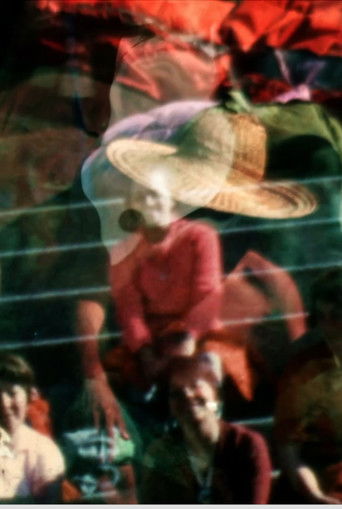 Fourteen variations on the intimate · 2023
Fourteen variations on the intimate
2023
MovieDocumentary
In early 2020, MUTA - International Festival of Audiovisual Appropriation and Cine Íntimo rescued and digitised a Peruvian archive of orphaned 8mm and Super 8 home movies. With the aim of restoring these lost memories, we sent the images around the world. This omnibus film is the result of the intervention of this material, by 14 experimental filmmakers. Fourteen perspectives and ways of experiencing appropriation. Fourteen variations on the intimate.
 Fragmentos para una historia del otro cine español · 2010
Fragmentos para una historia del otro cine español
★ 6.02010
MovieDocumentary
Documentary about the history of experimental cinema in Spain. FRAGMENTS is a historical survey of “the other” Spanish Cinema — films that brazenly explored their artistic, poetic and conceptual potential. Spanish experimental cinema can be glimpsed in a series of important yet isolated events that FRAGMENTS compiles through various firsthand accounts, film excerpts and documents. For the first time in Spain, a documentary brings together the most relevant of a cinema that is slowly losing its invisibility.
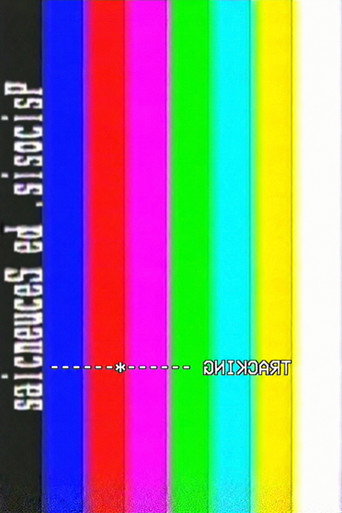 #0. sisocisP · 1992
#0. sisocisP
★ 6.01992
Movie
"[An] experiment that aims to highlight the number of shots of a specific scene [from Hitchcock's Psycho] by replacing the shot of the image with several of the credit titles from the same film [...] An early work, which would be the first official of Pinent's filmography, made when he was only 16 years old, [...] Two years away from Matthias Müller's 'found footage' reference work, 'Home Stories' (1990), a key piece in the genre." -Center de Cultura Contemporània de Barcelona
 Gioconda/Film · 1999
Gioconda/Film
1999
Movie
Theoretical experiment that uses the technique of picto-cinematography, win which “the search for the temporal objective duration of painting” stands out; this comes to us via its real measurements on a 35mm film. This technique allows us to get “a new vision of a pictorial work” within a temporal duration defined by cinematographic means. In this experiment, the same image of the painting remains in emulsion on the optical soundtrack, thus generating a sound. — AP
 Descenso · 2002
Descenso
2002
Movie
Film made with analog 35mm photo camera framed vertically. The sound that arises is caused by the image extending over the optical sound track. The content focuses on the descent made from a building in the Plaza de España in Madrid, honoring the great Spanish filmmaker Iván Zulueta. — AP
 QR Code/Film · 2014
QR Code/Film
★ 10.02014
Movie
First work from the ‘QR CODE / FILM’ series. Following in the footsteps of classic authors such as Gil J. Wolman, Peter Kubelka or Tony Conrad, who worked with alternating white frames (transparent) with black (opaque) in the 50’s and 60’s (last Century). — AP
 1/4 / C regeneraciones de VHS a VHS
1/4 / C regeneraciones de VHS a VHS
Movie
 Música visual en vertical · 2000
Música visual en vertical
2000
Movie
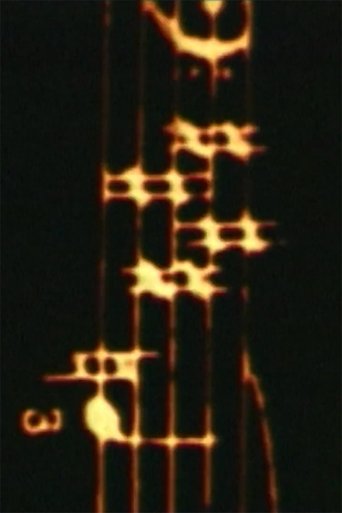
The starting point: the propositions from 1910’s and 1920’s about visual rhythm or visual music. We try to avoid the supposed failure explained by Jean Mitry and to propose a new way with the hope that the score of Beethoven’s Moonlight Sonata can be literally applied to the verticality of celluloid. Since it is perhaps impossible that cinema can grasp what ephemeral instant music is, let us picture the madness and ecstasy of a row of musical notes trapped onto any format. We could add or classify this work within “lettrist cinema,” but in that case could we not be referring to “integrist cinema”? An integral score, leaving no room for clumsy performances. — Ana Isabel Aréjula, Mardrid, 2002
Filmography
Sort
![QR Code/Film [#2]](https://image.tmdb.org/t/p/w342/2Zc6ISjRw5zLvNiJJ5cCytEVUBn.jpg)
![QR Code/Film [#3]](https://image.tmdb.org/t/p/w342/dwaykhtMkpYcwh5c292CRe1CojJ.jpg)