R
Production
Robert D. Graff
Born November 18, 1924
Died December 27, 1983 · aged 59
No biography available.
Known For
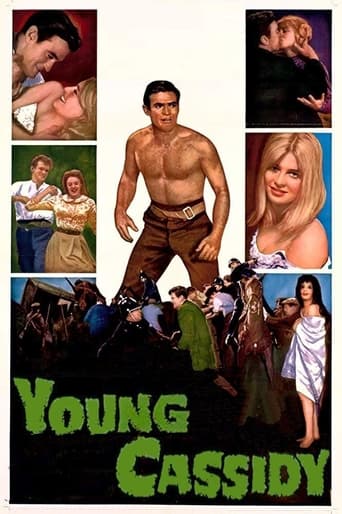 Young Cassidy · 1965
Young Cassidy
★ 6.41965
MovieDrama
In Dublin circa 1911, John Cassidy (Rod Taylor), an impoverished idealist, whose ambitions are restricted by the demands of looking after his family, journeys through the social injustices of Dublin life, involving himself with the rowdy tramway-men strike, dawdling with prostitute Daisy Battles (Julie Christie), and seeking a better life. He falls in love with bookshop assistant Nora (Dame Maggie Smith) who encourages him toward a life of writing. Finding success at the Abbey Theatre, his unorthodox views estrange him from family, friends, and his own past.
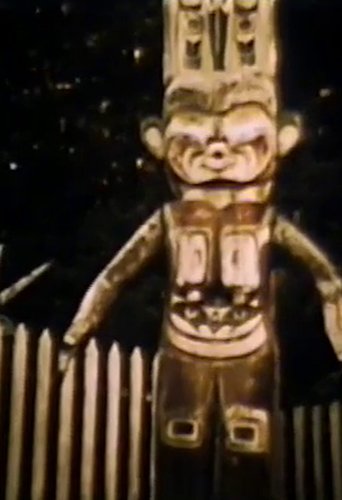 A Conversation with Marcel Duchamp · 1956
A Conversation with Marcel Duchamp
1956
Movie
Filmed amidst the Arensberg collection at the Philadelphia Museum of Art, where 35 works by Marcel Duchamp are gathered, this 1956 NBC interview features the artist talking with James Johnson Sweeney, former director of the Guggenheim Museum. Duchamp describes his transition away from Impressionism toward a Cubist, and then post-Cubist, approach, providing commentary while standing before Nude Descending a Staircase (“I was not aware of Italian Futurism when I painted it”) and The Large Glass (“The two crackings are symmetrically arranged and there is… almost an intention there… a ready-made intention, in other words, that I respect and love.”). These concepts are paradoxically, although quite logically, articulated alongside his desire for “dryness” and mechanical precision. Viewers also gain insight into Duchamp’s thoughts on painting for an “ideal” public—a notion he clearly distinguishes from ivory-tower elitism.
Filmography
Sort