Acting

Peter Kalisch

Born December 11, 1921 · Berlin, Germany

Died April 20, 1992 · aged 70

No biography available.

Known For
Die erste ReiheDie erste Reihe · 1987
Die erste Reihe
9.01987
MovieHistoryDrama
Berlin in the 1930s - Adolf Hitler comes to power, communists and social democrats are persecuted, books are burned and Jewish citizens are ostracized. The outwardly shiny façade of Berlin, the capital of the Reich, reveals nothing of the unequal struggle of young people against the increasing oppression...
Visiting Van GoghVisiting Van Gogh · 1985
Visiting Van Gogh
3.01985
MovieFantasyScience Fiction
In the 22nd Century, antiquities command huge prices. A woman uses a time machine to travel back the the 19th Century in order to buy paintings from Vincent Van Gogh before he was famous. Will she be wealthy upon her return?
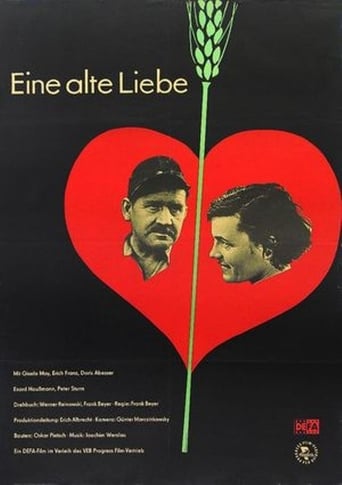
An Old LoveAn Old Love · 1959
An Old Love
7.01959
MovieDrama
Frieda and August Walkowiak celebrate their 30th wedding anniversary. However, the marriage has been in crisis for some time. August wants to spend his old age in peace, while Frieda has no intention of giving up her position as LPG chairman. The problems in the countryside are huge, collectivization is not progressing fast enough, even comrade Heinrich Rantsch is clinging to his individual farm. Frieda fights for progress, even in her private life, because not only her burden but also her higher position is a thorn in her husband's side. During the wedding anniversary celebrations, Frieda is called to the LPG. This is the cause of the family quarrel that has been in the air for a long time. August demands her resignation. In vain - and so he moves in with Rantsch. Their daughter Helga also leaves the house because of the tensions. Frieda collapses. When she is in hospital, August comes to his senses.
Das Stacheltier - Der WintermantelDas Stacheltier - Der Wintermantel · 1954
Das Stacheltier - Der Wintermantel
1954
MovieComedy
A little man wants to order a warm coat from a fabric he has brought with him to a tailor's workshop in winter. He is laughed at and told that orders for this type of garment are only accepted in the summer - after all, they work to a schedule. When the customer continues to insist on his request, he is declared insane by the employees of the atelier - they are not a capitalist company after all. This infuriates him so much that a neurologist, the fire department and an ambulance are called. The doctor clarifies the situation and advises the first tailor to have a word with his assistant. "I'm normal," he claims. "I believe it," replies the doctor, "but will the others believe it...?"
They Called Him AmigoThey Called Him Amigo · 1959
They Called Him Amigo
7.01959
MovieDrama
A refugee from a Nazi concentration camp is discovered by some boys in WWII Berlin. They provide him with food and help him to continue his flight. Later one of the boys, the son of a communist, is charged with theft, arrested and sent to a concentration camp.
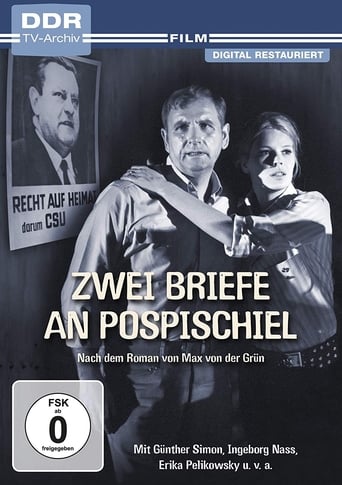
Zwei Briefe an PospischielZwei Briefe an Pospischiel · 1970
Zwei Briefe an Pospischiel
10.01970
MovieDrama
Paul Pospischiel loses his job in the great colliery collapse in the Ruhr, retrains and builds a new life for himself. One day, he receives a letter from his mother, which tears him from his comfort zone and triggers a serious conflict. She has discovered the man who sent his father to a concentration camp decades ago and is therefore responsible for his death. The mother demands accountability from this man. Paul decides to confront the suspected informer and murderer...
The Best YearsThe Best Years · 1965
The Best Years
6.31965
MovieDrama
In 1945, Ernst Machner returns home from the war in his mid-20s. Tuche would like him to weave for a living, but his comrades persuade him to become a young teacher instead.
As Long as There’s Life in MeAs Long as There’s Life in Me · 1965
As Long as There’s Life in Me
10.01965
MovieDrama
This is part one of a two-part biopic about Karl Liebknecht. In 1914, Germany is arming itself for war. Karl Liebknecht, left-wing revolutionary Social Democrat, workers’ leader and a virulent antimilitarist, is one among 110 SPD members of Parliament who vote against approving war loans. From then on, he is considered un-German and a traitor to the fatherland, and his own party’s leadership turns against him. Despite threats, Liebknecht speaks up against the war and writes the manifesto “The Main Enemy Is at Home.” Even when he is arrested and charged with treason, he does not surrender.
Filmography

Sort
An Old LoveAn Old Love · 1959
An Old Love
7.01959
MovieDrama
Frieda and August Walkowiak celebrate their 30th wedding anniversary. However, the marriage has been in crisis for some time. August wants to spend his old age in peace, while Frieda has no intention of giving up her position as LPG chairman. The problems in the countryside are huge, collectivization is not progressing fast enough, even comrade Heinrich Rantsch is clinging to his individual farm. Frieda fights for progress, even in her private life, because not only her burden but also her higher position is a thorn in her husband's side. During the wedding anniversary celebrations, Frieda is called to the LPG. This is the cause of the family quarrel that has been in the air for a long time. August demands her resignation. In vain - and so he moves in with Rantsch. Their daughter Helga also leaves the house because of the tensions. Frieda collapses. When she is in hospital, August comes to his senses.

Besecke

Censored: Kuhle WampeCensored: Kuhle Wampe · 1975
Censored: Kuhle Wampe
10.01975
MovieDocumentaryDrama
A detailed reconstruction of the censorship case against the landmark Weimar-era communist film, Kuhle Wampe, or Who Owns the World? (1932). Directed by Slatan Dudow, the crew and cast included left-wing luminaries, such as playwright Bertolt Brecht, composer Hanns Eisler and balladeer Ernst Busch. The film was the subject of vehement disputes and was banned twice for revolutionary and communist tendencies that were perceived to threaten the state. About 230 meters of the original film fell victim to the censor’s shears. This historic censorship case was argued over the course of three sessions. Censored: Kuhle Wampe re-enacts the censorship hearings, based on original minutes and documents, as well as personal records of the case. In addition to footage from the original film, this docudrama includes original clips of Berlin in the 1920s and '30s and short testimonies, filmed in the 1970s, with some of the actors involved in the original Kuhle Wampe film production.
Unterm BirnbaumUnterm Birnbaum · 1973
Unterm Birnbaum
6.31973
MovieCrimeDrama
Abel Hradscheck, the owner of an inn in the Oderbruch country, faces financial ruin. For this state of affairs, Ursula, his wife and former actress, is by no means free of blame. She is a "newcomer" to the area and even after eleven years in the area, still a "stranger". A Cracow company announces that a money-collector is on his way to the innkeeper. Mr. Szulski arrives and the debts are settled - with money supposedly stemming from an inheritance. The next day, Szulski departs but according to the maid and the stable-boy, behaves in a very strange manner. Soon afterwards, his carriage is discovered in the Oder River, but there is no trace of the drowned man. Hradscheck's neighbor starts casting suspicion on the innkeeper. The Counselor of Justice, who heads the investigations has the spot under the pear tree dug out. A dead body is exhumed...
Der aufhaltsame Aufstieg des Arturo UiDer aufhaltsame Aufstieg des Arturo Ui · 1974
Der aufhaltsame Aufstieg des Arturo Ui
1974
MovieTV Movie
Hitler's seizure of power in 1933 and his rule in the years that followed are transferred to the North American criminal world of the 1930s in a parable. Gangster boss Ui needs the protection of the ruling class to achieve his goals and offers his help to their representatives. They initially hesitate, but join forces after Ui violently gains their respect. His victory is perfect and the people fall silent before the revolvers of their "protectors". Ui takes the raised hands as a sign of approval... Bertolt Brecht wrote the play in 1941 in a Finnish asylum - the premiere only took place in Stuttgart after his death in November 1958. It has been staged at the Berliner Ensemble since 1959 - Ekkehard Schall has played Ui over 500 times since then. On January 13, 1974, the play was shown for the last time, recorded in color by GDR television.

Flake

Lachtauben weinen nichtLachtauben weinen nicht · 1979
Lachtauben weinen nicht
7.01979
MovieDrama
The film tells the story of the smelter brigade of a steel mill whose members are connected by a strong comradeship. Among the workers are, for instance, young Rolf, whom everybody just calls "Lachtaube" and who always comes through for his co-workers, or the likable Hubert, who works as a simple smelter again after being dismissed as the head of the steel mill. Then, there is also the stubborn Manfred, who should have become a brigadier long ago because of his experience and his competence, but this privilege is refused to him because Manfred is not a party member. Ironically, it is Manfred who hears by accident about the plans of the mill to close down the old Martin furnaces – and to lay off the smelters. When the other men learn about the plans they enter the barricades for their jobs and force the plant′s management to face the workers′ demands and criticism.