Directing
Carl E. Brown
Born January 1, 1959 · Toronto, Canada (age 67)
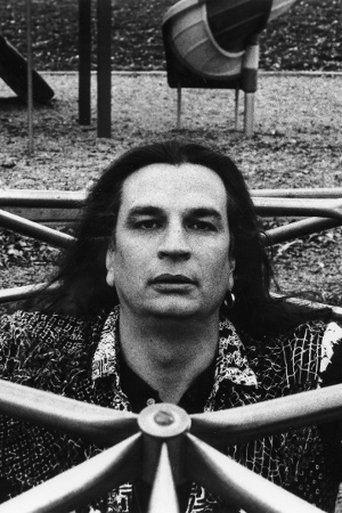
Carl E. Brown (b.Toronto, 1959) is a canadian filmmaker, photographer and writer. After two years at the University of Toronto where he studied philosophy and psychology, he decided to study filmmaking, completed in 1982 at Sheridan College. He's completed nearly twenty films which have been screened in many festivals in America, Europe and Asia, and were part of the retrospective Experience chrom…
Known For
 Memory Fade · 2009
Memory Fade
2009
MovieAnimation
"The images of “Memory Fade” are not lost… they are spectral and the dance steps repeated over and over in time fights the Fade – a falling down that breaks the spine of the book of life (mankind)."
 Urban Fire · 1982
Urban Fire
★ 5.01982
Movie
A child is given birth in the womb of its dead mother. Child’s eyes perceive the death of a city. The last birth combined with the fire and destruction.
 Cloister · 1989
Cloister
1989
Movie
As the wheel turns, the religion of the body moves to and through the physical into the psychological. We see the feared, all is moved. There is a hint of seclusion, an idea from the past re-worked and still dangerous. The participants unsure choose a convent and are still revealed. Through a window there appears a tree, and then a forest. Too many options. The monastic life, safe and sure. We cluster for the cloister.
 Blue Monet · 2006
Blue Monet
2006
MovieDocumentary
Monet is an artist that I have always greatly admired. His use of colour through water and sky to convey his emotional state has had a great influence on me. Whether it was the first rays of light glinting the water's edge or the magic time just before nightfall, Monet's sense of colour and colour conveyance has always been perfect. I have used my techniques of alchemical film to translate onto film my impressions of Monet's sense of colour, water, sky and his most powerful icon the water lily. Using my toning, liquid emulsion, reticulation, dried crystal bleach formations and stacking techniques to just name a few I have translated the Monet experience onto the surface of my film.
 Fine Pain · 1999
Fine Pain
1999
Movie
"This two-screen dual projector film extends Brown's use of chemically tortured celluloid to the breaking point. A collaboration with his long-time sound colleague John Kamevaar, 'Fine Pain' is an extended dialogue between image and sound - like a prolonged riff of free jazz between two masters. The discordant tensions of this film will keep you on the very edge of your seat, astonish you with the mesmerizing range of colour and abstraction and the over-modulated sound vibrations." (Pleasure Dome program notes, Toronto, March 2000)
 Drop · 1989
Drop
1989
Movie
"'Drop' restages Newton's celebrated encounter with the heaviest and most voluptuous fruit of the vegetable kingdom. It tracks the eye's apple from the graceless decline of the primal couple to our own fall into the orbits of applied science. Begun at a crossroads soon abandoned, Drop's anxious recollection services this passage from orchard to orison, reminding us of Toto's immortal quip from 'The Wizard of Oz': the less the firma, the more the terra." (Mike Hoolbom)
 Sheep · 1991
Sheep
1991
Movie
A man counting sheep as he sleeps. I have never seen sheep as I sleep. The sheep relax the man, he falls into a deep sleep. You are wide awake, moving through the man, maybe sleeping counting sheep. The alchemy, the dream, the scene. (CB)
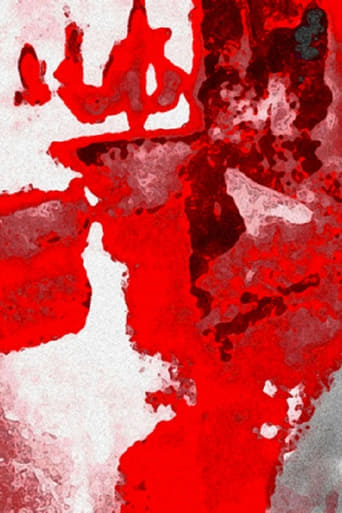 neige noire · 2003
neige noire
2003
Movie
"Carl Brown makes celluloid dance. [His] new film work will burn colours so deeply into your brain, you'll be watching a light show inside your eyelids for hours. Titled Neige Noir ('Black Snow'), a name that conjures up Toronto winters but actually refers to the trenches of the First World War, the piece is a visual feast. It opens with a calming sequence of manipulated representations of a swimmer and the sea set to a lulling jazz tune, and then crashes into a steady techno and white noise assault with pulsating images. Brown radically alters the celluloid itself, experimenting like a mad scientist to create gorgeous colour patterns. He sometimes refilms an image up to eight times to bring its dance of distortion to a climax. Any single still from this film could bring you to a stop in an art gallery, and Brown gives us some 86,000 of them." (Thomas Hirschmann)
Filmography
Sort