
Acting
Ruth Núñez
Born April 7, 1979 · Madrid, Madrid, Spain (age 47)
No biography available.
Known For
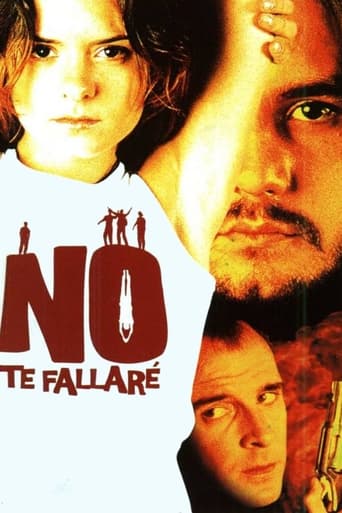 No te fallaré · 2001
No te fallaré
★ 3.32001
MovieDramaAction
"FRIENDS...THREE YEARS LATER" School is finally out. Valle and Quimi, a couple since childhood, decide to celebrate with their gang on a trip to the coast. They feel free and swear that they will always be together. But three years later, everything is quite different. A party at the high school unites them all again. They haven't seen each other for years and the tension is thick. Something unexpected changed the course of their lives. Valle is a dancer at a club and attracted to Ray, the owner, who is also an art dealer under pressure to use his nightspot to peddle drugs.
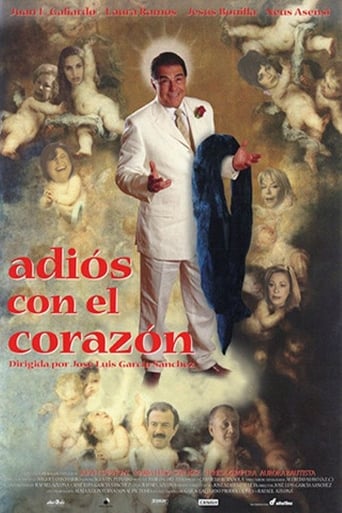 Goodbye from the Heart · 2000
Goodbye from the Heart
★ 6.42000
MovieComedyDrama
Juan is now in his fifties, has a protruding belly, dyes his hair gray and lives alone with a cat who has urinary problems, but despite this, women still find him attractive.
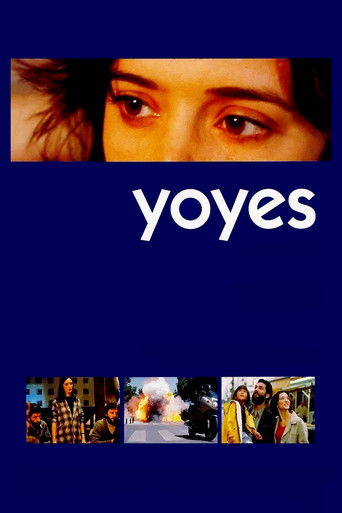 Yoyes · 2000
Yoyes
★ 5.62000
MovieDrama
Yoyes, the first woman to hold responsibility positions within ETA, returns from exile in Mexico and try to rebuild her life. But her return is not easy.
 Bargain Lingerie · 1999
Bargain Lingerie
★ 3.71999
Movie
A celebration of big-breasted women. A shy, young lesbian (while shopping for a bra) discovers the one thing she has really been looking for since she was a child.
 Amar es para siempre · 2013
Amar es para siempre
★ 5.02013
SeriesDramaHistory
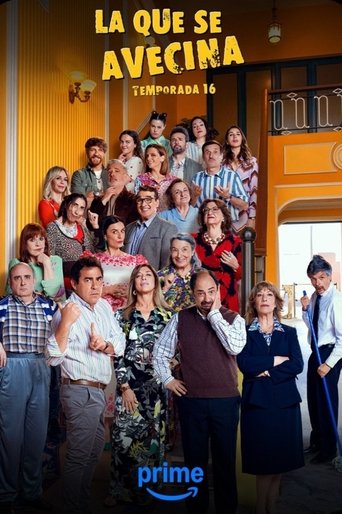 La que se avecina · 2007
La que se avecina
★ 8.12007
SeriesComedy
La que se avecina is a Spanish television comedy created by Alberto Caballero, Laura Caballero and Daniel Deorador. The TV-series focusing around the inhabitants of Mirador de Montepinar, a fictional building located on the outskirts of a big city. Both its storylines and cast are heavily based on Aquí no hay quien viva, which ended when Telecinco bought Miramón Mendi, the series production company.
The episodes debuted on the Telecinco network, and were later rerun by the same network as well as cable/satellite channels FactoríaDeFicción and Paramount Comedy. The series debuted in 22 April 2007 and became popular thanks to its funny characters, witty script, use of catchphrases and capacity to integrate and poke fun at contemporary issues; the program presents a caustic satire of many of the 'types' found in Spanish society.
The name of the show involves wordplay, as "vecina" is the Spanish word for neighbour.
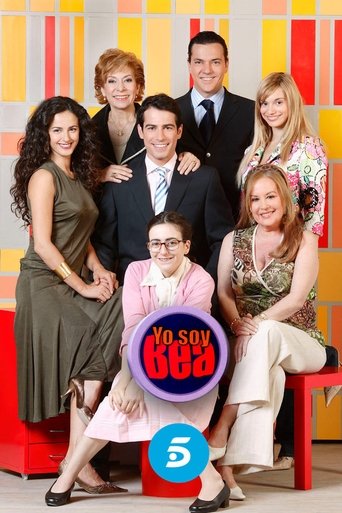 Yo soy Bea · 2006
Yo soy Bea
★ 4.22006
SeriesDramaComedy
Yo soy Bea is a Spanish television comedy-drama series which aired on Telecinco from 10 July 2006 to 16 August 2009.
The series is an adaptation of the popular Colombian telenovela Yo soy Betty, la fea. Ruth Núñez played the title role of Beatriz "Bea" Pérez Pinzón and Alejandro Tous played Álvaro Aguilar, Bea's love interest. Yo soy Bea translates to "I am Bea"; it is a pun, with "Bea" sounding like bella, meaning pretty, and like fea, meaning ugly.
The Spanish adaptation screened weekdays during the daytime and pulled in, on average, over four million viewers. The series' record is a 42,1% share. It was Spain's top rated daytime programme.
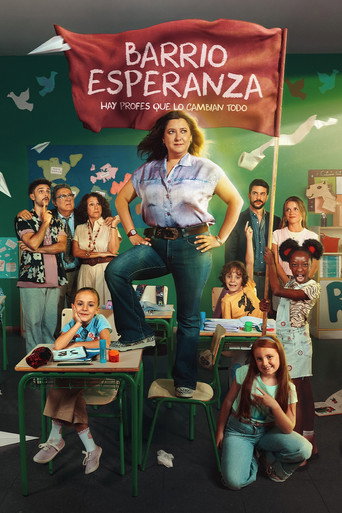 Barrio Esperanza · 2026
Barrio Esperanza
★ 7.52026
SeriesComedy
Filmography
Sort
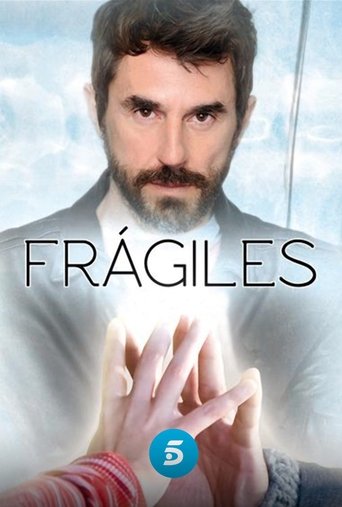 Frágiles · 2012
Frágiles
★ 2.02012
SeriesComedyDrama
Dolores "Lola" Martín