W
Directing
Wendelien van Oldenborgh
Born December 28, 1962 · Rotterdam, Netherlands (age 63)
No biography available.
Known For
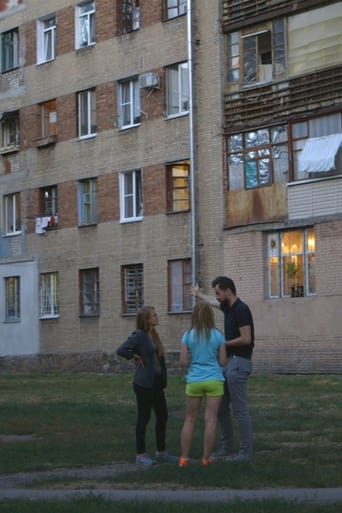 Two Stones · 2019
Two Stones
2019
Movie
Let’s embark upon a journey to discover two collective housing projects. One in Kharkiv, Ukraine, from the early days of the Soviet era in 1930; the other, in the suburbs of Rotterdam, in the 1950s. Their connection? Lotte Stam-Beese, the first woman to train as an architect at the Bauhaus, who took part in both ventures. Two political and social spaces for two different architectural utopias. The film unfolds stories and expands them with well-informed, militant explanations, as we go back and forth, sometimes imperceptibly, from one city to another, from past to present, in a delicate weaving operation. As a game of transfer and echoes, of viewpoints opening up a counter-History, in reverse, as suggested by the superimpositions the film is peppered with. A journey through the bends of places, History, words, punctuated by the apparitions of an interpreter who translates as much as she comments, in a whispering voice, as a ghostly narrator.
 Hier. · 2021
Hier.
2021
MovieDocumentary
Wendelien van Oldenborgh uses architecture both as a setting and as an investigative tool to question politics and its history.
 Of Girls · 2023
Of Girls
2023
MovieDocumentary
Shot in Japan, the film brings together the voices of today’s women with the lives and texts of Fumiko Hayashi and Yuriko Miyamoto, focusing on gender, politics and love.
 Beauty and the Right to the Ugly · 2014
Beauty and the Right to the Ugly
2014
MovieDocumentary
A documentary by Wendelien van Oldenborgh.
Filmography
Sort