
Directing
Isabelle Prim
Born September 11, 1984 · Paris, France (age 42)
No biography available.
Known For
 The Beast · 2024
The Beast
★ 6.32024
MovieScience FictionDrama
In the near future where emotions have become a threat, Gabrielle finally decides to purify her DNA in a machine that will immerse her in her past lives and rid her of any strong feelings. She then meets Louis and feels a powerful connection, as if she had known him forever.
 Tempting Devils · 2018
Tempting Devils
★ 4.72018
MovieDrama
A woman discovers curious erotic messages on a lost cell phone in the train. When she meets the owner of the phone, a liberated young woman, the two of them embark on an erotic journey.
 Love Canal · 2017
Love Canal
2017
MovieDrama
300 million years ago, the north of France was a wetland. 140 years ago, a canal is dug and never filled with water. One day, vagabonds decide to go down an invisible river and pick on the way débris of a world to start a new one. The film finds its starting point in the 1970s environmental scandal of Love Canal (NY, USA) who led to the Superfund act (1986), the first federal program on damages caused to natural ressources by industrial sites. From there, the film traces a path through the post-industrial landscapes of north of France and questions, through fiction, the taking in hand (metaphorically and litterally) of those great landscapes.
 Less and Less · 2010
Less and Less
★ 6.12010
MovieComedy
Less and Less, Luc Moullet’s 40th film, concerns development and expansion, from 1968 to 2010, of the devices based on computers, automats, interactive terminals and others that can be found everywhere.
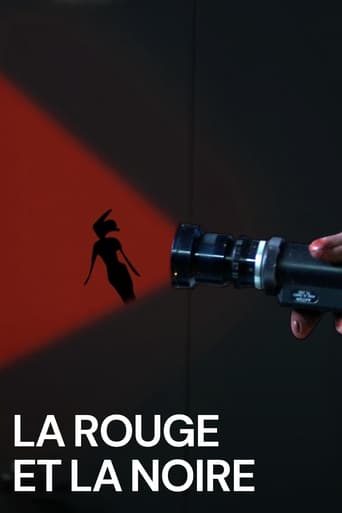 La rouge et la noire · 2011
La rouge et la noire
2011
MovieCrime
Carrying on Luc Moullets unfinished screenplay about the theft of la pénélope, a camera created by Aaton and capable of recording equally well in 35 mm and digitally, LA ROUGE ET LA NOIRE is a film in kaleidoscope form. The portrait of Aatons founder, Jean-Pierre Beauviala creator, inter alia, of the time-code and the light cameras used by the New Wave (in particular the bush camera specially designed for Jean Rouch) is centered around the basic plot introduced by two women thieves who talk as voice-overs, and whose identities will only be revealed at the end.
 Civil war, the film · 2012
Civil war, the film
2012
MovieDocumentary
 Le Jardin des délices · 2023
Le Jardin des délices
2023
MovieComedyScience Fiction
Arrived in an abandoned place or emerged from a society at a standstill, men and women organize themselves in their own way, borrowing what they find on the spot and in the memory of what surrounds them, the theater and the people...
In the superb mineral setting of the Boulbon quarry, Philippe Quesne, inspired by a work by the painter Jérôme Bosch, orchestrates a joyful retro-futurist epic to meet the worlds to come, between environmental science fiction and contemporary western.
 The World After Us · 2021
The World After Us
★ 6.12021
MovieDrama
When penniless young writer Labidi meets Elisa he knows she’s the one for him. But Paris is expensive. A captivating film that combines the classic themes of French New Wave cinema with questions about roots, familiarity and distance.
Filmography
Sort


