Acting
Jeff Donnell
Born July 10, 1921 · Windham, Maine, USA
Died April 11, 1988 · aged 66
Jean Marie "Jeff" Donnell (July 10, 1921 — April 11, 1988) was an American film and television actress. She grew up in South Windham, Maine. As a child, she adopted the nickname "Jeff" after the character in her favorite comic strip, Mutt and Jeff. Donnell graduated from Towson High School, Towson, Maryland, in 1938 and attended the Leland Powers School of Drama in Boston, Massachusetts. Later, sh…
Known For
 Tora! Tora! Tora! · 1970
Tora! Tora! Tora!
★ 7.21970
MovieWarHistory
In the summer of 1941, the United States and Japan seem on the brink of war after constant embargos and failed diplomacy come to no end. "Tora! Tora! Tora!", named after the code words used by the lead Japanese pilot to indicate they had surprised the Americans, covers the days leading up to the attack on Pearl Harbor, which plunged America into the Second World War.
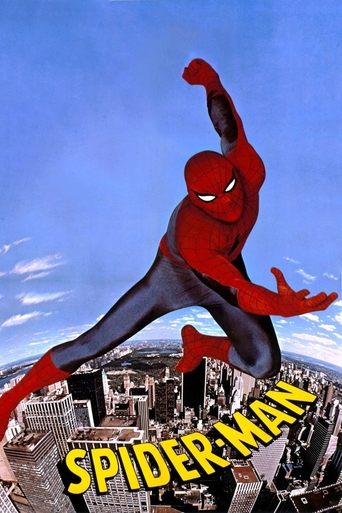 Spider-Man · 1977
Spider-Man
★ 6.31977
MovieScience FictionAction
When an extortionist threatens to force a multi-suicide unless a huge ransom is paid, only Peter Parker can stop him with his new powers as Spider-Man.
 Sweet Smell of Success · 1957
Sweet Smell of Success
★ 7.61957
MovieDrama
New York City newspaper writer J.J. Hunsecker holds considerable sway over public opinion with his Broadway column, but one thing that he can't control is his younger sister, Susan, who is in a relationship with aspiring jazz guitarist Steve Dallas. Hunsecker strongly disapproves of the romance and recruits publicist Sidney Falco to find a way to split the couple, no matter how ruthless the method.
 In a Lonely Place · 1950
In a Lonely Place
★ 7.61950
MovieThrillerDrama
A violent screenwriter and a female neighbor fall in love after she clears him of murder, but she begins to have second thoughts.
 The Blue Gardenia · 1953
The Blue Gardenia
★ 6.51953
MovieCrimeMystery
Upon waking up to the news that the man she’d gone on a date with the previous night has been murdered, a young woman with only a faint memory of the night’s events begins to suspect that she murdered him while attempting to resist his advances.
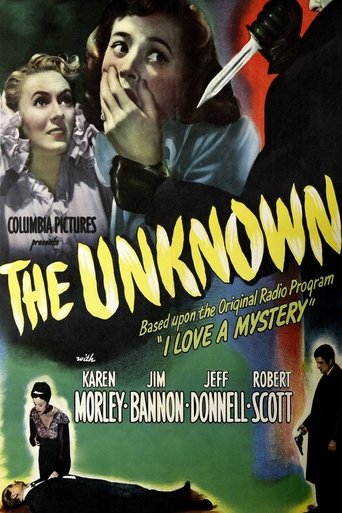 The Unknown · 1946
The Unknown
★ 6.31946
MovieMysteryThriller
"The Unknown" was the final entry in Columbia’s I Love A Mystery series. A woman hires two detectives to keep her alive long enough to claim her inheritance.
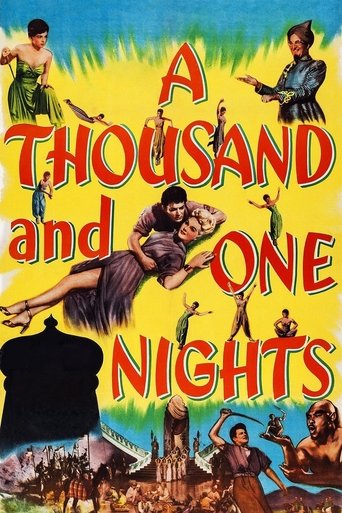 A Thousand and One Nights · 1945
A Thousand and One Nights
★ 6.11945
MovieAdventureComedy
On the run after being found sweet-talking the Sultan's daughter, Aladdin comes upon a lamp which, when rubbed, summons up Babs the genie. He uses it to return as a visiting prince asking for the princess's hand. Unfortunately for him, the sultan's wicked twin brother has secretly usurped the throne, someone else is after the lamp for his own ends, and Babs has taken a shine to Aladdin herself and is bent on wrecking his endeavours.
 Gidget Goes to Rome · 1963
Gidget Goes to Rome
★ 5.01963
MovieComedyRomance
Francis, now 17, is still in love with Moondoggy. She can persuade her parents to allow them a journey to Rome, together with two of her and two of his friends. However they have to take an adult with them, so they choose Peter's eccentric aunt. In Rome they get the beautiful guide Daniela, who's fascinating the guys and making especially Gidget jealous. She starts looking elsewhere herself.