D
Directing
David Hall
No biography available.
Known For
 Between · 1972
Between
1972
Movie
Between is a highly-wrought piece of structuralism which makes no concessions to its audience…it implicates viewers in what is happening on the ‘other side’ of the screen… and one is fully conscious of the role of the photographer. The camera is made to approach a lit screen in a viewing theatre before turning full circle to approach the projector… the trip was made only once, but the sequence is repeated by an intricate process using successive generations of prints – a print from a print etc… Here there is a progressive deterioration of ‘quality’ and the image breaks up into signs and symbols and finally into abstract fragments. What we have then is a clear case of art as truth through fabrication, with the imperative that the fabrication, the contrivance, must be revealed…
 Edge · 1973
Edge
1973
MovieWestern
An impending gunfight moves from a conventional confrontation to a confrontation with audience expectation as camera action predominates. A film in which the less you see of what you expect - the more there is exposed.
 Phased Time · 1974
Phased Time
1974
Movie
Constructed on a pre-determined progressively self-defining ‘phased’ score and lens-matting procedure, Phased Time2 consists of six sections, each out of a 100ft roll. All work was done in camera except for linking with black spacer between sections. Apart from the first, each section is subdivided according to logical cyclic procedures. Each division (take) is a fixed position shot. At every consecutive take the camera is ‘pre-panned’ half a frame’s width to the right. Effectively, the camera is revolving in a ‘static pan’ around a room throughout the film. Also, each consecutive take is partially superimposed over its predecessor (by rewinding after each take) and consequently phases the half-frame moves… The sound phases and eventually superimposes synchronously with the picture, and was produced on a synthesiser and electric organ. -DH
 Vertical · 1969
Vertical
1969
Movie
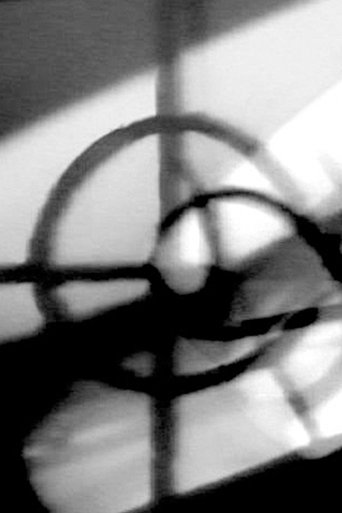
“..in his seminal film VERTICAL, Hall manipulates.. perceptual assumptions by translating geometric shapes of three dimensional sculpture on landscape photographed from striking perspectives. Careful attention to laws of perspective and manipulation of framing and composition enable Hall to contradict initial visual information and to violate expectation….” – Deke Dusinberre
 TV Interruptions (7 TV Pieces) · 1971
TV Interruptions (7 TV Pieces)
1971
Movie
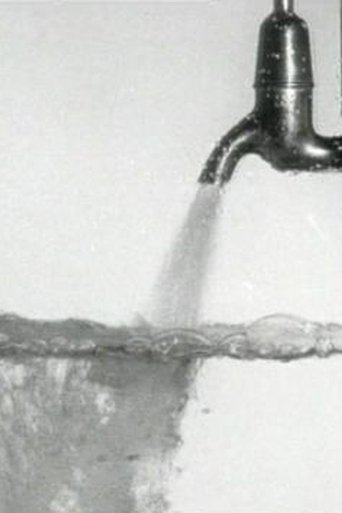
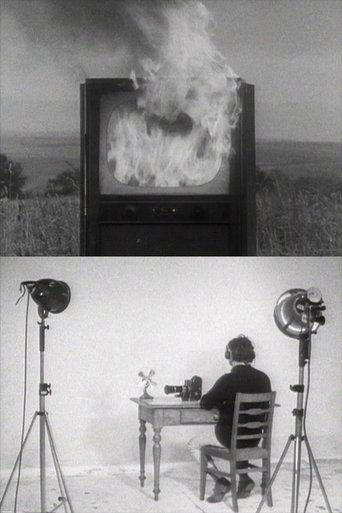
Conceived and made specifically for broadcast, these were transmitted by Scottish TV during the Edinburgh Festival. The idea of inserting them as interruptions to regular programmes was crucial and a major influence on their content. That they appeared unannounced, with no titles, was essential.. These transmissions were a surprise, a mystery. No explanations, no excuses. Reactions were various. I viewed one piece in an old gents club. The TV was permanently on but the occupants were oblivious to it, reading newspapers or dozing. When the TV began to fill with water newspapers dropped, the dozing stopped. When the piece finished normal activity was resumed. When announcing to shop assistants and engineers in a local TV shop that another was about to appear they welcomed me in. When it finished I was obliged to leave by the back door. I took these as positive reactions… – D.H.
 Motion Parallax · 1968
Motion Parallax
1968
Movie
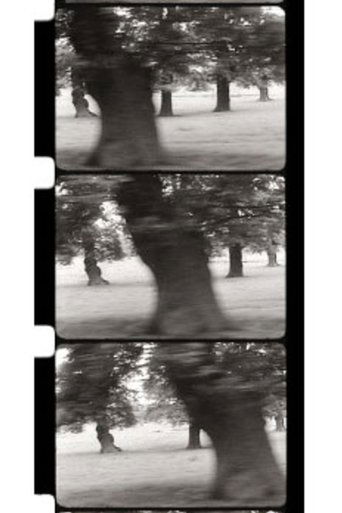
A camera-object travelling through landscape records images of static objects/textures apparently moving, all at variable rates, depth cues constantly changing, the illusion problematic doubled, and representation confounded as projection produces the opposite - a travelling landscape. This was my first film and, as with later films and video work, in some way parallels issues I had been working through in my sculpture'. DH.
 This Is a Television Receiver · 1976
This Is a Television Receiver
1976
MovieDocumentary
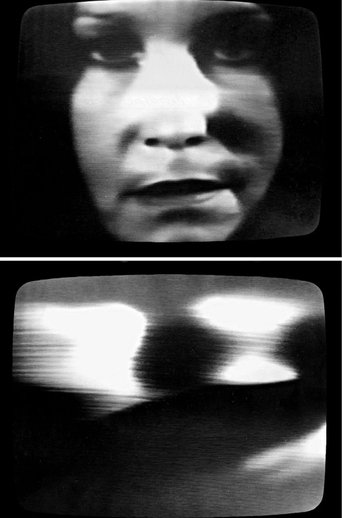
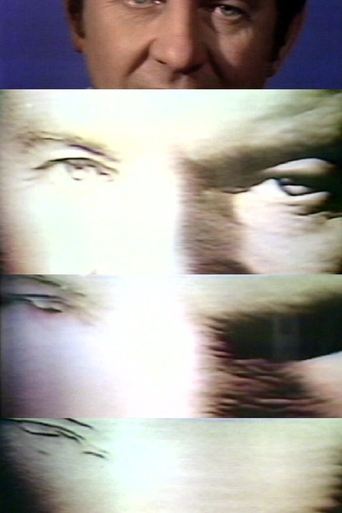
Commissioned by BBC TV as the unannounced opening piece for their Arena video art programme, March 1976. Programme produced by Mark Kidel, conceived by Anna Ridley and presented by David Hall. 'Richard Baker [the well known newsreader] describes the essential paradoxes of the real and imagined functions of the TV set on which he appears. The second shot is taken optically off a monitor, the third copied from the second, and so on, until there is a complete degeneration of both sound and image, removing the newsreader from his position of authority...' - Tamara Krikorian, Art Monthly, February 1984.
 TV Interruptions: Burning TV · 1971
TV Interruptions: Burning TV
1971
Movie
Ten works commissioned by the Scottish Arts Council were broadcast, unannounced, by Scottish TV in August/September 1971. Later, seven were compiled as TV Interruptions (7 TV Pieces).
Filmography
Sort