Acting

Masaru Kodaka

Born November 3, 1928 · Bunkyo, Tokyo, Japan (age 97)

No biography available.

Known For
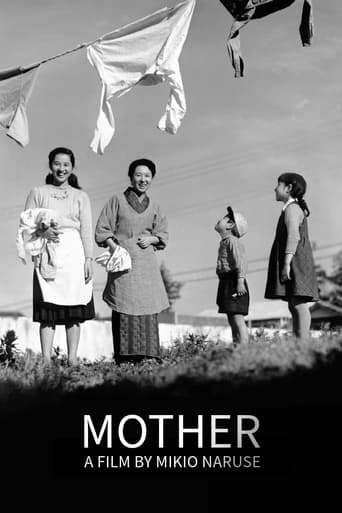
Ghost Stories of Wanderer at HonjoGhost Stories of Wanderer at Honjo · 1957
Ghost Stories of Wanderer at Honjo
7.81957
MovieFantasyHorror
A samurai rescues a mischievous tanuki from hunters and sets it free. When the samurai's wastrel son hatches a plot to kill his father for his fortune, the magical tanuki is determined to protect its rescuer.
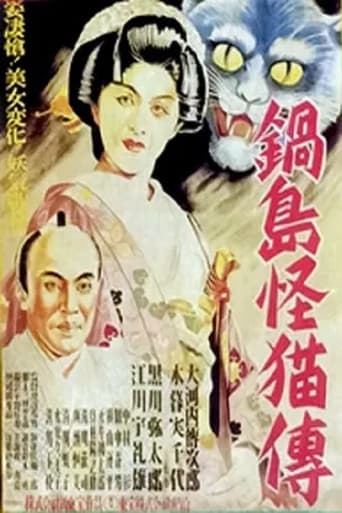
Ghost Cat of NabeshimaGhost Cat of Nabeshima · 1949
Ghost Cat of Nabeshima
6.51949
MovieMysteryHorror
Tanuma Kandayuu is a high class samurai of the house of Nabeshima. He finds a lavish board of Go (a Chinese Board game) at Kinbei's store. He recommend Kinbei to offer it to his lord. Kinbei hesitates at first, since he knows the board has a mysterious legend surrounding it; it's believed that for every game played on the board, one death is required.
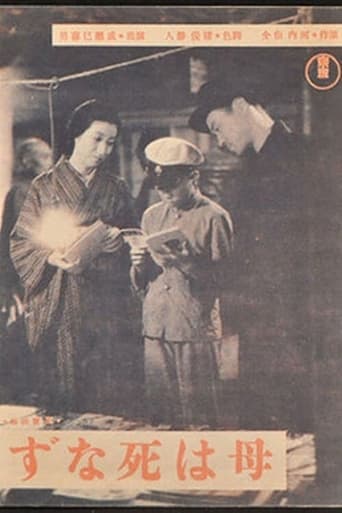
MotherMother · 1952
Mother
7.01952
MovieDrama
A teenaged girl witnesses her widowed mother's attempt to sustain her family.
Queen BeeQueen Bee · 1958
Queen Bee
7.01958
MovieCrime
Earlier version or Prequel to Queen Bee and the School for Dragons.
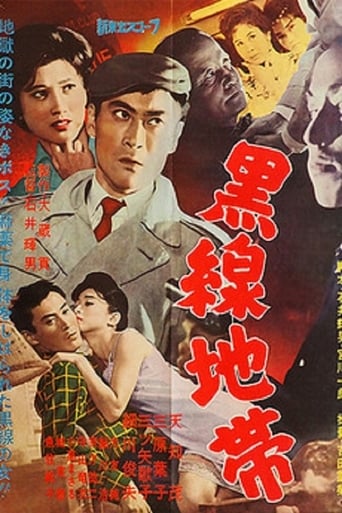
Black LineBlack Line · 1960
Black Line
5.01960
MovieCrime
Freelance reporter “Scoop” Machida is hot on the trail of a prostitution ring called the Black Line, when he is framed for the murder of a young woman. Forced to clear his own name, the handsome journalist sinks deeper into the Black Line’s rotten swamp of drugs, prostitution, and murder and finds unexpected help in Maya, a steamy female gambler familiar with the neon-lit streets, shadowy alleyways, and seedy nightclubs he must navigate. The closest film in the Line series to classic American film noir, Ishii’s Black Line is a pulpy assortment of crime film conventions including the starkly expressionistic black and white cinematography by Jûgyô Yoshida, a jazzy music score by Michiaki Watanabe, and a sleazy screenplay by Ishii and Ichirô Miyagawa.
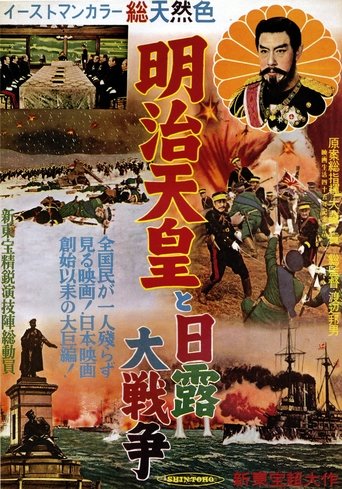
Emperor Meiji and the Great Russo-Japanese WarEmperor Meiji and the Great Russo-Japanese War · 1957
Emperor Meiji and the Great Russo-Japanese War
8.01957
MovieHistoryWar
Meiji Tenno portrays the buildup to the Russo-Japan War. In addition to showing the political events that led to war, it also shows the era from the story of a farm family in rural Japan that sends their son off to war. As such, it could be considered an anti-war movie, showing how, while war is devised by governments, the people do not really understand what war is, and its combatants often do not know what they are fighting for.
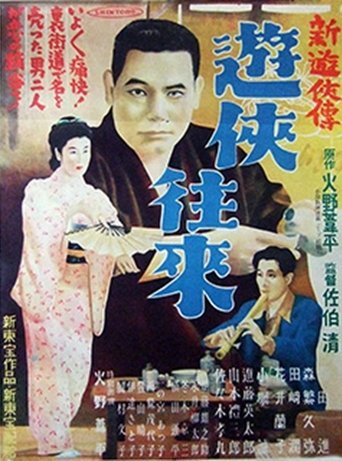
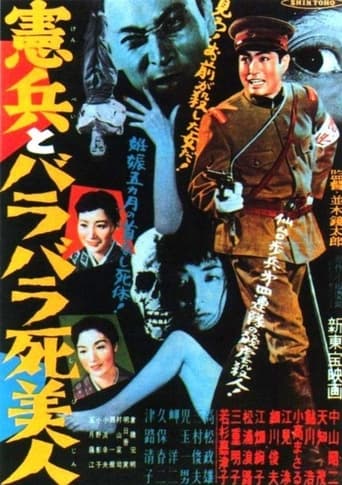
The Military Policeman and the Dismembered BeautyThe Military Policeman and the Dismembered Beauty · 1957
The Military Policeman and the Dismembered Beauty
8.01957
MovieHorrorMystery
The year is 1937, and it has been six months since the Sendai Infantry left for Manchuria. The rotted corpse of a young woman is found at the bottom of a well, but her face and limbs are gone. The military police begin an investigation and search fervently for the person responsible, but they can't even determine the victim's identity, much less find any clues. However, the incident is made public when newspapers give wide coverage to the story, so Staff Sergeant Kosaka is dispatched from Tokyo to solve the case. Eventually, General Tsunekichi is taken into custody by local infantrymen because of the testimony of another unit, but the spirit of the dead woman appears before Staff Sergeant Kosaka, who continues to investigate on his own...
The Sacrifice of the Human TorpedoesThe Sacrifice of the Human Torpedoes · 1955
The Sacrifice of the Human Torpedoes
9.01955
MovieWar

Filmography

Sort
Black LineBlack Line · 1960
Black Line
5.01960
MovieCrime
Freelance reporter “Scoop” Machida is hot on the trail of a prostitution ring called the Black Line, when he is framed for the murder of a young woman. Forced to clear his own name, the handsome journalist sinks deeper into the Black Line’s rotten swamp of drugs, prostitution, and murder and finds unexpected help in Maya, a steamy female gambler familiar with the neon-lit streets, shadowy alleyways, and seedy nightclubs he must navigate. The closest film in the Line series to classic American film noir, Ishii’s Black Line is a pulpy assortment of crime film conventions including the starkly expressionistic black and white cinematography by Jûgyô Yoshida, a jazzy music score by Michiaki Watanabe, and a sleazy screenplay by Ishii and Ichirô Miyagawa.

Photo seller

The Military Policeman and the Dismembered BeautyThe Military Policeman and the Dismembered Beauty · 1957
The Military Policeman and the Dismembered Beauty
8.01957
MovieHorrorMystery
The year is 1937, and it has been six months since the Sendai Infantry left for Manchuria. The rotted corpse of a young woman is found at the bottom of a well, but her face and limbs are gone. The military police begin an investigation and search fervently for the person responsible, but they can't even determine the victim's identity, much less find any clues. However, the incident is made public when newspapers give wide coverage to the story, so Staff Sergeant Kosaka is dispatched from Tokyo to solve the case. Eventually, General Tsunekichi is taken into custody by local infantrymen because of the testimony of another unit, but the spirit of the dead woman appears before Staff Sergeant Kosaka, who continues to investigate on his own...

MP Corporal Karita

Toward the Decisive Battle in the SkyToward the Decisive Battle in the Sky · 1943
Toward the Decisive Battle in the Sky
5.01943
MovieActionWar
Young men endure challenging flight training in the Yokaren, a program feeding new pilots into the Army and Navy. By the time of the filming, the pressure of the war had led the government to shorten the training and expand the age range of the recruits. Yokaren was highly selective, and thus an object of great fascination and desire for boys and young men. In this Navy–sponsored film, Setsuko Hara plays the daughter of a family that often entertains recruits on their days off—a surrogate sister to many trainees. Her fragile younger brother aspires to join the program, but is rejected. With perseverance and much support from Hara and their mother, he surmounts his weaknesses and becomes a flier.
Chocolate and SoldiersChocolate and Soldiers · 1938
Chocolate and Soldiers
8.51938
MovieWarDrama
Chocolate and Soldiers (チョコレートと兵隊, Chokorēto to Heitai) is a 1938 Japanese war film directed by Sato Takeshi and one of the most effective Japanese propaganda films of the late 1930s. The American director Frank Capra said of Chocolate and Soldiers "We can't beat this kind of thing. We make a film like that maybe once in a decade. We haven't got the actors. It shows the common Japanese soldier as an individual and as a family man, presenting even enemy Chinese soldiers as brave individuals. It is considered to be a "humanist" film, paying close attention to the human feelings of both the soldier and his family. Cinema theorist Kate Taylor-Jones suggests that Chocolate and Soldiers provided "a vision of the noble, obedient and honourable Japanese army fighting to defend the emperor and Japan.