Writing
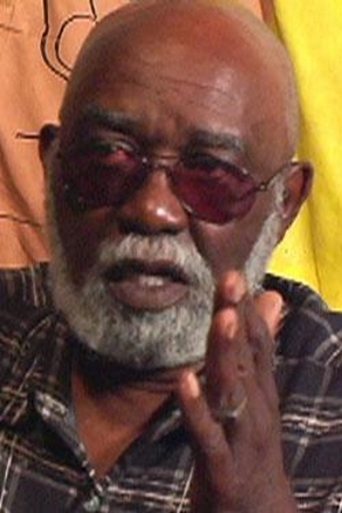
Ben Caldwell
Arts educator and independent filmmaker Ben Caldwell grew up assisting his grandfather, who projected movies at a small theater in New Mexico. His passion for the visual arts lead him to study film at UCLA and reside in the neighborhood of Leimert Park, epicenter for the African American art scene in Los Angeles. After teaching film and video at Howard University in Washington, D.C. from 1981-84, …
Known For
 Medea · 1973
Medea
★ 7.01973
MovieDocumentaryHistory
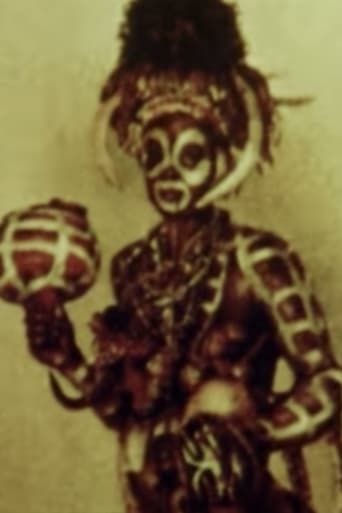
Ben Caldwell’s Medea, a collage piece made on an animation stand and edited entirely in the camera, combines live action and rapidly edited still images of Africans and African Americans which function like flashes of history that the unborn child will inherit. Caldwell invokes Amiri Baraka’s poem “Part of the Doctrine” in this experimental meditation on art history, Black imagery, identity and heritage.
 African Woman – USA · 1980
African Woman – USA
1980
MovieDrama
A woman from Nigeria seeks work in the United States while her daughter struggles with premonitions and homesickness.
 Gidget Meets Hondo · 1980
Gidget Meets Hondo
1980
Movie
Filmed in response to the LAPD’s shooting of Eulia Love in 1979, Gidget Meets Hondo opens with stills taken by Bernard Nicolas of a demonstration against Love’s killing. Nicolas’ Gidget is a self-absorbed young white woman who remains clueless to the violence erupting around her, ultimately to her own peril. The film asks whether such police brutality would be tolerated if the victim were a middle-class white woman.
 Festival of Mask · 1982
Festival of Mask
1982
MovieDocumentary
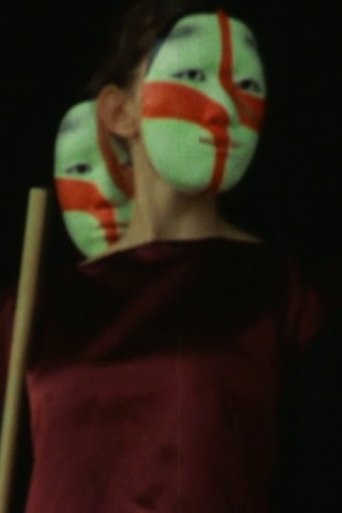
Filmmaker Don Amis was one of the very few Black student filmmakers at UCLA (including Carroll Parrott Blue and Denise Bean) working in a documentary mode. In this film, preparations, parade and performances from the Craft and Folk Art Museum’s annual Festival of Mask illustrate L.A.’s diverse racial and ethnic communities (African, Asian, Latin American) expressing themselves through a shared traditional form.
 Water Ritual #1: An Urban Rite of Purification · 1979
Water Ritual #1: An Urban Rite of Purification
★ 3.81979
Movie
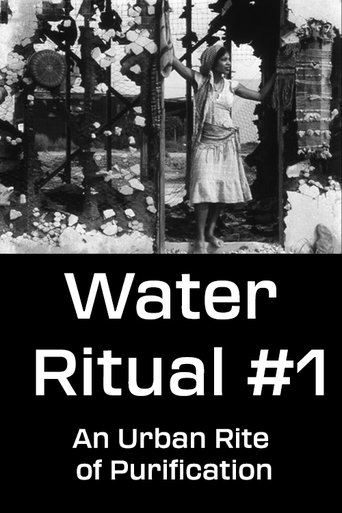
Made in collaboration with performer Yolanda Vidato, Water Ritual #1 examines Black women’s ongoing struggle for spiritual and psychological space through improvisational, symbolic acts. Shot in 16mm black-and-white, the film was made in an area of Watts that had been cleared to make way for the I-105 freeway, but ultimately abandoned. Though the film is set in contemporary L.A., at first sight, Milanda and her environs (burnt-out houses overgrown with weeds) might seem to be located in Africa or the Caribbean, or at some time in the past. Structured as an Africanist ritual for Barbara McCullough’s “participant-viewers,” the film addresses how conditions of poverty, exploitation and anger render the Los Angeles landscape not as the fabled promised land for Black migrants, but as both cause and emblem of Black desolation. (Jacqueline Stewart)
 I & I: An African Allegory · 1979
I & I: An African Allegory
★ 6.01979
Movie
Drawing from Ayi Kwei Armah’s novel, "Two Thousand Seasons," Caldwell meditates on reciprocity and on the concept of “I and I” which postulates no division between people, whereas the splitting of “you” from “I” is an invention of the devil designed to brew trouble in the world.