Michael Kloft

Directing

Michael Kloft

Born January 1, 1961 · Bonn, Germany (age 65)

No biography available.

Known For
Death in the Bunker: The True Story of Hitler's DownfallDeath in the Bunker: The True Story of Hitler's Downfall · 2004
Death in the Bunker: The True Story of Hitler's Downfall
8.02004
MovieDocumentaryHistory
Adolf Hitler spent the last ten days of his life in a bunker underneath the Chancellery of the Reich. Unwilling to face the consequences of defeat, the dictator ended his own life on April 30, 1945 in this fortified underground complex. Featuring exclusive interviews with the last survivor’s of Hitler’s inner circle and extensive archival footage, Death in the Bunker is an illuminating look at the Führer’s final decisions in preparation for his suicide.
Hitlers BergHitlers Berg · 2006
Hitlers Berg
2006
MovieDocumentary
Adolf Hitler spent over 1,000 days on the Obersalzberg, his mountain holiday refuge near Berchtesgaden. It was there he made his decisions about war and destruction. The producers, through special permits, explore the abandoned concrete tunnels in search of the relics of history of Hitler’s mountain and to tell almost forgotten tales of the people who lived there, high up in the shadow of power.
The Tramp and the DictatorThe Tramp and the Dictator · 2002
The Tramp and the Dictator
7.02002
MovieDocumentaryTV Movie
A look at the parallel lives of Charlie Chaplin and Adolf Hitler and how they crossed with the creation of the film “The Great Dictator,” released in 1940.
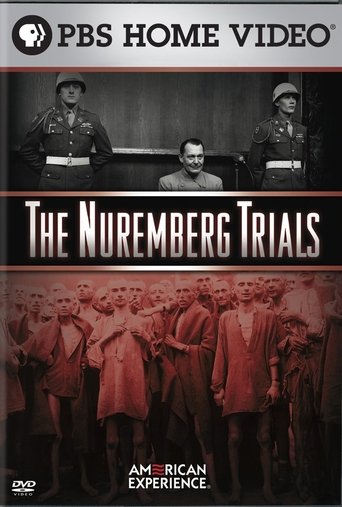
The Nuremberg TrialsThe Nuremberg Trials · 2006
The Nuremberg Trials
8.02006
MovieDocumentaryHistory
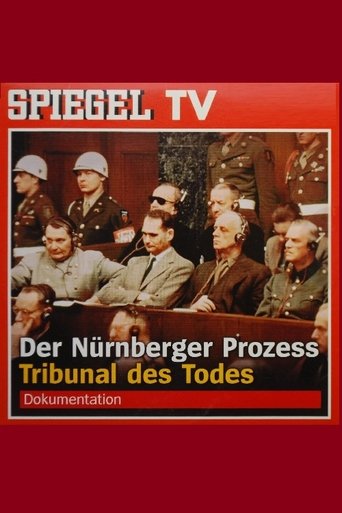
One journalist described it as a chance "to see justice catch up with evil." On November 20, 1945, the twenty-two surviving representatives of the Nazi elite stood before an international military tribunal at the Palace of Justice in Nuremberg, Germany; they were charged with the systematic murder of millions of people. The ensuing trial pitted U.S. chief prosecutor and Supreme Court judge Robert Jackson against Hermann Göring, the former head of the Nazi air force, whom Adolf Hitler had once named to be his successor. Jackson hoped that the trial would make a statement that crimes against humanity would never again go unpunished. Proving the guilt of the defendants, however, was more difficult than Jackson anticipated. This American Experience production draws upon rare archival material and eyewitness accounts to recreate the dramatic tribunal that defines trial procedure for state criminals to this day.
Television Under the SwastikaTelevision Under the Swastika · 1999
Television Under the Swastika
7.21999
MovieDocumentaryHistory
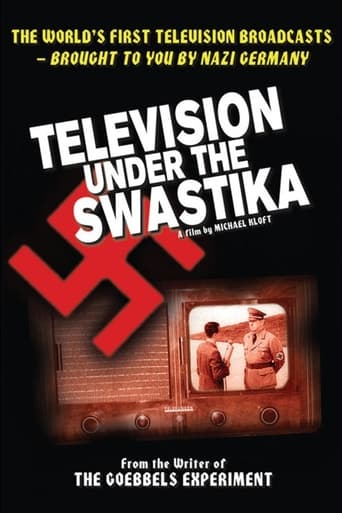
A history of Nazi television programming and technology, from 1935 to 1944.
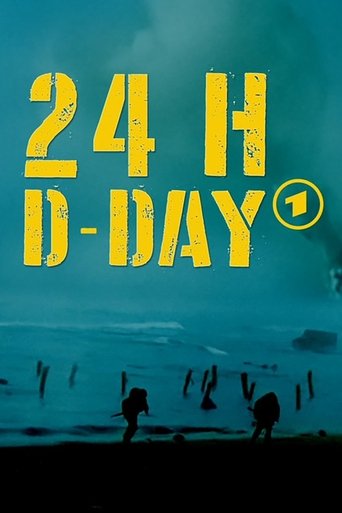
24 h D-Day24 h D-Day · 2024
24 h D-Day
2024
MovieDocumentaryHistory
D-Day marks the starting point for the liberation of Western Europe from the grip of the Nazi yoke. On June 6th, 1944, Allied soldiers attack German positions at no less than five sectors of the beach in Normandy. The assault takes place from the sea and is considered the largest amphibious landing operation in history. This event now sees its 80th anniversary. But so close, so authentic, this battle has never been shown before. American and British cameramen are at the scene in landing boats, under fire at the beaches, and during the rescue of wounded soldiers. Their original footage, shot in black-and-white, was extensively restored and colourized for this documentary. The historically unique footage appears in motion picture quality. The war gets colour. And thereby a different impact. We look directly in the faces of those, Americans, Canadians, Britons, and Germans, who are often not older than 20. In “24h D-Day”, they tell about their D-Day, the day they never can forget.
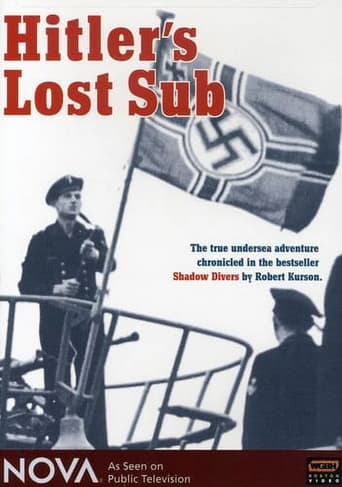
Hitler's Lost SubHitler's Lost Sub · 2000
Hitler's Lost Sub
2000
MovieDocumentary
In 1991, professional diver John Chatterton discovered a sunken German U-boat from World War II, lying undetected only 60 miles off the New Jersey shore, its unexploded torpedoes and the bodies of its crew still aboard. This two-hour special follows Chatterton and his dive partners in their dangerous quest to identify the missing U-boat, a pursuit that takes six years and costs three lives. The U-boat's history involves unusual coincidences and a startling twist of fate.
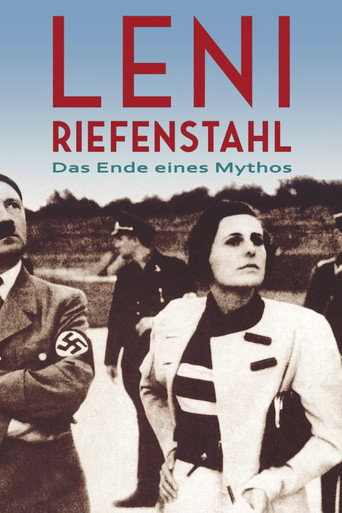
Leni Riefenstahl - The End of a MythLeni Riefenstahl - The End of a Myth · 2020
Leni Riefenstahl - The End of a Myth
7.32020
MovieDocumentary
Countless people around the world know the pictures from Leni Riefenstahl's films, even if they have not seen them in their entirety. The work of the German director has burned itself into the collective memory. Even decades after the end of the Nazi era, she showed no remorse and presented herself as an apolitical, naive follower of the Nazi criminal regime. Her artistic service for the cinema was always recognized. But book author Nina Gladitz shows after decades of research that Hitler's favorite filmmaker was not only a follower, but also a perpetrator during the Third Reich, who instrumentalized other filmmakers such as the brilliant cinematographer Willy Zielke in order to gain fame for herself.

Filmography

Sort
The Nuremberg TrialsThe Nuremberg Trials · 2006
The Nuremberg Trials
8.02006
MovieDocumentaryHistory
One journalist described it as a chance "to see justice catch up with evil." On November 20, 1945, the twenty-two surviving representatives of the Nazi elite stood before an international military tribunal at the Palace of Justice in Nuremberg, Germany; they were charged with the systematic murder of millions of people. The ensuing trial pitted U.S. chief prosecutor and Supreme Court judge Robert Jackson against Hermann Göring, the former head of the Nazi air force, whom Adolf Hitler had once named to be his successor. Jackson hoped that the trial would make a statement that crimes against humanity would never again go unpunished. Proving the guilt of the defendants, however, was more difficult than Jackson anticipated. This American Experience production draws upon rare archival material and eyewitness accounts to recreate the dramatic tribunal that defines trial procedure for state criminals to this day.

Producer

24 h D-Day24 h D-Day · 2024
24 h D-Day
2024
MovieDocumentaryHistory
D-Day marks the starting point for the liberation of Western Europe from the grip of the Nazi yoke. On June 6th, 1944, Allied soldiers attack German positions at no less than five sectors of the beach in Normandy. The assault takes place from the sea and is considered the largest amphibious landing operation in history. This event now sees its 80th anniversary. But so close, so authentic, this battle has never been shown before. American and British cameramen are at the scene in landing boats, under fire at the beaches, and during the rescue of wounded soldiers. Their original footage, shot in black-and-white, was extensively restored and colourized for this documentary. The historically unique footage appears in motion picture quality. The war gets colour. And thereby a different impact. We look directly in the faces of those, Americans, Canadians, Britons, and Germans, who are often not older than 20. In “24h D-Day”, they tell about their D-Day, the day they never can forget.
Director

Leni Riefenstahl - The End of a MythLeni Riefenstahl - The End of a Myth · 2020
Leni Riefenstahl - The End of a Myth
7.32020
MovieDocumentary
Countless people around the world know the pictures from Leni Riefenstahl's films, even if they have not seen them in their entirety. The work of the German director has burned itself into the collective memory. Even decades after the end of the Nazi era, she showed no remorse and presented herself as an apolitical, naive follower of the Nazi criminal regime. Her artistic service for the cinema was always recognized. But book author Nina Gladitz shows after decades of research that Hitler's favorite filmmaker was not only a follower, but also a perpetrator during the Third Reich, who instrumentalized other filmmakers such as the brilliant cinematographer Willy Zielke in order to gain fame for herself.

Writer

FirestormFirestorm · 2003
Firestorm
9.02003
MovieDocumentary
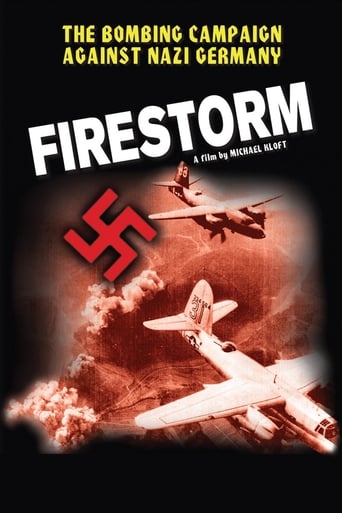
After suffering heavy losses of aircraft during attacks on German factories, Winston Churchill orders cities to be targeted in order to smash German morale and reduce the number of workers available for the Nazi war machine. Hundreds of thousands of German civilians are killed as incendiary bombs turn the center of cities like Hamburg and Dresden into tornados of fire. Sixty years later, a new debate is underway over the reasons for this lethal bombing campaign. Were these relentless aerial attacks on German cities, which killed so many and destroyed so much, a necessary tactic in the war against Hitler? Or was it an act of revenge by the British and Americans? Using rare film footage (much of it in color) and stirring interviews with historians, former bomber pilots and survivors of the destruction, this extraordinary film brings to light the devastating allied air campaign against Nazi Germany.

Director

Nazi HuntersNazi Hunters · 2022
Nazi Hunters
2.52022
SeriesDramaDocumentary
Shortly after the end of the Second World War: In 1945 and 1946, the men of the British "War Crimes Investigation Unit" drove through northern Germany on the hunt for Nazi criminals. One of them is Captain Anton Walter Freud, the grandson of Sigmund Freud, the founder of psychoanalysis. Anton Walter Freud fled to London with his family from the Nazis in 1938. Now an intelligence officer, he's back to track down killers on Allied wanted lists: hitmen in pinstripes, brutal SS henchmen, and ruthless doctors who conducted medical experiments even on children. The soldiers who witnessed the liberation of the Bergen-Belsen concentration camp months earlier are not squeamish about it. 24-year-old Freud is a free spirit known for his unorthodox methods. He knows how to make war criminals talk. So he comes across a crime that has hardly been known before, the murder of 20 children in Hamburg in the last days of the war.

Producer

When the World Was on Fire: The Chronicle of the Second World WarWhen the World Was on Fire: The Chronicle of the Second World War · 2008
When the World Was on Fire: The Chronicle of the Second World War
2008
SeriesDocumentary
The Second World War began on September 1, 1939, with the invasion of Poland and ended on May 8, 1945, as a global catastrophe with over 50 million deaths and devastated cities. Hitler’s expansion plans and Japan’s imperial ambitions led to bloody battles such as Stalingrad and Iwo Jima, the bombing of German cities, and the atomic bombings of Hiroshima and Nagasaki. SPIEGEL-TV author Michael Kloft recounts the war’s chronology and presents rare, partly unpublished footage from both the front lines and the home front, beyond propaganda. He is supported by experts Antony Beevor, Jörg Friedrich, and Rolf-Dieter Müller, who provide insights into military strategies and personal stories. Together, they create a comprehensive portrait of the Second World War.

Director

Desert WarDesert War
Desert War
SeriesDocumentary
Desert War is an Australian two-part documentary series portraying segments of the North African Campaign in World War II. The first episode covers the Siege of Tobruk from 10 April to September 1941, when the 9th Australian Division provided the backbone of the defence against attacks by Italian and German forces under Lieutenant General Erwin Rommel. The second episode covers the preparations for the major Allied counter-attack and victory under Bernard Montgomery in the Second Battle of El Alamein. It is demonstrated that extensive and accurate military intelligence, which greatly empowered Rommel for a long period, was gained through the copying of a burgled code book and regular indiscreet radio transmissions from the American embassy in Cairo. When these transmissions were terminated, advantage shifted overwhelmingly to the Allies.

Director