Costume & Make-Up

Carlos Prieto

Born March 11, 1947

Died October 11, 1995 · aged 48

No biography available.

Known For

XicaXica · 1976
Xica
★ 7.01976
MovieHistoryDrama
The romanced story of Xica da Silva, a slave that used her "feminine atributes" in order to get power.
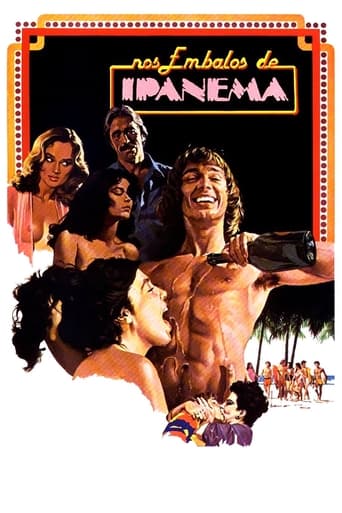
Nos Embalos de IpanemaNos Embalos de Ipanema · 1978
Nos Embalos de Ipanema
★ 4.81978
MovieComedyDrama
Toquinho is a young man living in Marechal Hermes, a poor neighborhood in Rio de Janeiro, together with his widow mother and a younger sister. Although he is poor, he is also ambitious, and wants to change his life. He spends all his time on the beach, at Arpoador, Ipanema, where he dreams to become a famous surfer. Besides, he usually finds Patricia there, a rich and liberated young woman, whom he likes a lot. To impress Patricia and satisfy some of her wishes, he lets himself be seduced by André, a gay guy who, in return for his sexual favors, promises him a trip to Hawaii for a surf championship.
The Dream's Not OverThe Dream's Not Over · 1982
The Dream's Not Over
★ 4.91982
MovieDrama
The routine of a group of brazilian teenagers living in Brasília, Brazil's capital. Their aspirations, dreams and illusions presented in a context of a country that was on the final years of a dictatorship back in the 1980s.
EngraçadinhaEngraçadinha · 1981
Engraçadinha
★ 5.41981
MovieComedy
After the funeral of her father Arnaldo, who committed suicide, Engraçadinha confesses to the priest the motives. On the engagement party of her cousin Sílvio with Letícia, Engraçadinha seduces him in the library, and later she ends her engagement with Zózimo and lies to Letícia, telling that she is pregnant. Letícia decides to tell Arnaldo what happened, and he says that the child can not be born. He exposes dirty secrets to Engraçadinha, and a tragedy is announced.

Luz Del FuegoLuz Del Fuego · 1982
Luz Del Fuego
★ 5.11982
MovieComedyDrama
Biography of a Brazilian dancer who lived on an island and practiced nudism when it was forbidden by law.
Tritones, más allá de ningún sitioTritones, más allá de ningún sitio · 2009
Tritones, más allá de ningún sitio
2009
MovieComedy

Fonte da SaudadeFonte da Saudade · 1987
Fonte da Saudade
★ 4.21987
MovieDrama
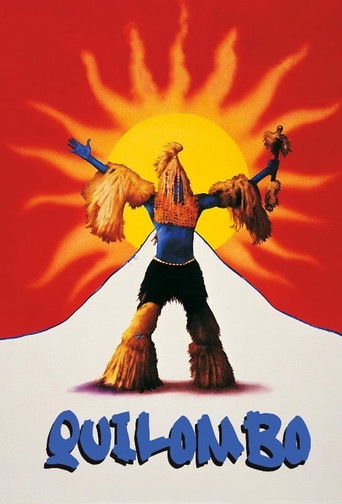
QuilomboQuilombo · 1984
Quilombo
★ 6.91984
MovieHistoryDrama
Quilombo dos Palmares was a real-life democratic society, created in Brazil in the 17th century. This incredibly elaborate (and surprisingly little-known) film traces the origins of Quilombo, which began as a community of freed slaves. The colony becomes a safe harbor for other outcasts of the world, including Indians and Jews. Ganga Zumba (Toni Tornado) becomes president of Quilombo, the first freely elected leader in the Western Hemisphere. Naturally, the ruling Portuguese want to subjugate Zumba and his followers, but the Quilombians are ready for their would-be oppressors. The end of this Brave New World is not pleasant, but the followers of Zumba and his ideals take to the hills, where they honor his memory to this day. Writer/director Carlos Diegues takes every available opportunity to compare the rise and fall of Quilombo with the state of affairs in modern-day Brazil.

Filmography

Sort
QuilomboQuilombo · 1984
Quilombo
★ 6.91984
MovieHistoryDrama
Quilombo dos Palmares was a real-life democratic society, created in Brazil in the 17th century. This incredibly elaborate (and surprisingly little-known) film traces the origins of Quilombo, which began as a community of freed slaves. The colony becomes a safe harbor for other outcasts of the world, including Indians and Jews. Ganga Zumba (Toni Tornado) becomes president of Quilombo, the first freely elected leader in the Western Hemisphere. Naturally, the ruling Portuguese want to subjugate Zumba and his followers, but the Quilombians are ready for their would-be oppressors. The end of this Brave New World is not pleasant, but the followers of Zumba and his ideals take to the hills, where they honor his memory to this day. Writer/director Carlos Diegues takes every available opportunity to compare the rise and fall of Quilombo with the state of affairs in modern-day Brazil.

Makeup Artist

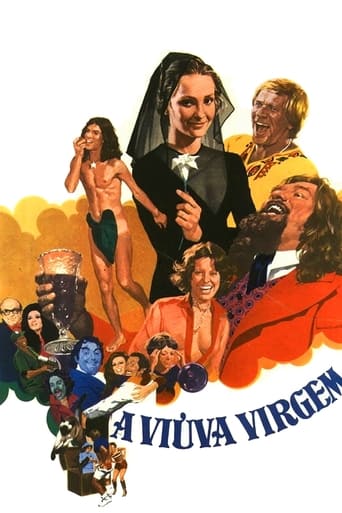
A Viúva VirgemA Viúva Virgem · 1972
A Viúva Virgem
★ 4.41972
MovieComedyHorror
In Minas Gerais, the powerful "colonel" Alexandrão gets married with the young and virgin Cristina and promotes a huge wedding party in his farm. He eats and drinks a lot along the day, but in his "first night" with the bride, he dies before consummating his marriage. The marital status of Cristina becomes very unusual, being a virgin widow. Her doctor advises her to travel to Rio de Janeiro to rest, and she moves with her aunt to an inherited apartment in Leme. Once in Rio de Janeiro, the rascal Constantino, who is aware of her wealth, courts her and borrows money, clothes and a Mercedes Benz from his friends, pretending he is businessman man. His friends release "stocks" in a parallel stock market, based and supported in the expectation of the possible marriage of Constantino with Cristina. However, the ghost of Coronel Alexandrão appears for her whenever she intends to have sex with Constantino.
The Earth Is FlatThe Earth Is Flat · 1977
The Earth Is Flat
★ 7.01977
MovieComedy
Jorden Er Flad or The Earth is Flat is based on the play Erasmus Montanus, from the classical era in Danish literature, by Ludvig Holberg. Director Henrik Stangerup had the play translated into Portuguese, and adapted it for filming in contemporary Brazil. In this comic movie, a group of villagers have scrimped and saved to send their fellow villager Erasmus Montanus (Fausto Wolff) away for an education. When the boy returns to his village, he is stuffed full of book-learning of a kind which is of absolutely no use to those of the village. The boy, rather than seeing his situation clearly, continues to spout learned platitudes, including the incredible observation, "the earth is round," supported by nothing other than his authority as an "educated man." Understandably, his posturing provokes derision.

Makeup Artist

The FallThe Fall · 1976
The Fall
★ 6.81976
MovieDrama
An accident at a construction site, resulting in one death, sets one worker off on a struggle for justice that exposes the mechanisms of exploitation and the class relations of a country that had undergone one decade of fast-paced ‘conservative modernisation’ at the hands of the military. As a sort of sequel to the classic The Guns (1964), following the fate of those characters as they move from enforcers of exploitation to exploited, it offers more than a snapshot of the period: the correspondent time lapses in fiction and reality capture the passage of a chunk of Brazilian history between the two films, and, therefore, also the transformations in cinematographic approaches to the social and political between the two moments. Equally daring in content and form, and in the originality of the adequacy of one to the other, it won the Silver Bear at Berlin.

Production Design