S
Acting
Shōzaburō Date
Born December 7, 1935 (age 90)
No biography available.
Known For
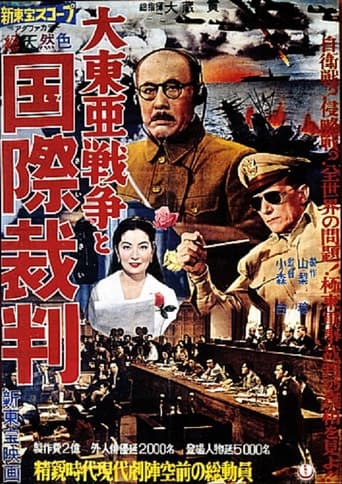 The Pacific War and the International Military Tribunal · 1959
The Pacific War and the International Military Tribunal
★ 8.01959
MovieWar
In 1941, overpopulated Japan faces an economic boycott and its armed forces push further to the south. And despite negotiations between Japan and the U. S. A. war is declared with the attack on Pearl Harbour. Victories follow for Japan on land and sea and her forces push forward to the borders of India. But gradually the tide turns in favour of the Allies and after the atom bombings of Hiroshima and Nagasaki, Japan is compelled to accept the Potsdam Declaration and by the order of the Emperor agrees to unconditional surrender. Under the supervision of the occupation forces the International Military Tribunal opens in Tokyo to try the Japanese war leaders. Established in the cause of justice, and to prevent future aggressive wars the trials drag on for two and a half years. And on December 23, 1948, General Tojo and six other war leaders mount the thirteen steps to the gallows at Tokyo's Sugamo prison.
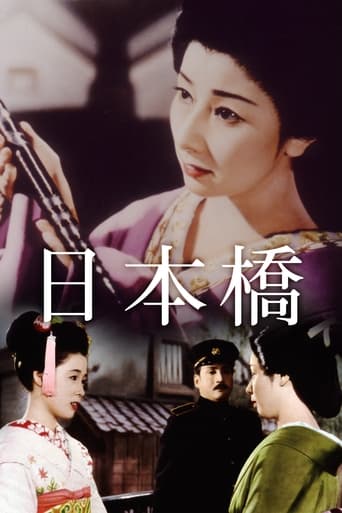 Bridge of Japan · 1956
Bridge of Japan
★ 7.81956
MovieRomanceDrama
Ichikawa's 1956 adaptation of Nihonbashi was the first to take the work of Kyoka Izumi— until then regarded as a writer of common tragic melodramas—and re-evaluate it as a tanbi-ha work of decadence, aestheticism, and intrigue. Ichikawa's film presents the tragic plot of the young geisha who is unable to enact her love for a man publicly in any way other than a histrionic story of torment, a heart-rending tale of lovers being crushed by fate. Instead, Ichikawa shows the contest of wills that transpires as two geisha, Oko and Kiyoha fight for the top spot in Nihonbashi, the pinnacle of the Tokyo geisha world. Nihonbashi is an elegant, if steely, exposition of manners. The young doctor, Shinzo Katsuragi, is the object of affection for both women, but appears to be more the choice reward for the plotting and thieving of these two early modern superwomen, than a lover they swoon over.
 The Woman Gambler's Trump Card · 1969
The Woman Gambler's Trump Card
1969
MovieCrimeDrama
15th in the 17 film Daiei "Woman Gambler" series
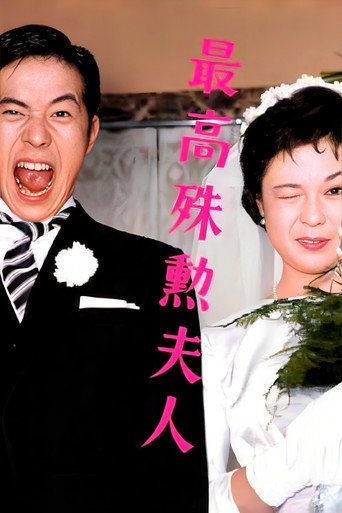 The Most Valuable Wife · 1959
The Most Valuable Wife
★ 8.01959
MovieComedyDrama
Kyoko is the third daughter of the Nonomiya family, a very ordinary family. Momoko, the eldest daughter, is married to Ichiro, the president of Mihara Shoji, and Riko, the second daughter, is married to Jiro, the managing director, and they plot to marry Kyoko to Saburo, the third son of the Mihara family. Kyoko is angry at the marriage talk that is being pushed forward without her permission, and declares that she "definitely won't get married," but before she knows it, she begins to become aware of the other person...
 Closing Time · 1962
Closing Time
★ 7.01962
MovieDrama
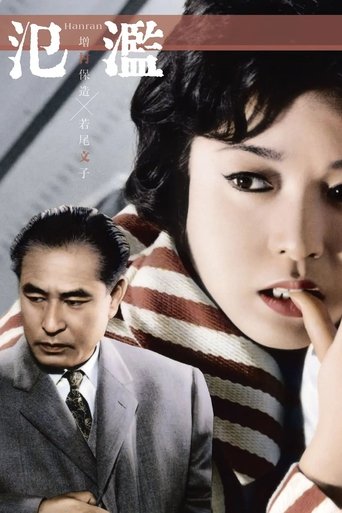 The Cast-Off · 1959
The Cast-Off
★ 8.01959
MovieDrama
The inventor of a ground-breaking glue, Sanada, becomes rich thanks to his discovery a high executive in his company. Because of this promotion, his world is changing completely : his wife behaves like never before, considering she's now rich and has the right to do whatever she wants, even having an affair. (Also occasionally known in English as “Overflow”)
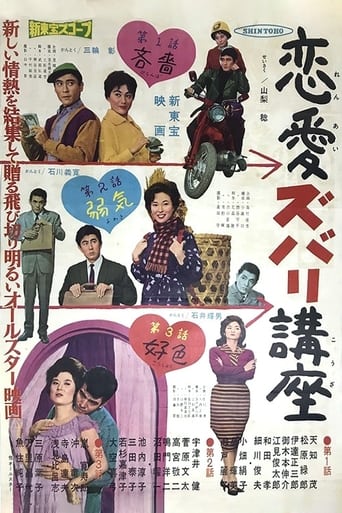 Straight Talk on Romance: The Definitive Guide · 1961
Straight Talk on Romance: The Definitive Guide
1961
MovieDramaRomance
A omnibus movie consisting of the three parts: "Kechinbo", "Yowak" and "Kōshoku".
 The Betrothed · 1957
The Betrothed
★ 8.01957
MovieDrama
Adaptation of the Yukio Mishima novel.
Filmography
Sort