Directing
John Baldessari
Born June 17, 1931 · National City, California, USA
Died January 2, 2020 · aged 88
John Anthony Baldessari (June 17, 1931 – January 2, 2020) was an American conceptual artist known for his work featuring found photography and appropriated images. He lived and worked in Santa Monica and Venice, California. Initially a painter, Baldessari began to incorporate texts and photography into his canvases in the mid-1960s. In 1970 he began working in printmaking, film, video, installati…
Known For
 Script · 1974
Script
1974
Movie
Script is the opposite of an improvisational exercise. Seven couples, all amateurs, are handed pages from random movie scripts and instructed to enact the absurd text through force of imagination, without direction or knowledge of what the others are doing.
 Cremation · 1970
Cremation
1970
Movie
John Baldessari is today known as one of the leading conceptual artists of his generation, using found or appropriated images and exploring the associative power of language. Like many experimental artists Baldessari began his career in the more traditional realm of painting. Rather than merely moving on from these early works, Baldessari decided in 1970 to have them destroyed. In the summer of 1970 all paintings in the artist’s possession dating from the thirteen years 1953–66 were incinerated at a local crematorium. This is the film of that cremation. [Overview Courtesy of Tate Modern]
 Folding Hat · 1971
Folding Hat
1971
Movie
'Folding Hat' is a deadpan conceptual exercise that represents a dashed attempt to rescue an object from the meaning assigned to it. Whistling an aria from The Barber of Seville, Baldessari bends and folds a simple hat into numerous configurations. However, for the duration of the exercise, which unfolds in real time, the object never loses its "hatness." In the end it is untransmutable—no escape can be made from its meaning. Although Baldessari tries to drive a wedge between the signifier and signified, the viewer never misrecognizes the hat.
 I Will Not Make Any More Boring Art · 1971
I Will Not Make Any More Boring Art
1971
Movie
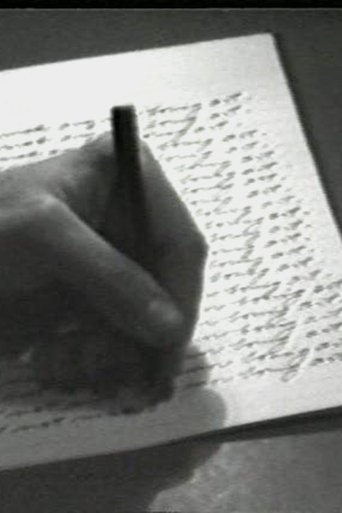
In 1971, Baldessari was commissioned by the Nova Scotia College of Art and Design in Canada to create an original, on-site work. Unable to make the journey himself, he suggested that the students voluntarily write the phrase "I will not make any more boring art" on the gallery walls. Inspired by the work's completion — the students covered the walls with the phrase — Baldessari committed his own version of the piece to videotape. Like an errant schoolboy, he dutifully writes, "I will not make any more boring art" over and over again in a notebook for the duration of the tape. In an ironic disjunction of form and content, Baldessari's methodical, repetitive exercise deliberately contradicts the point of the lesson — to refrain from creating "boring" art.
 Teaching a Plant the Alphabet · 1972
Teaching a Plant the Alphabet
1972
Movie
“[A] rather perverse exercise in futility,” this tape documents Baldessari’s response to Joseph Beuys’s influential performance, How to Explain Pictures to a Dead Hare. Baldessari’s approach here is characteristically subtle and ironic, involving ordinary objects and a seemingly banal task. The philosophical underpinnings of Baldessari’s exercise are structuralist theories about the opaque and artificial nature of language as a system of signs. Using a common houseplant to represent nature and instructional flashcards to represent the alphabet, Baldessari ironically illustrates this theorem. That language is the structuring element of the tape—the length of the tape was determined by the number of letters in the alphabet—enforces the connection between language and art, a recurrent theme in Baldessari’s work.
 The Meaning of Various News Photos to Ed Henderson · 1973
The Meaning of Various News Photos to Ed Henderson
1973
Movie
Baldessari introduces eight news photos to Ed Henderson — ranging in subject matter from geese at the zoo to an accidental electrocution — and asks him to identify them. Henderson's associative responses suggest the projection of unconscious desires and fears onto these arbitrary images, which are removed from their original contexts. The implied narratives that emerge from the seemingly random juxtapositions and sequences of photographs give rise to questions of manipulation, inference and meaning.
 I Am Making Art · 1971
I Am Making Art
1971
Movie
In an ironic reference to body art, process art and performance, Baldessari challenges definitions of the content and execution of art-making. Performing with deadpan precision, he moves his hands, arms and entire body in studied, minute motions, intoning the phrase "I am making art" with each gesture. Each articulation of the phrase is given a different emphasis and nuance, as if art were being created from moment to moment. This index of body movements is ironically offset by the repetitive monotony of the exercise.
 Six Colorful Inside Jobs · 1977
Six Colorful Inside Jobs
1977
Movie
Seen from a bird's eye view, a figure paints the walls and floor of a windowless room six times in six days, using each of the primary and secondary colors.
Filmography
Sort