L
Directing
Lorna Rasmussen
No biography available.
Known For
 Great Grand Mother · 1975
Great Grand Mother
★ 7.01975
MovieDocumentaryHistory
This short film is an ode to the women who settled the Prairies, from the days of early immigration to 1916 - when Manitobans became the first women in Canada to receive the provincial vote - and beyond. Recollections of women are complemented by a series of quotations drawn from letters, diaries, and newspapers of the day, which are spoken over re-enacted scenes and archival photographs.
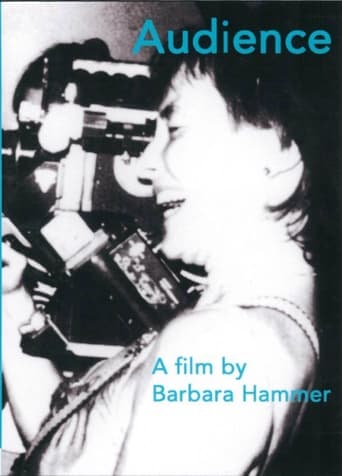 Audience · 1983
Audience
★ 3.51983
MovieDocumentary
Barbara Hammer’s Audience is a fascinating deep cut from the director’s prodigious filmography. Relatively raw in its design, this 16mm diary of audience reactions at retrospectives of Hammer’s work in San Francisco, London, Toronto, and Montreal in the early 1980s bears none of the distinctive visual flourishes and essayistic form one usually finds in her filmmaking. Today, Audience serves as an invaluable historical archive, providing quick but complex portraits of lesbian scenes in different cities and countries: the San Francisco women are bold and raucous, treating Hammer like a celebrity; the London crowd more reserved and tentative; the Canadians politely critical after initial hesitation. It also functions as a testament to the power of Hammer herself as a figure of lesbian culture, showing how fully she engages audiences to incite new forms of discourse about representation.
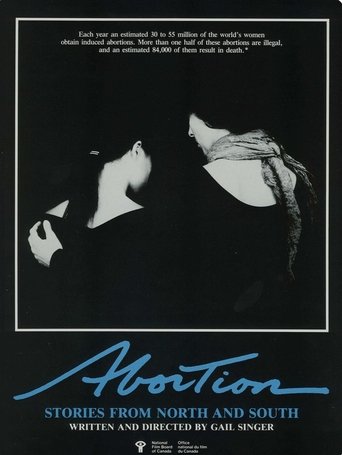 Abortion: Stories from North and South · 1984
Abortion: Stories from North and South
★ 7.01984
MovieDocumentary
Women have always sought ways to terminate unwanted pregnancies, despite powerful patriarchal structures and systems working against them. This film provides a historical overview of how church, state and the medical establishment have determined policies concerning abortion. From this cross-cultural survey--filmed in Ireland, Japan, Thailand, Peru, Colombia, and Canada--emerges one reality: only a small percentage of the world's women has access to safe, legal operations.
 To a Safer Place · 1987
To a Safer Place
★ 9.01987
MovieDocumentary
Sexually abused by her father from infancy to early adolescence, Shirley Turcotte is now in her thirties and has succeeded in building a rich and full life. To further reconcile her past and present, she is returning to the people and places of her childhood. Her mother, brothers and sister, all of whom were also caught up in the cycle of family violence, openly share their thoughts. Their frank disclosures will encourage survivors of incest to break through the silence and betrayal to recover and develop a sense of self-worth and dignity.
 Gurdeep Singh Bains · 1977
Gurdeep Singh Bains
1977
MovieDocumentary
Gurdeep is a thirteen-year-old Canadian Sikh whose family runs a dairy farm near Chilliwack, British Columbia. They have retained their language and religion. Attendance at the Sikh temple, playing soccer with his schoolmates, and working on the farm are all part of Gurdeep's well-integrated life, but sometimes he feels a little different from the other children because he wears a turban. This film is part of the Children of Canada series.
 Beautiful Lennard Island · 1977
Beautiful Lennard Island
★ 9.01977
MovieDocumentary
 Kevin Alec · 1977
Kevin Alec
1977
MovieDocumentary
In the mountainous country near Lillooet, British Columbia, eleven-year-old Kevin Alec of the Fountain Indian Reserve learns to make fishnets with his grandfather, and skin and tan hides with his aunt. He goes fishing with his grandmother and horseback riding with his brother. Life is full of wonderful things to do and to learn. Will Kevin eventually abandon his traditional way of life or will it be a source of continuing enrichment? This film is part of the Children of Canada series.
Filmography
Sort