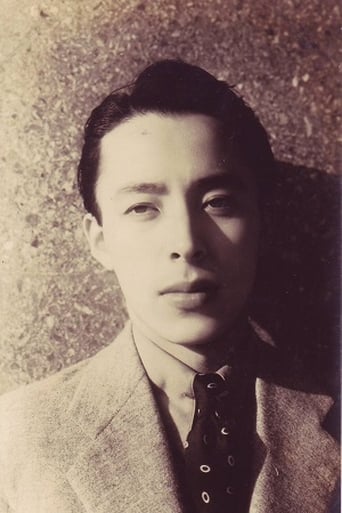
Kōkichi Takada

Acting

Kōkichi Takada

Born November 7, 1911 · Hyōgo Prefecture, Japan

Died May 19, 1998 · aged 86

No biography available.

Known For
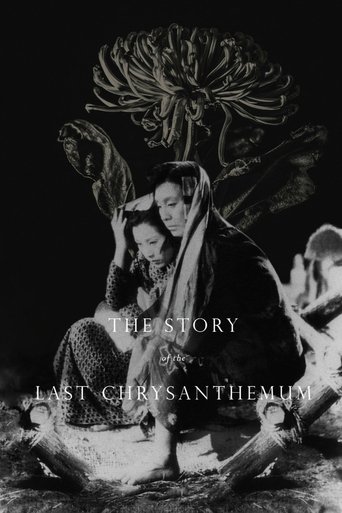
The Story of the Last ChrysanthemumThe Story of the Last Chrysanthemum · 1939
The Story of the Last Chrysanthemum
★ 7.81939
MovieRomanceDrama
In late 19th-century Tokyo, Kikunosuke Onoue, the adopted son of a legendary actor, himself an actor specializing in female roles, discovers that the praise he receives is only due to his status as his father's heir. Devastated, he turns to Otoku, a servant of his family, for comfort, and they fall in love. Kikunosuke becomes determined to leave home and develop as an actor on his own merits, and Otoku faithfully joins him.
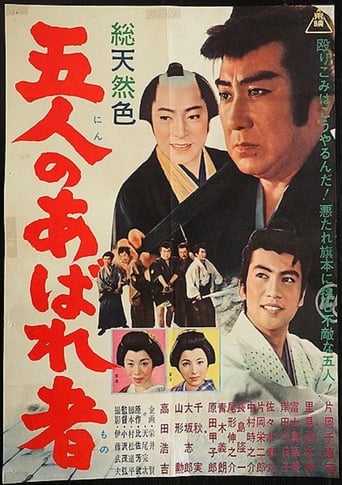
Five RoninsFive Ronins · 1963
Five Ronins
1963
Movie
The story of five easygoing Yakuza who come together to save the live of a young innocent girl, Oichi, from an evil vassal.
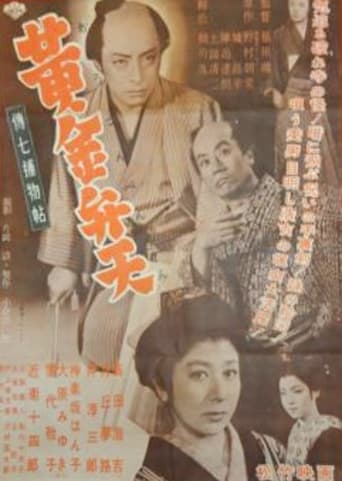
Denshichi Torimonocho: The Case of the Golden GoddessDenshichi Torimonocho: The Case of the Golden Goddess · 1954
Denshichi Torimonocho: The Case of the Golden Goddess
1954
MovieMystery
A samurai detective film.
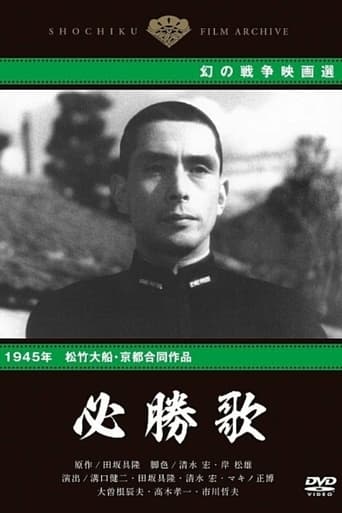
Victory SongVictory Song · 1945
Victory Song
★ 5.71945
MovieDrama
An anthology of thirteen patriotic stories about Japanese citizens contributing to the war effort.
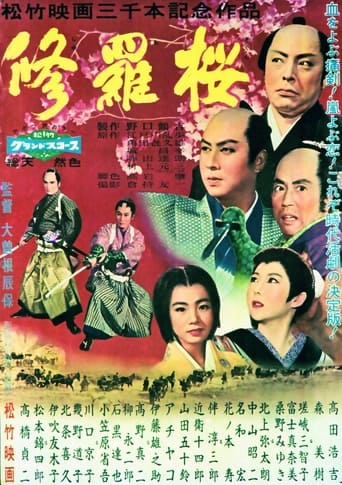
The Hidden TreasureThe Hidden Treasure · 1959
The Hidden Treasure
★ 7.01959
MovieDrama
Shochiku's commemorative 3000th film production; a suspenseful period drama.
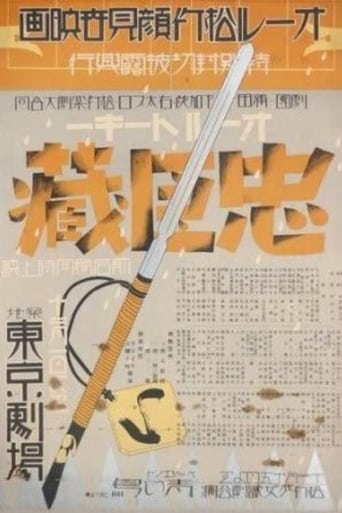
The Loyal 47 RoninThe Loyal 47 Ronin · 1932
The Loyal 47 Ronin
1932
MovieDrama
This 1932 adaptation is the earliest sound version of the ever-popular and much-filmed Chushingura story of the loyal 47 retainers who avenged their feudal lord after he was obliged to commit hara-kiri due to the machinations of a villainous courtier. As the first sound version of the classic narrative, the film was something of an event, and employed a stellar cast, who give a roster of memorable performances. Director Teinosuke Kinugasa was primarily a specialist in jidai-geki (period films), such as the internationally celebrated Gate of Hell (Jigokumon, 1953), and although he is now most famous as the maker of the avant-garde silent films A Page of Madness (Kurutta ichipeji, 1926) and Crossroads (Jujiro, 1928), Chushingura is in fact more typical of his output than those experimental works. The film ranked third in that year’s Kinema Junpo critics’ poll, and Joseph Anderson and Donald Richie noted that 'not only the sound but the quick cutting was admired by many critics.
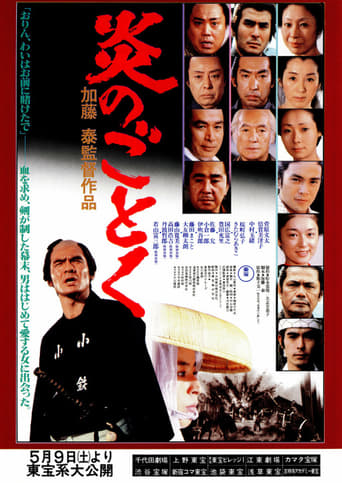
Flames of BloodFlames of Blood · 1981
Flames of Blood
★ 8.01981
MovieActionDrama
​The story follows the chance meeting between Senkichi, a wandering gambler on the run, and Orin, a blind musician who offers him kindness and shelter. As their lives become intertwined, they attempt to find a sense of peace and domesticity while caught in the crossfire of the violent Bakumatsu revolution.
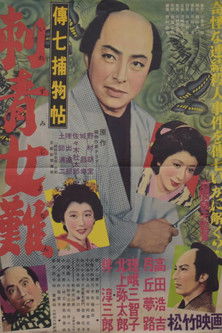
Denshichi Torimonocho: Tattoo Woman TroubleDenshichi Torimonocho: Tattoo Woman Trouble · 1954
Denshichi Torimonocho: Tattoo Woman Trouble
1954
Movie
During the era of Tokugawa Ieyasu, one night a carver named Fujijiro was murdered. Immediately launching an investigation, Denhichi, accompanied by Otoshi and Take, toured the entertainment houses of Ryogoku. There, they discovered a connection between an acrobat and the incident. On their way home, Otoshi unexpectedly encountered an old friend, Inosuke, nervously buying a dagger. Inosuke, a clerk at the Kashimaya store, was in love with Oko, a secret lover of Bunzaemon. Amidst this, Seihei, the head clerk, was murdered by someone, and a dagger belonging to Inosuke was found at the scene, leading Gohei to suspect Inosuke as the culprit. However, Otoshi was hiding Inosuke. Driven by Otoshi's plea and a professional instinct that Inosuke wasn't the perpetrator, Denhichi desperately searched for the real culprit.
Filmography

Sort
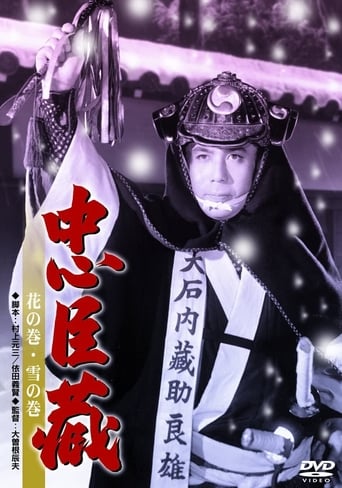
The Loyal 47 RoninThe Loyal 47 Ronin · 1932
The Loyal 47 Ronin
1932
MovieDrama
This 1932 adaptation is the earliest sound version of the ever-popular and much-filmed Chushingura story of the loyal 47 retainers who avenged their feudal lord after he was obliged to commit hara-kiri due to the machinations of a villainous courtier. As the first sound version of the classic narrative, the film was something of an event, and employed a stellar cast, who give a roster of memorable performances. Director Teinosuke Kinugasa was primarily a specialist in jidai-geki (period films), such as the internationally celebrated Gate of Hell (Jigokumon, 1953), and although he is now most famous as the maker of the avant-garde silent films A Page of Madness (Kurutta ichipeji, 1926) and Crossroads (Jujiro, 1928), Chushingura is in fact more typical of his output than those experimental works. The film ranked third in that year’s Kinema Junpo critics’ poll, and Joseph Anderson and Donald Richie noted that 'not only the sound but the quick cutting was admired by many critics.

Sezaemon Oishi

Denshichi Torimonocho: Tattoo Woman TroubleDenshichi Torimonocho: Tattoo Woman Trouble · 1954
Denshichi Torimonocho: Tattoo Woman Trouble
1954
Movie
During the era of Tokugawa Ieyasu, one night a carver named Fujijiro was murdered. Immediately launching an investigation, Denhichi, accompanied by Otoshi and Take, toured the entertainment houses of Ryogoku. There, they discovered a connection between an acrobat and the incident. On their way home, Otoshi unexpectedly encountered an old friend, Inosuke, nervously buying a dagger. Inosuke, a clerk at the Kashimaya store, was in love with Oko, a secret lover of Bunzaemon. Amidst this, Seihei, the head clerk, was murdered by someone, and a dagger belonging to Inosuke was found at the scene, leading Gohei to suspect Inosuke as the culprit. However, Otoshi was hiding Inosuke. Driven by Otoshi's plea and a professional instinct that Inosuke wasn't the perpetrator, Denhichi desperately searched for the real culprit.
黒門町の伝七

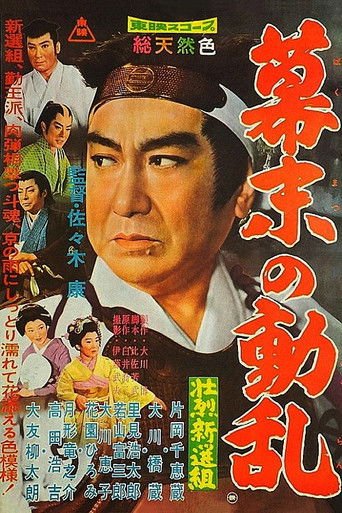
The Shogun’s Guard: Valor in TurbulenceThe Shogun’s Guard: Valor in Turbulence · 1960
The Shogun’s Guard: Valor in Turbulence
★ 5.71960
MovieActionDrama
The stormy tale of the Shinsengumi is told from its birth by master filmmaker Sasaki Yasushi, with an all-star cast based on the original story by Shirai Kyoji. The battles between the royalists and Shogunate supporters come to a fever pitch during the Gion Festival as the exclusionists plot to burn Kyoto and kidnap the Emperor. From its earliest beginnings as a group of ronin brought from Edo to protect the Shogun when he is in Kyoto to see His Imperial Highness, the group had to face difficulties both from within and without. Commander Serizawa Kamo's corrupt practices threaten the group's very existence, as they try to recover from the bad reputation he left them with. Their redemption comes when they learn of Katsura Kogoro plans to gather men at Kyoto's Ikedaya Inn for his attack on the city. Along with Hijikata Toshizo and Okita Soji, Kondo leads the group in an attempt to save Japan from the rebels.

Katsura Kogoro

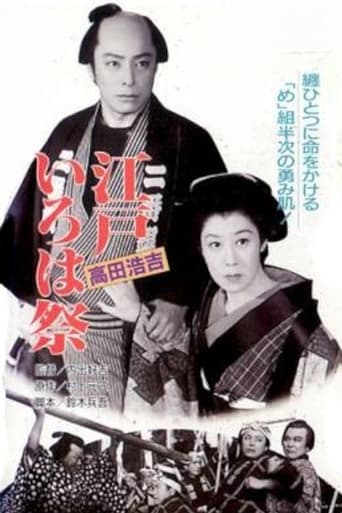
江戸いろは祭江戸いろは祭 · 1953
江戸いろは祭
★ 10.01953
Movie
Hatamoto Akabane Tanaka once ruined his life with alcohol in his youth, leaving behind his wife and son, Hanji, to embark on a journey. He killed a man on the Shikoku route, but later returned to Edo, reforming his ways. Concerned about Hanji, he tracked down the wet nurse, O-Kane, to whom he had entrusted the boy. To his surprise, Hanji had become a respectable young man, now a subordinate of the gang leader, Tatsugorou. During a New Year visit to the Shiba Shinmei shrine, a minor altercation led Hanji to meet the geisha Koina, the wicked servant Miya-toku, and the sumo wrestler Naruto. Hanji and Naruto hit it off and formed a bond like brothers. However, Naruto's father was the very man Tanaka had killed. Naruto had been seeking vengeance against his father's killer. During a chance encounter at a restaurant, Naruto witnessed the reunion of Hanji and Tanaka, realizing Tanaka was his father's killer.

め組の半次

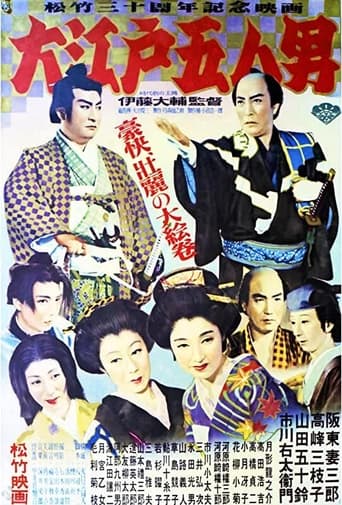
Five Men of EdoFive Men of Edo · 1951
Five Men of Edo
★ 6.01951
MovieActionDrama
During the 17th Century roving bands of hatamoto were causing trouble in the new capital city of Edo and constantly fought with the townspeople at every turn. The leader of these ruthless samruai was Mizuno Jirozaemon, who despite his high rank was in deep financial distress, thus leading to a tragedy that shook the very streets of the city.Opposing him was Banzui-in Chobei, the ‘Protector of the Weak’ who was willing to put his life on the line to save the 808 districts of Edo from the 80,000 hatamoto whose violent behavior threatened to destroy the fabric of society. Starring Bando Tsumasaburo, the first great star of the silver screen along with mega-star Ichikawa Utaemon, this is a story not to be missed. Torn from the pages of history, this true story has been told many times, but never as powerfully as this!

Takamisawa

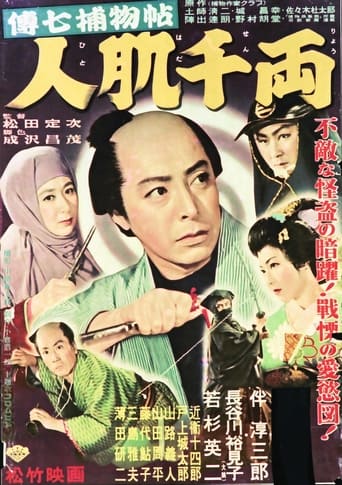
Denshichi Torimonocho: Senryo Human SkinDenshichi Torimonocho: Senryo Human Skin · 1954
Denshichi Torimonocho: Senryo Human Skin
1954
Movie
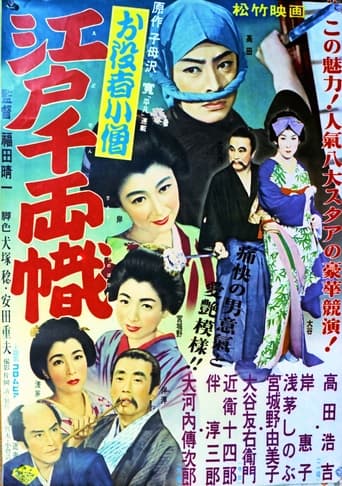
In the era of the twelfth Shogun, Tokugawa Ieyoshi, a notorious bandit known as "Shippu" (or "Swift Wind") emerged in Edo. Shippu would send a warning message called the "Thief's Summons" before striking, yet despite the magistrate's desperate search efforts, they couldn't find any leads. One day, a summons was shot into the residence of Ono Ryusai, who was leading a peaceful retirement life with his two concubines, O-Ran and O-Koshi. With the summons, various individuals including O-Ran's brother Itami Shigoshiro, the master of the Muso-ryu dojo, vigilante Mankichiro, rope expert Gohei, and Den'ichi from Kuromon Town were assigned to monitor the situation. However, while they were distracted by a neighboring fire, a chest containing a thousand ryo was stolen, and O-Koshi was killed.

黒門町の伝七