S
Acting
Shiro Mizutani
No biography available.
Known For
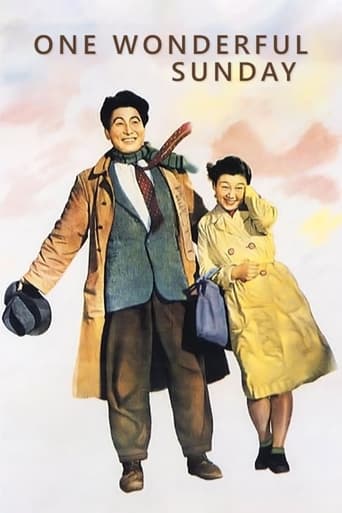 One Wonderful Sunday · 1947
One Wonderful Sunday
★ 7.21947
MovieDramaRomance
Two broke sweethearts wander war-scarred Tokyo on a single Sunday, stretching 35 yen as they chase housing, small pleasures, and a little hope.
 Stray Dog · 1949
Stray Dog
★ 7.61949
MovieCrimeDrama
A bad day gets worse for young detective Murakami when a pickpocket steals his gun on a hot, crowded bus. Desperate to right the wrong, he goes undercover, scavenging Tokyo’s sweltering streets for the stray dog whose desperation has led him to a life of crime. With each step, cop and criminal’s lives become more intertwined and the investigation becomes an examination of Murakami’s own dark side.
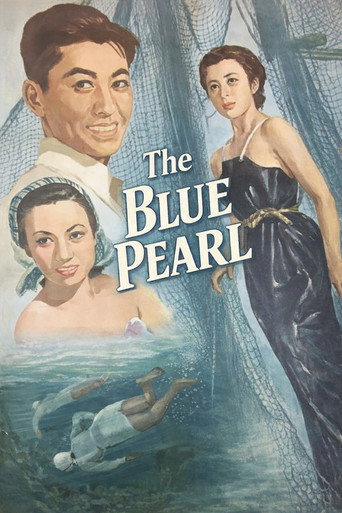 The Blue Pearl · 1951
The Blue Pearl
★ 7.51951
MovieDramaRomance
The Blue Pearl depicts the interplay between a young man from Tokyo and two ama (pearl divers; literally “women of the sea”) in a superstitious coastal town. Though raised within the same tradition-bound crucible, the two women – Noe and Riu – are portrayed as diametric opposites; the former meek but affectionate, the latter strong-willed but jaded by a tryst with metropolitan life.
 Young Teacher · 1942
Young Teacher
1942
MovieDrama
A novice city-based teacher's first assignment is to a fishing village's grade school. The young teacher's first week with her new students is enjoyable, but she gradually notices that many of the students are skipping school. Visiting her students after class, she realizes that many of them are charged with work and tasks like making money, toiling on the farm, doing housework or tending to their younger siblings. Many of them live in unhygienic homes due to poverty or overwork. She not only reports and explains the situation to the school's principal, but also attempts to improve the conditions by making textbooks, teaching cleanliness, and making her classes relevant.
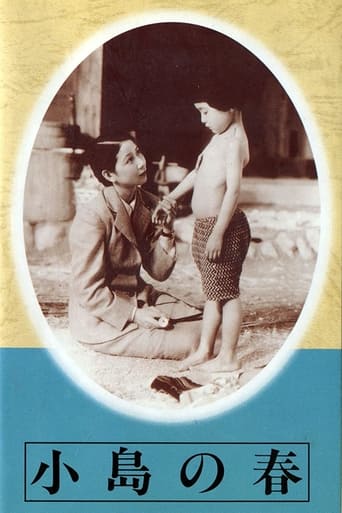 Spring on Leper's Island · 1940
Spring on Leper's Island
★ 7.21940
MovieHistoryDrama
A female doctor's story of her life in an isolated leper colony.
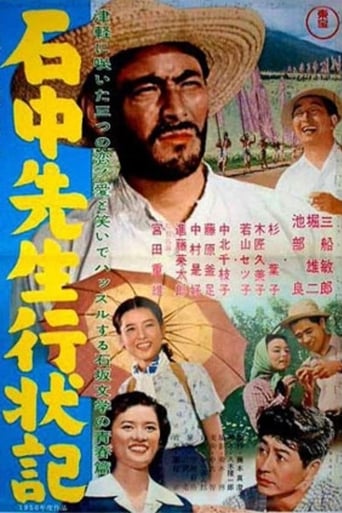 Conduct Report on Professor Ishinaka · 1950
Conduct Report on Professor Ishinaka
★ 6.91950
MovieComedyRomance
Three humorous love stories set in rural Japan.
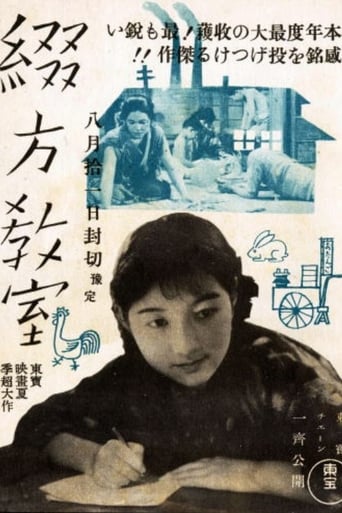 Composition Class · 1938
Composition Class
★ 6.81938
MovieDrama
Masako, the daughter of an impoverished itinerant tinsmith, wins a grammar school composition contest with an essay about her neighborhood. The much publicized essay ends up causing the family problems and their chronic money troubles threaten Masako's further education.
 Chocolate and Soldiers · 1938
Chocolate and Soldiers
★ 8.51938
MovieWarDrama
Chocolate and Soldiers (チョコレートと兵隊, Chokorēto to Heitai) is a 1938 Japanese war film directed by Sato Takeshi and one of the most effective Japanese propaganda films of the late 1930s. The American director Frank Capra said of Chocolate and Soldiers "We can't beat this kind of thing. We make a film like that maybe once in a decade. We haven't got the actors. It shows the common Japanese soldier as an individual and as a family man, presenting even enemy Chinese soldiers as brave individuals. It is considered to be a "humanist" film, paying close attention to the human feelings of both the soldier and his family. Cinema theorist Kate Taylor-Jones suggests that Chocolate and Soldiers provided "a vision of the noble, obedient and honourable Japanese army fighting to defend the emperor and Japan.
Filmography
Sort