Directing
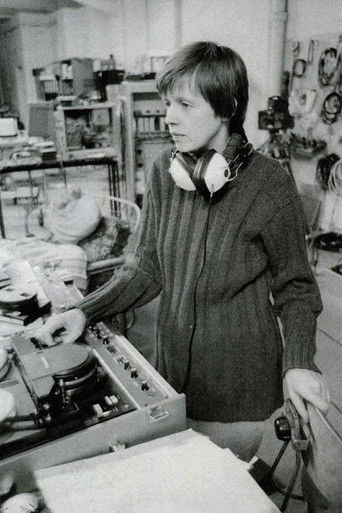
Steina Vasulka
Steina Vasulka is an early pioneer of video art, producing work since the early 1960s.
Known For
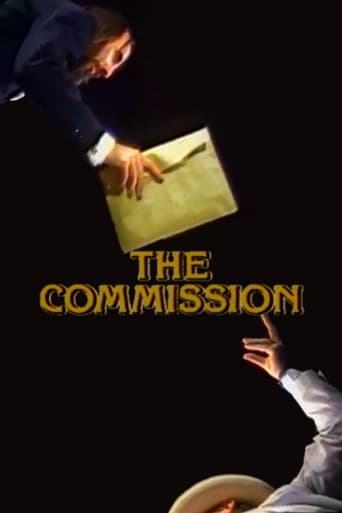 The Commission · 1983
The Commission
1983
Movie
This work is Woody's first entry into the narrative sphere, whereby the "story" is continually undermined with the aid of various anti-narrative strategies: In each of the eleven segments of this "electronic opera", different effects are used. Fascinated with the remarkable personality of infamous violinist Niccola Paganini and his complicated relationship to Hector Berlioz (played by artists Ernie Gusella and Robert Ashley, respectively), the author meditates over the intricacies of artistic geniality as connected not only with fame but also with the necessity of painful survival under the pressures of the art market.
 Minnesota Landscapes · 1980
Minnesota Landscapes
1980
Movie
Produced by the National Endowment for the Arts, along with the Jerome Foundation, this showcase is hour-long collection of shorts from six prominent video artists, all commissioned to the state of Minnesota.
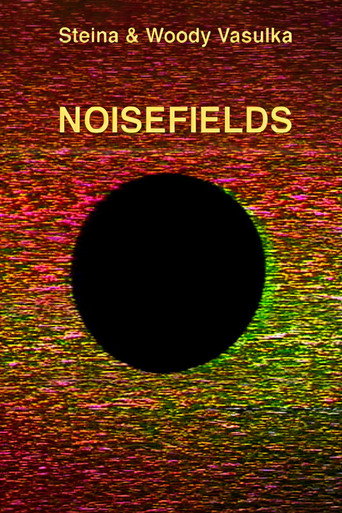 Noisefields · 1974
Noisefields
1974
Movie
This is an attempt to process abstract images without the use of camera. The central circle divides the creen into two parts that continually vibrate hypnotically and change colors to the accompanying rumbling of modulated sound.
 Violin Power · 1978
Violin Power
1978
MovieDocumentary
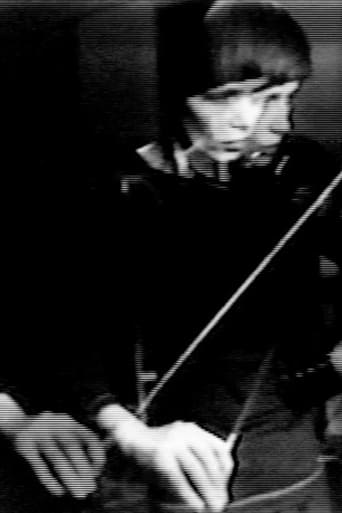
Steina trained as a classical violinist, pushing her experience as a professional musician into the electronic realm with this seminal work. Originally performed in the late 1970s as a live recital with monitors, "Violin Power" began with the idea of generating a video image solely through the sound and movement of the bow. This signal switch, from audio to visual, grew in possibilities and variances as technology continued to expand in the ensuing decades. The most recent iteration of this performance involved Steina working with a MIDI violin and laptop.
 Lilith · 1987
Lilith
1987
Movie
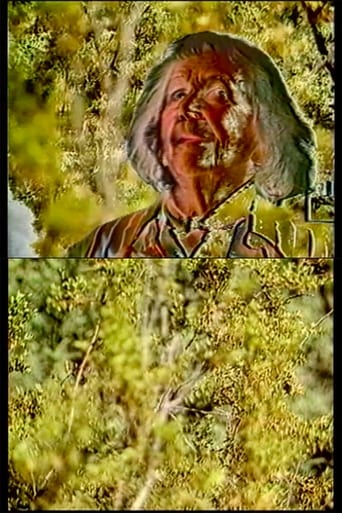
Against a field of swaying and halting yellow vegetation, another processed field: the image of the eponymous subject (performed by painter Doris Cross) riles and emits unintelligibly to the viewer. Conjuring the mystical biblical character Lilith, Steina's video layers both sound and image to produce an ever-shifting, frustrated presence.
 Matrix II · 1974
Matrix II
1974
MovieDocumentary
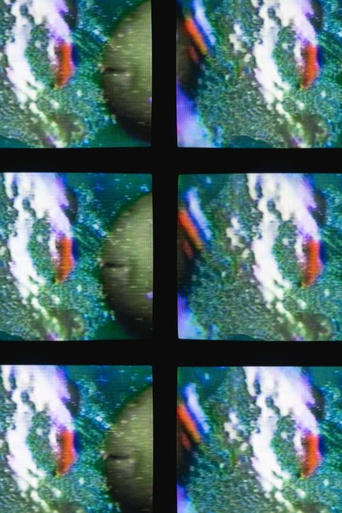
Matrix II explores the properties of images and sounds in the medium of video. Geometric shapes travel across a ‘matrix’ (grid) of cathode ray tube (CRT) screens. CRT televisions, which use manipulated electron beams to display images on a fluorescent screen, remained in widespread use until the early 2000s. The Vasulkas sought to test the limits of each monitor, creating a fluid motion resembling the behaviour of electronic signals. Matrix II is an early example of video art, which first developed in the late 1960s and 1970s as artists came into contact with new consumer technologies for capturing moving images.
 Somersault · 1982
Somersault
1982
Movie
Using one half of a convex mirror mounted within a glass cylinder, Steina trains the video camera eye dead center as she records the space immediately around her. “Steina playfully does gymnastics with her camera and its mirrored lens attachment as a means of producing a 360-degree image of a torso wrapped around the camera lens . . . an exercise in an immersive space” for both maker and viewer. —Yvonne Spielmann
 Video: The New Wave · 1975
Video: The New Wave
1975
MovieDocumentary
The New Wave is the seminal compendium of independent video work in the early 1970s. Written and narrated by Brian O'Doherty, this overview of the emerging video field includes examples of guerrilla television and "street" documentaries, early explorations with image-processing and synthesis, and performance video. This historical anthology includes excerpts of tapes by the following video pioneers: Stephen Beck and Warner Jepson, Peter Campus, Douglas Davis, Ed Emshwiller, Bill Etra, Frank Gillette, Don Hallock, Joan Jonas, Richard Serra, Paul Kos, Nam June Paik, Otto Piene, Willard Rosenquist, Dan Sandin, James Seawright, Steina Vasulka, TVTV, Stan Vanderbeek and William Wegman.
Filmography
Sort