Directing
Horst E. Brandt
Born January 17, 1923 · Berlin, Germany
Died August 22, 2009 · aged 86
Horst E. Brandt was a German film and television director who became known in the GDR for films on political themes.
Known For
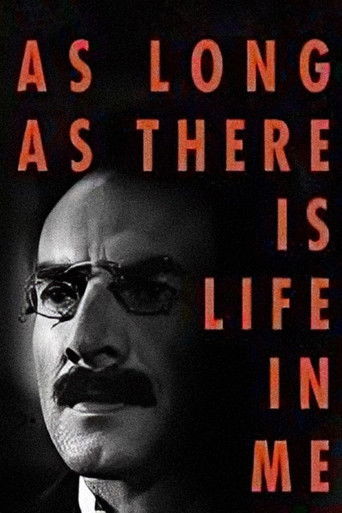 As Long as There’s Life in Me · 1965
As Long as There’s Life in Me
★ 10.01965
MovieDrama
This is part one of a two-part biopic about Karl Liebknecht. In 1914, Germany is arming itself for war. Karl Liebknecht, left-wing revolutionary Social Democrat, workers’ leader and a virulent antimilitarist, is one among 110 SPD members of Parliament who vote against approving war loans. From then on, he is considered un-German and a traitor to the fatherland, and his own party’s leadership turns against him. Despite threats, Liebknecht speaks up against the war and writes the manifesto “The Main Enemy Is at Home.” Even when he is arrested and charged with treason, he does not surrender.
 Ernst Thälmann – Leader of the Working Class · 1955
Ernst Thälmann – Leader of the Working Class
★ 7.11955
MovieHistoryDrama
This film is the second of a two-part historical and biographical portrait of the communist politician and anti-fascist Ernst Thälmann. Autumn, 1918: Somewhere on Germany’s western front, Ernst Thälmann, age twenty-four, is calling on his fellow soldiers to put down their guns and join him in the communist struggle at home. When Hamburg’s Police Commissioner blocks a much-needed food shipment to the workers of Petrograd, Ernst battles to see it allowed through. Until his murder on August 18, 1944, Ernst remained true to his political convictions in the face of many setbacks.
 Filmsommerliches · 1966
Filmsommerliches
1966
MovieDocumentary
A feuilletonistic conversation with the movie audience about the question: How do you feel about going to the movies? In general - and especially in summer? What do people expect from movies these days and what criticism do they have on their minds? The interviewees are vacationers of all ages and tastes.
The occasion and background for this not entirely serious survey is the 1965 Summer Film Festival, which is captured in a cheerful reportage style. Interviews with actors on the festive opening evening and climax of the film confirm that there is only a relative cinema fatigue. It depends on the quality of the film on offer.
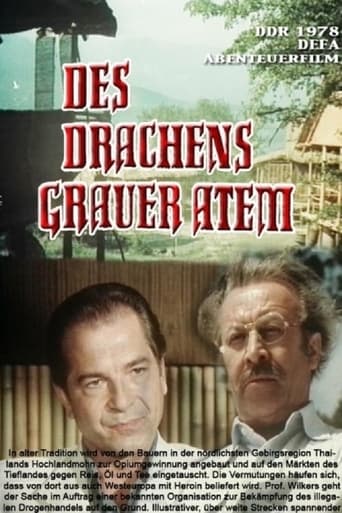 Des Drachens grauer Atem · 1979
Des Drachens grauer Atem
★ 8.01979
MovieCrimeDrama
Professor Wilkers saw the trip to Thailand as a welcome change. But already in Bangkok, the starting point of his research into the origin of the drugs whose abuse he is trying to combat as a member of an international commission, he encounters extreme contradictions. The Swiss doctor is tempted to solve them, as the claims of the rich silk manufacturer Tracy Blake sound truthful and bitter, yet extremely strange. Leo Wilkers decides to embark on a life-threatening venture: He moves into the mountains near the border with Burma. Up there, in the village of Muong Nan, whose headman is at the same time in prison in Bangkok worrying about who in the capital might be interested in his arrest, Wilkers learns about the necessity of poppy cultivation in these areas.
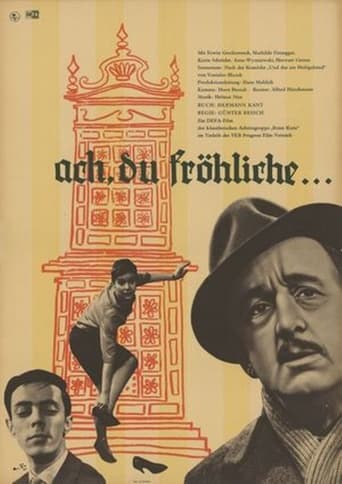 Ach, du fröhliche · 1962
Ach, du fröhliche
★ 5.51962
MovieComedyDrama
It was supposed to be a cozy Christmas evening with the family. Labor Director Walter Lörke was particularly looking forward to it. But then his daughter Anne surprised him with her future son-in-law Thomas Ostermann. And that's not all: Lörke is to become a grandfather. This doesn't suit him at all, especially as the young man clearly shows his critical attitude towards the state whose ideals Lörke has fought for all his life. An argument ensues - on Christmas Eve. Lörke leaves the apartment in a rage. But he is driven by unrest: He wants to know what kind of person his future son-in-law is and why he has such a negative attitude towards the state. It turns out that Thomas has had bitter experiences with the opportunistic attitudes of many adults and that, although he was the best student in his class, he was not admitted to university because of his critical opinions.
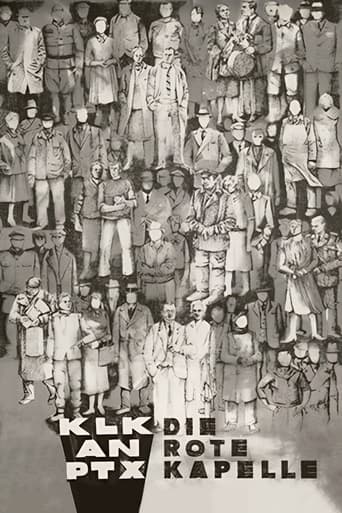 KLK Calling PTZ – The Red Orchestra · 1971
KLK Calling PTZ – The Red Orchestra
★ 9.81971
MovieDramaHistory
East German film about the history of Red Orchestra, a real life German pro-Soviet spy ring created after the rise of Hitler that turned into a resistance movement led by a leftist Nazi officer, Harro Schulze-Boysen, and Arvid Harnack.
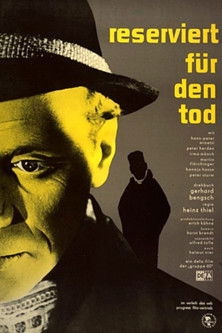 Reserved for the Death · 1963
Reserved for the Death
★ 10.01963
MovieDramaThriller
Former East German engineer Erich Becker had been lured to West Germany by promises of a high reward. Now residing in Stockholm, he is recalled to serve as a spy in the East. He is to convince Dr. Jadenburg to flee from the GDR with the help of his daughter Hanna, who works for the West. While travelling on the train with Hanna, he is told that he is also to murder another agent who betrayed and now works for the Stasi. The traitor is revealed to be a former friend of Becker, Harry Korb.
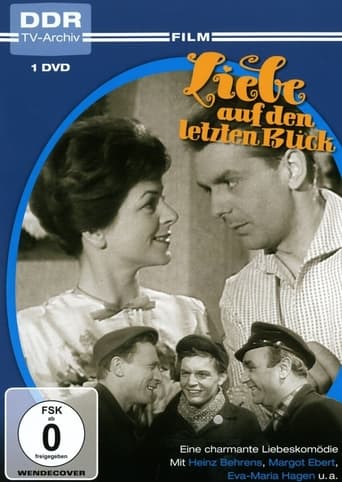 Liebe auf den letzten Blick · 1960
Liebe auf den letzten Blick
1960
MovieDrama
The aircraft mechanic Hans Bertram is an incorrigible apron hunter who boasts that he can get around any woman. He even makes bets on it. But then he falls in love with the new colleague, the budding engineer Helga Nonnert. He fails to conquer them by storm. After many tangles and fun episodes, she manages to heal him of his gallant frivolity.
Filmography
Sort