Directing
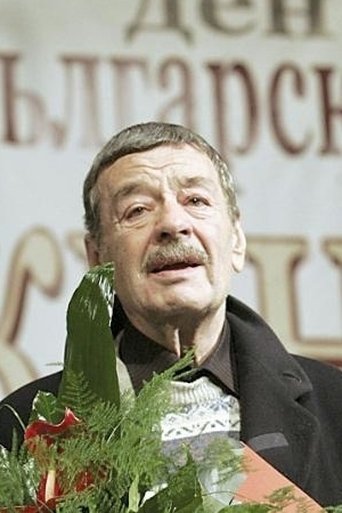
Christo Christov
Born April 17, 1926 · Plovdiv, Bulgaria
Died April 16, 2007 · aged 80
Christo Christov was a Bulgarian film director and screenwriter.
Known For
 Eastern Plays · 2009
Eastern Plays
★ 6.42009
MovieDrama
Two estranged brothers are brought together when they have opposite roles in a racist beating: while Georgi who's recently joined a neo-nazi group participates in the violence, Hristo witnesses and rescues a Turkish family. Only by reuniting will the two brothers be able to assess what they really want from life.
 Rootless Tree · 1974
Rootless Tree
★ 7.01974
MovieDrama
Having remained alone in his village house, old Gatyo must move in with his son and daughter-in-law in their flat in the city. They receive him with great understanding and sympathy but cannot find the key to his heart. Torn out of his natural environment and left bewilderingly rootless, this good man cannot adapt himself to the urban way of life. He does not like the mayonnaise he is offered, does not know how to use the lift. The people hurrying in the streets seem to him indifferent, and some even sly and deceitful. He sees the city as a place full of hostile people and inanimate objects. He badly misses the warm human touch of his village. Death is the only possible solution to the tragic conflict of this peasant, crucified between the archaic and the modern, and unable to adapt to the urban lifestyle.
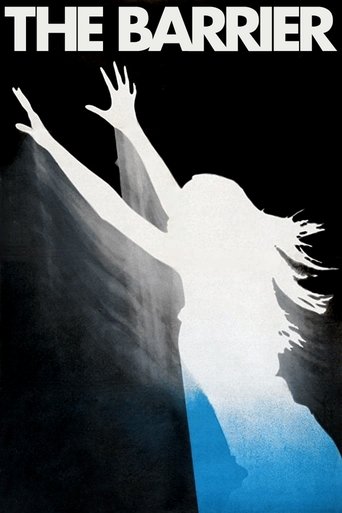 The Barrier · 1979
The Barrier
★ 5.41979
MovieDramaFantasy
In this picture, the barrier epitomizes the line between reality and dreams, the pattern of harmony and happiness. The delicate, pretty, sensitive Dorotea and the sedate middle-aged composer Antoni meet by chance. He gives her shelter in his house. Famous composer falls under the spell of young Dorothea: A pretty, thin-skinned, though quite an eccentric girl.
 The Truck · 1980
The Truck
★ 8.01980
MovieDrama
A study in human psychology that uses five disparate characters from clearly defined social positions, this film offers as much insight into the society of a changing Bulgaria, as it does into the minds of individuals in conflict. The story centers around transporting a worker's corpse, in a truck, to the mountain village where he was born. In the truck is: a man who may be suffering from tuberculosis, and who has an unfaithful wife at home; a doctor (the intellectual); a bookkeeper worried over the salaries she pays out; a hermit picked up on the road; and the driver who is a rough-and-ready working-class symbol. The seeds for conflict are set both by the personalities of the five in the truck and by their social background. The director Christo Christov, acknowledges his debt to Henri-Georges Clouzot and the Wages of Fear, for inspiration in the treatment of human conflict, its development through a set storyline, and its resolution in each of the five cases.
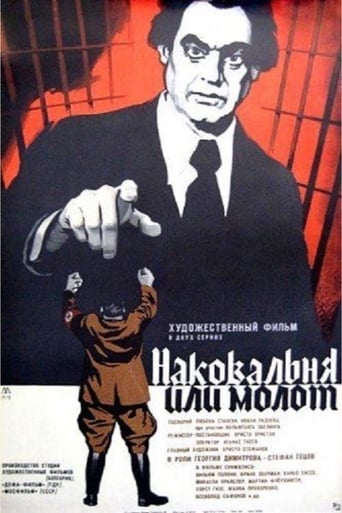 Hammer or Anvil · 1972
Hammer or Anvil
★ 7.01972
MovieDramaCrime
This is a political picture about the Bulgarian revolutionary Georgi Dimitrov. In 1933 during the Reichstag Fire Trial trumped-up charges of having set the Reichstag on fire were brought against him. At the trial Dimitrov exposed the machinations of the Nazis and turned from a defendant into an accuser. Central to the story is the face-to-face political duel between Dimitrov and Goering. Dimitrov's interactions with ordinary Germans, the memories of his wife Lyuba Ivoshevich, and the meetings with his mother Parashkeva alternate with documentary shooting scenes from the time of Nazi Germany.
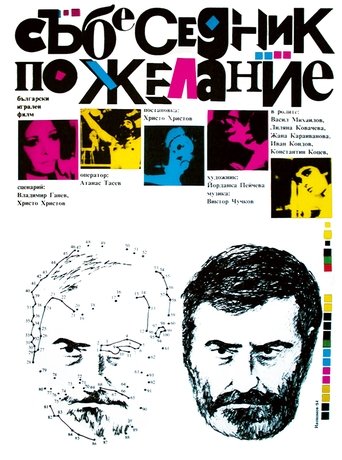 Question of Time · 1984
Question of Time
★ 9.01984
MovieDrama
A famous stage and screen actor has been invited for an interview on 'Question Time', a popular Bulgarian TV program. He has fought heroically in the anti-fascist resistance and at present his talent is bringing him artistic satisfaction and fame. His personal life also seems to be trouble-free. After the end of Sunday program, however, he learns that he is terminally ill with leukemia. The prospect of death destroys his all too comfortable illusions and turns his ideas of life upside down. His love for a provincial actress, from whom he has broken away in the past, is rekindled. Now he needs a closer relationship with his only son, who owes many of his complexes to the egotism of his father. The deceptive harmony between genuine and pseudo art in his career gets disturbed. The protagonist devotes the last few month of his life to the staging of a play which has been rejected in the past, and which he has not had the courage to defend.
 Test '88 · 1989
Test '88
★ 9.01989
MovieDrama
Night on the outskirts of a big city. Several dump trucks are chasing random people on the road at high speed. They threaten to crush them. What makes these drivers so violent? The investigator puts them before the court on their own conscience. They should answer the question: "am I a good person?"
 Cyclops · 1976
Cyclops
★ 9.01976
MovieDrama
The main character is a commander of a nuclear powered submarine. Once a very promising hydroacoustics expert, he sacrificed his scientific career to devoting himself to serving his homeland as a warrior. Gradually, he figures out that the worth of mastering the art of war is in its non-appliance.
Filmography
Sort