Joan Jonas

Directing

Joan Jonas

Born January 1, 1936 · New York, New York, U.S.A. (age 90)

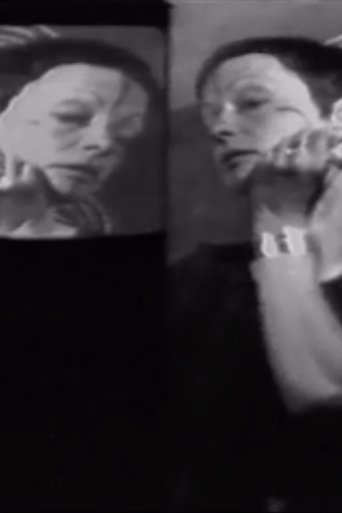
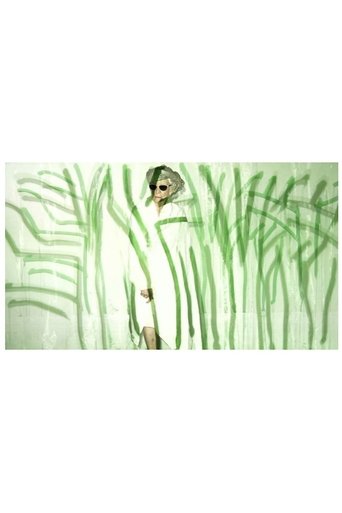
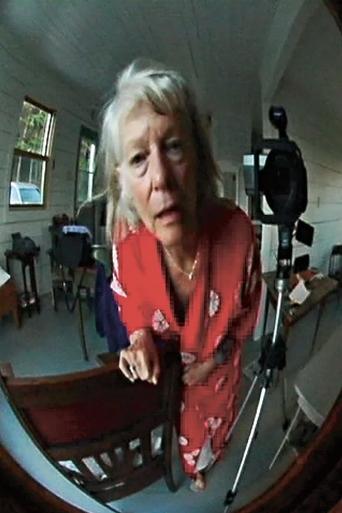
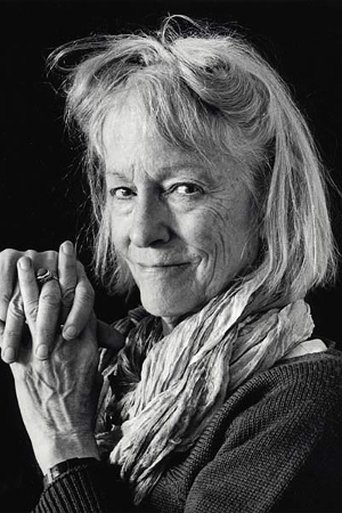
Joan Jonas is an American visual artist and a pioneer of video and performance art who is one of the most important female artists to emerge in the late 1960s and early 1970s.[1] Jonas' projects and experiments provided the foundation on which much video performance art would be based. Her influences also extended to conceptual art, theatre, performance art and other visual media. She lives and wo…

Known For
Brooklyn BridgeBrooklyn Bridge · 1988
Brooklyn Bridge
1988
Movie
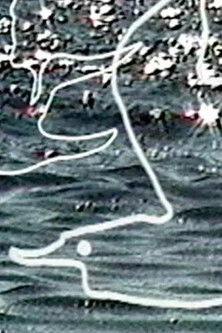
Still photographs, live video, and superimposed drawings created on a Quantel Paintbox are fused in this visual poem dedicated to a New York City landmark, the Brooklyn Bridge. Emphasizing its strength and beauty, Jonas locates the bridge as an iconic site in this meditative, cryptic study of identity and place. In Brooklyn Bridge, the transformative power of video is used to infuse the static photographs and naturalistic footage of the bridge with a mythic, animistic force, which is heightened by the artist's emblematic inscription of self onto the site.
Two WomenTwo Women · 1973
Two Women
1973
Movie
Two women kiss.
Strong MedicineStrong Medicine · 1981
Strong Medicine
★ 6.31981
MovieDrama
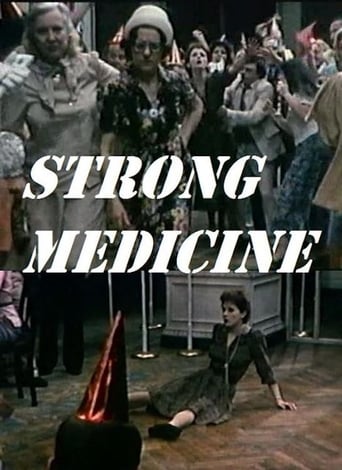
Adaptation of an avant-garde play about Rhoda, a hysterical heroine who feels oppressed by the people around her. She suffers through her birthday party, goes to see a doctor, plans a vacation, argues a lot and even breaks the fourth wall.
WindWind · 1968
Wind
1968
Movie
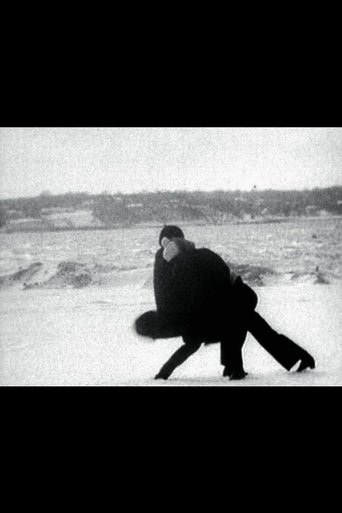
Cutting between snowy fields and a raw seashore, Jonas focuses on a group of performers moving through a stark, windswept landscape. The 16mm film — silent, black and white, jerky and sped-up — evokes early cinema, while its content locates it in the spare minimalism of the late 1960s.
Keep BusyKeep Busy · 1975
Keep Busy
★ 8.01975
Movie
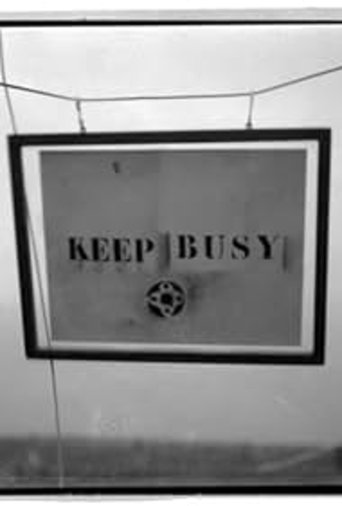
The protagonists’ astounding verbal gymnastics and often incomprehensible interactions tend to descend into nonsense, and with the syncopated rhythm of its action and dialogue, this film is reminiscent of the playful and parodying elements of the Beat fantasy Pull My Daisy. The interweaving of documentary and fiction with the syncopated rhythm of its action and dialogue presents an absurd buzz of activity reminiscent of Beckett’s abstract comic grotesque.
Paul ReverePaul Revere · 1971
Paul Revere
1971
Movie
The film is an adaptation from two sources: Kinesics and Context by Ray L. Birdwhistell, and Choreomania, a performance by Joan Jonas
He Saw Her BurningHe Saw Her Burning · 1983
He Saw Her Burning
1983
Movie
He Saw Her Burning, which is based on a 1983 performance, is a provocative narrative collage, a surreal juxtaposition of two narrated texts. A man and a woman begin their respective tales: He saw a woman burst into flames on the street; she saw an American soldier go berserk and drive a tank into a crowd. Produced while Jonas was living in Berlin on an artist's fellowship, the disjunctive narratives are pervaded with a sense of cultural dislocation and alienation. The man and woman occupy separate narrative spaces as they tell their stories, which are intercut with a pastiche of word games, narrative reenactments, filmed sequences, isolated gestures and objects. Memory — elusive and ephemeral, personal and collective — is the catalyst for this complex work.

Shadows/ComoShadows/Como · 2007
Shadows/Como
2007
Movie
Frenetic silhouettes pass us by.

Filmography

Sort
He Saw Her BurningHe Saw Her Burning · 1983
He Saw Her Burning
1983
Movie
He Saw Her Burning, which is based on a 1983 performance, is a provocative narrative collage, a surreal juxtaposition of two narrated texts. A man and a woman begin their respective tales: He saw a woman burst into flames on the street; she saw an American soldier go berserk and drive a tank into a crowd. Produced while Jonas was living in Berlin on an artist's fellowship, the disjunctive narratives are pervaded with a sense of cultural dislocation and alienation. The man and woman occupy separate narrative spaces as they tell their stories, which are intercut with a pastiche of word games, narrative reenactments, filmed sequences, isolated gestures and objects. Memory — elusive and ephemeral, personal and collective — is the catalyst for this complex work.

Director

Vertical RollVertical Roll · 1972
Vertical Roll
★ 4.01972
Movie
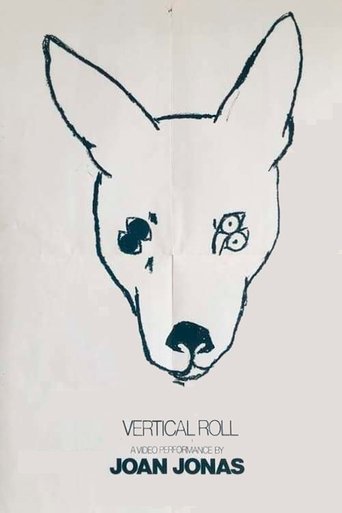
Cast as an “electronic erotic seductress,” the multiple costumes and roles performed by Jonas critically examine the ever-changing, but consistently unequal roles of women. The camera gazes at Jonas, implicating the viewer in the work and further, with her body. Her intentional de-synchronization of the monitor's receiving and transmitting frequencies results in the on-screen image's repeated vertical descent. Creating a sense of fragmentation, the vertical roll relentlessly pounds at the images of the artist as she moves through a series of performed identities. Characterized a "disjunctive self portrait" by the Electronic Arts Intermix, the image content of the work is strongly mediated by the mirror-like function of the camera, scrutinized by the lens and subjected to violence by the vertical roll.

Director

Organic Honey's Visual TelepathyOrganic Honey's Visual Telepathy · 1972
Organic Honey's Visual Telepathy
1972
Movie
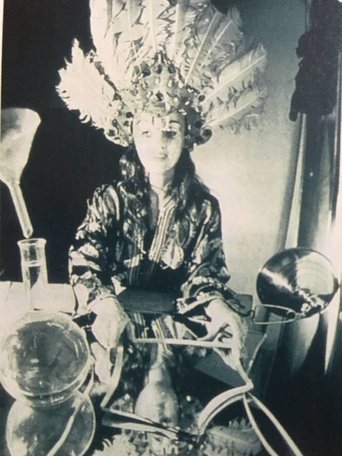
Organic Honey's Visual Telepathy is based on Jonas' 1972 performance of the same name, the first in which she used video. In an enigmatic ritual of identity, Jonas performs as herself and as her masked double, Organic Honey. Dressed in a feathered headdress and costumes, Organic Honey is the embodiment of artifice, masquerade and narcissism — a female alter-ego whose guise is a frozen doll's face. This elliptical, nonlinear narrative performance explores themes that are emblematic of Jonas' early video work: The study of female gestures and archetypes, both personal and cultural; the use of disguise and masquerade, ritual objects and ritualized self-examination; and an inquiry into subjectivity and objectivity. The work's formal elements — the layering of mirrors and mirrored images, manipulations of reflective space and spatial ambiguity, and the use of drawing to add a further layering of meaning — are also Jonas' signatures.

Director

Upsidedown and BackwardsUpsidedown and Backwards · 1980
Upsidedown and Backwards
1980
Movie
In Upsidedown and Backwards, two fairy tales — The Frog Prince and The Boy Who Went Out to Learn Fear — are told simultaneously, one backwards and one forwards, each interrupting the other. Jonas' ironic use of visual symbolism further inverts the structure and content of the fragmented fairy tale narratives, creating multiple, mirror-image reversals of the texts and their meaning. The inverted and mixed-up tales, which are intercut with Jonas' ritualistic performances, merge into a composition of transformation and sexuality that evokes the tangled subconscious of male and female desire. Jonas performs wearing a veiled doll face as she manipulates childlike objects or partners a skeleton in a danse macabre. Charged with the sublimated fears and fantasies of childhood, the tape's imagery mirrors the fairy tales in its fusion of innocence and horror, dream and nightmare.

Director

Left Side, Right SideLeft Side, Right Side · 1972
Left Side, Right Side
1972
MovieDocumentary
In this early work, Jonas translates her performance strategies to video, applying the inherent properties of the medium to her investigations of the self and the body. Jonas performs in a direct, one-on-one confrontation with the viewer, using the immediacy and intimacy of video as conceptual constructs. Exploring video as both a mirror and a masking device, and using her body as an art object, she undertakes an examination of self and identity, subjectivity and objectivity. Creating a series of inversions, she splits her image, splits the video screen, and splits her identification within the video space, playing with the spatial ambiguity of non-reversed images (video) and reversed images (mirrors). Though Jonas' approach is formalist and reductive, her performance reveals an ironic theatricality. Illustrating the phenomenology of video as a mirror, Left Side Right Side is a classic of early performance-based, conceptual video.

Director