Acting
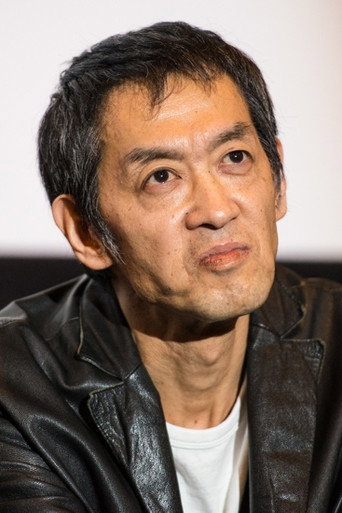
Takeshi Itō
Born February 9, 1962 · Onojo, Fukuoka Prefecture, Japan
Died September 7, 2014 · aged 52
Takeshi Itō (伊藤猛) was a Japanese actor, well known for his roles in pink films during the 1990s.
Known For
 Molester Train: Mischievous Wives · 1992
Molester Train: Mischievous Wives
★ 3.71992
Movie
A former Self-Defense Force officer who returns to his hometown with his comrades to fight for his life. A woman who comes to trace the trail of her husband, who has been missing for seven years. A woman who wants something stimulating in her boring village. A man and his daughter who left his wife without giving a reason and drifted to a fishing village in the north to live in seclusion. The lives of these five people intersect for a moment and are eventually dismantled again.
 Uncle's Paradise · 2006
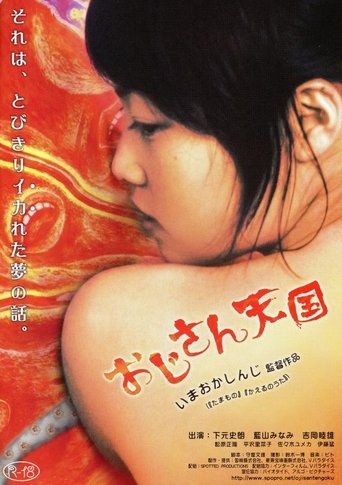
Uncle's Paradise
★ 4.72006
MovieFantasyDrama
This surrealistic comedy follows the life of Haruo Maekawa, a young man who makes a living catching squid. Haruo is obsessed with catching a legendary giant squid rumored to live in Tokyo Bay. Haruo's uncle Takashi, fallen on hard times, comes to stay with his nephew until he can get back on his feet. Uncle Takashi is addicted to energy drinks, and seduces any woman in sight, including Haruo's girlfriend Rika. While praying at a Shintō shrine, Uncle Takashi is bitten in the scrotum by a poisonous snake and dies. The uncle is destined to spend the afterlife in Hell unless his nephew and girlfriend can rescue him from the King of Hell.
 BAD FILM · 2012
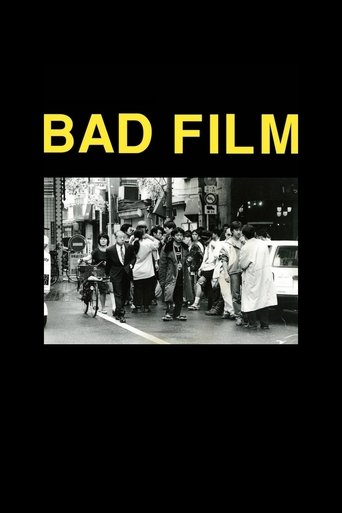
BAD FILM
★ 7.32012
MovieCrimeAction
Near the end of the 20th century on Tokyo's Chuo train line, just before Hong Kong's return to Chinese control, masses of people go on a rampage, and love runs wild.
 Keep on Masturbating: Non-Stop Pleasure · 1994
Keep on Masturbating: Non-Stop Pleasure
★ 4.31994
MovieDrama
A man with a troubled past including incest with a younger sister and the murder of a woman travels to an isolated countryside town in Nagano. There a local who mistakes him for a famous television actor shows him the town's sites, including a strip bar in which the performers remove Heian era costumes. The film's narrative is in an allegorical and disjointed manner with references to Buddhist concepts.
 An Aria on Gazes · 1992
An Aria on Gazes
★ 5.21992
MovieDramaHorror
Housewife Kyoko begins moonlighting at a mysterious sex club as a means of rebelling against her boring salaryman husband Akihito. The Bedroom isn’t like any normal club, though: the female hostesses all take the powerful sedative Halcion to sleep through their encounters with the male clientele.
 Waiting for the Comet · 1995
Waiting for the Comet
★ 3.71995
MovieRomance
Shinji Imaoka’s debut film about three men, a woman, and a dead body.
 Tokyo X Erotica · 2001
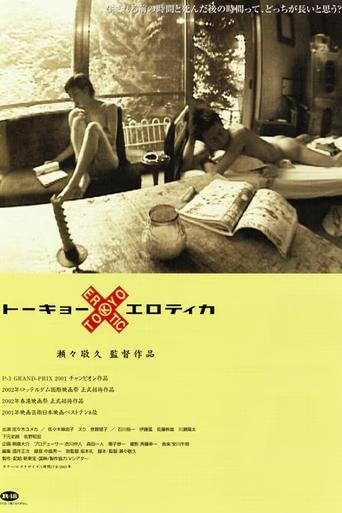
Tokyo X Erotica
★ 5.32001
MovieDrama
What lasts longer, the time before birth or the time after death? In the 1990's, Kenjo dies in a terrorist gas attack. His girlfriend Haruka is killed by a man she meets as a street prostitute. In 2002, Kenji and Haruka who should already be dead, meet again and a new story begins.
 Black Out Tokyo Elevator Panic · 2000
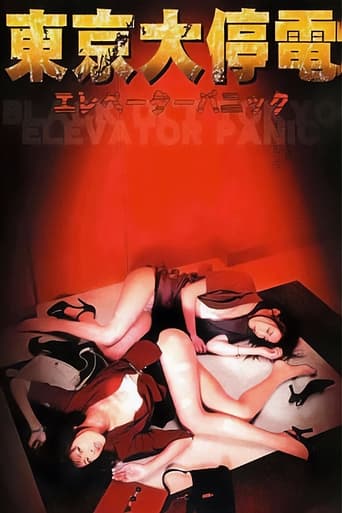
Black Out Tokyo Elevator Panic
★ 5.02000
MovieDrama
Kazuo "Gaira" Komizu's sexually charged, delirious, and extremely low budget movie, has two men and two women trapped in an elevator, indulging in their growing psychotic fantasies about what they would do to each other.
Filmography
Sort