Directing
Mustafa Abu Ali
Mustafa Abu Ali ( مصطفى أبو علي) was a Palestinian filmmaker. Abu Ali studied at the University of California-Berkeley in the 1960s before studying cinema in London, graduating in 1967. He is considered one of the founders of Palestinian cinema, and the Palestinian Cinema Association in Beirut in 1973, (re-established in Ramallah in 2004). Along with Sulafa Jadallah and Hani Jowharieh, he establis…
Known For
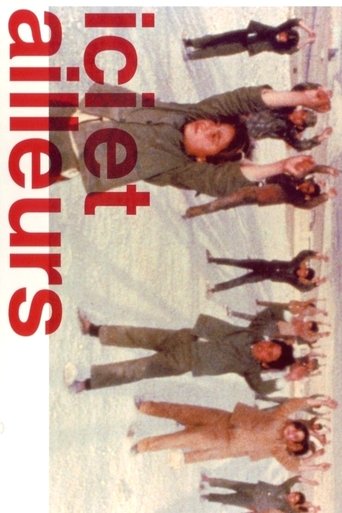 Here and Elsewhere · 1976
Here and Elsewhere
★ 6.71976
MovieDocumentary
Here and Elsewhere takes its name from the contrasting footage it shows of the fedayeen and of a French family watching television at home. Originally shot by the Dziga Vertov Group as a film on Palestinian freedom fighters, Godard later reworked the material alongside Anne-Marie Miéville.
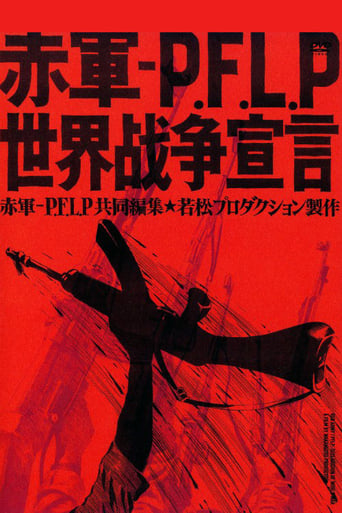 Red Army/PFLP: Declaration of World War · 1971
Red Army/PFLP: Declaration of World War
★ 6.51971
MovieDocumentary
On their way back from the Cannes Film Festival in 1971, filmmakers Wakamatsu Koji and Adachi Masao visited Lebanon to meet Japan's Red Army faction and the Popular Front for the Liberation of Palestine to shoot a newsreel film promoting the Palestinian resistance. Conceived as a ‘declaration of world war’ that implicates us all, the directors capture the everyday banality of military training and preparation exercises for imminent battle.
 Palestine in the Eye · 1977
Palestine in the Eye
1977
MovieDocumentary
Palestine in the Eye chronicles the profound impact of Hani Jawharieh’s death for the PLO Film Unit. The film reflects on his life through interviews with family, colleagues, and his own cinematography, including the moment of his death while filming for the Unit in 1976. Although the film has later been attributed to Mustafa Abu Ali, the Unit’s method of work was to describe everyone as a collective of “workers,” and we see this in the film titles, which collectively list the names of all those who participated as a non-hierarchical collective. Through this reflection on Jawharieh, we are offered an understanding of the workings of the Palestine Film Unit and its international connections.
 A Zionist Aggression · 1973
A Zionist Aggression
1973
MovieDocumentary
Following the operation against the Israeli sports delegation participating in the Munich Olympics in Germany in 1972, the Zionist entity launched retaliatory raids against the Palestinian refugee camps in Syria and Lebanon (specifically the village of Da'al in Syria and the Nabatieh camp in Lebanon) on September 8th, 1972. In reflecting the sheer barbarism of the Zionist aggression, legendary Palestinian filmmaker Mustafa Abu Ali is compelled to reach for new filmic grammar to reflect on the brutality. This is a film haunted and haunting, with unfiltered images of death. Lifeless babies, features bloated. Children in hospital beds, limbs twisted, faces bruised. Agony. Skulls shattered. Hands crushed. Occasionally, lifeless eyes blink, a twitch of the hand brings something akin to hope – that life persists, life could persist.
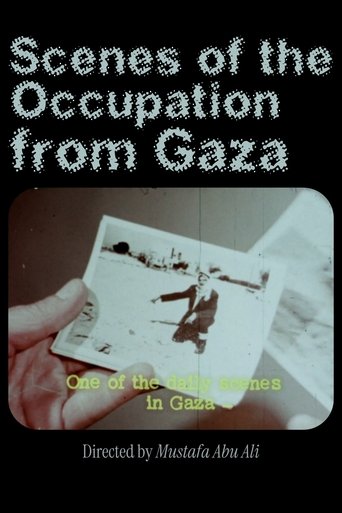 Scenes of the Occupation from Gaza · 1973
Scenes of the Occupation from Gaza
1973
MovieDocumentary
A rare film by the legendary filmmaker Mustafa Abu Ali, one of the founders of the Palestine Film Unit, the first filmic arm of the Palestinian revolution. Shot by a French news team, the footage was edited by Mustafa in Lebanon to produce one of the earliest films on the occupied territory in Gaza. Scenes of the Occupation from Gaza employs experimental editing tech- niques to produce a cinematically and politically subversive film. The film won the prize as best film at the Damascus Film Festival in 1973 and was screened at multiple festivals. It was the only film produced by the Palestine Cinema Group, which in 1974 became the Palestine Cinema Institute.
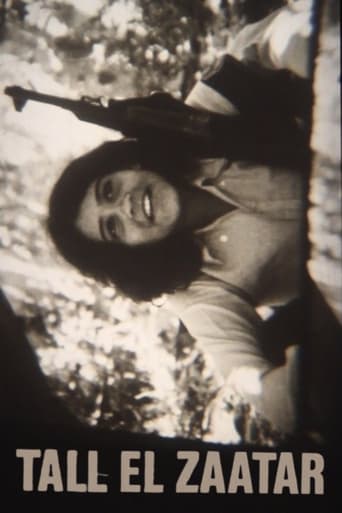 Tall el Zaatar · 1977
Tall el Zaatar
1977
MovieDocumentary
In the early summer of 1976, right-wing militias representing a coalition of ultra-nationalist and counter-revolutionary forces laid siege to the refugee camp of Tall al-Zaatar (“Hill of Thyme”) in Beirut. After holding out for months without food, water, or medical supplies, and under heavy artillery and sniper fire, the camp fell to the militias on 12 August. What followed was one of the worst atrocities of the civil war, with over 2,500 civilians massacred and the camp razed to the ground. Produced after the massacre, but featuring footage shot before and during the siege, Tall al-Zaatar remembers the camp and its community, recounting the long months of siege and resistance, and recalling the horrors of the massacre through the testimony of survivors.
 They Do Not Exist · 1974
They Do Not Exist
★ 8.21974
MovieDocumentaryWar
Shooting under extraordinary conditions, the director, who worked with Godard on his "Ici et Ailleurs" ("Here and Elsewhere") - this film was shot on the same 16mm camera - and founded the PLO's film division, covers conditions in Lebanon's refugee camps, the effects of Israeli bombardments, and the lives of guerrillas in training camps. "They Do Not Exist" is a stylistically unique work which explodes at the intersection between the political and the aesthetic.
 Kings and Extras: Digging for a Palestinian Image · 2026
Kings and Extras: Digging for a Palestinian Image
2026
MovieDocumentary
The films in the PLO Media Unit were supposed to show a self-determined image of Palestinian reality – and they went missing during the Israeli invasion of Beirut in 1982. In a « road movie » from Palestine to Jordan, Syria and Lebanon, director Azza El-Hassan follows the contradicting and confusing clues as to the whereabouts of the lost archive.
Filmography
Sort