
Directing
Raúl Perrone
Raúl Perrone was born on February 5, 1952 in Ituzaingo, Buenos Aires, Argentina. He is a director and writer, known for Ragazzi (2014), Favula (2014) and P3nd3jo5 (2013).
Known For
 The Wick · 2003
The Wick
★ 6.52003
MovieDrama
An old man drivesdriven around town trying to find a wick for his old heater during the long months of the Argentinean winter.
 Graciadió · 1997
Graciadió
★ 6.11997
MovieDrama
It is the history of a group of boys around twenty years old of the suburban district. They stroll for the quarter, look at videos, listen to rock. Nothing happens, but it goes on from everything and they are basically alone in the world. As well as there is another "American dream", there is another “Argentine dream”
 P3nd3jo5 · 2013
P3nd3jo5
★ 4.62013
MovieMusicThriller
An hypnotic musical with ghosts, young skaters, a "cumbiópera" in three acts and an epilogue. A ballet of visages, gazes, desire, love, drama, tragedy and shooting.
 Cínicos · 2017
Cínicos
★ 5.02017
MovieDrama
The cynical philosophers lived in Ancient Greece. Its name comes from the word "dog", denomination attributed by its frugal way of living. They considered that civilization was an evil and so they despised riches and repudiated sciences, norms, and conventions.
 PR1NC3S4 · 2021
PR1NC3S4
★ 4.02021
Movie
In his new cinematic adventure, Raúl Perrone makes a new incursion into the Japanese out of Ituzaingó in order to shape the variations of a story that revolves around a woman who cuts dead people’s hair, a samurai with an intolerable mission, a nosy burglar, a feudal lord on the verge of insanity and a giant metal fish. The film is freely inspired in the original version of Rashomon –written by Ryūnosuke Akutagawa– and, as usual in his filmography since P3ND3JO5 (2013), Perrone blends different elements from classical film; in this case, visible ghosts from Kurosawa’s cinema and certain aspects of Japan’s traditional culture melt with nightmarish distortions and machinistical irruptions, typical of a future that may never come. “The avant-garde is in the past” he once said in an interview. In his reimagining of film history, Perrone again finds an inexhaustible field of expression.
 Luján · 2012
Luján
2012
MovieDrama
Luján was a construction worker. He had fourteen children, some of whom he no longer remembers the name of. It is separate. A neighbor, Liliana, gives him a house and food, in exchange for work. One of his children claims him, but he does not want to return, because he is no longer even half of what he was.
NEW
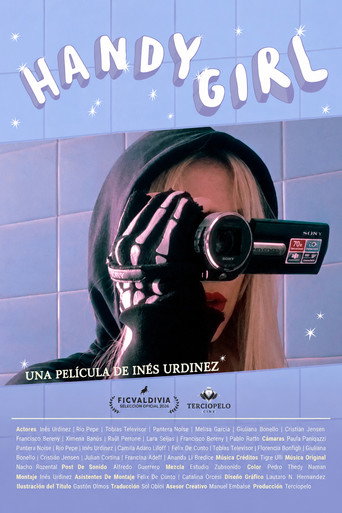
Handy Girl · 2026Handy Girl
2026
Movie
An urgent and punk cinematic diary where documentary and fiction collide. Guided by her handycam, a Buenos Aires underground actress and mother captures her daily fight for self-determination, turning low-fi filmmaking into political and artistic resistance.
 CIN3 FILI4 · 2026
CIN3 FILI4
2026
Movie
“Some time ago, I decided to stop writing synopses of my films. I want people to come without knowing what they are going to see. There will be no trailer either; they are deceitful and never truly reflect the spirit of the film. Thank you for your understanding.” -Raúl Perrone


