S
Directing
Stan Neumann
No biography available.
Known For
 Inquisitions · 2026
Inquisitions
★ 8.02026
MovieDocumentary
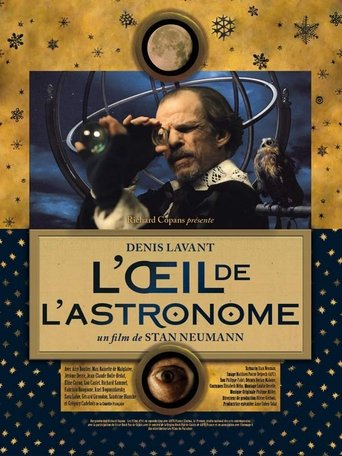 Eye of the Astronomer · 2012
Eye of the Astronomer
★ 3.32012
MovieDramaHistory
During the summer of the year 1610 one of the first telescopes made by Galileo ends up in the hands of Jean Kepler in Prague who at the time was the astronomer of Emperor Rudolp II. Kepler observes the night-sky as nobody has seen it before him. His observation platform becomes the meeting place of Prague's imperial court. In this entourage Kepler separates science from superstition, freedom from intolerance.
 Austerlitz · 2015
Austerlitz
2015
MovieDocumentaryDrama
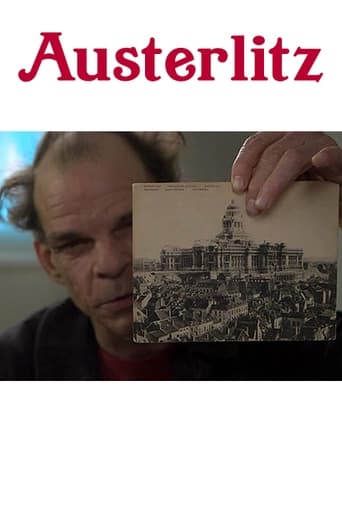
“You buy a book. You don’t really know why. It lies around, and then one day you open it, almost absentmindedly. And there you are, facing your own innermost secrets.” So begins Stan Neumann’s cinematic adaptation of W.G. Sebald’s award-winning novel, Austerlitz. The vaulted and majestic space of the railway station in Antwerp is where our journey really starts with actor Denis Lavant (Holy Motors) addressing the camera directly, and musing on the curious nature of railway stations. This bravura opening is startling, charming, and like the unnamed narrator of the book, you surrender to the proceedings and perambulate alongside Lavant, as he journeys through the great buildings of Europe, faded and shuttered hotels and grand colonnades with broken windows.
 Brothers in Arms · 1992
Brothers in Arms
★ 10.01992
MovieDocumentaryHistory
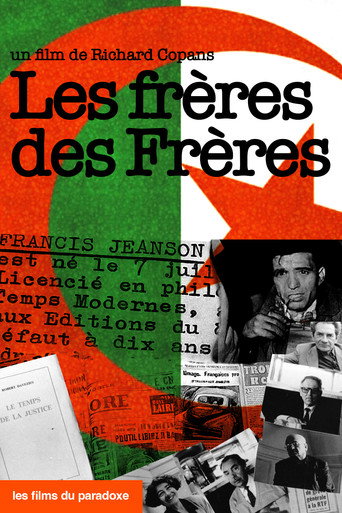
From 1954 to 1962, during the Algerian War, French citizens provided concrete assistance to the FLN in France: sheltering refugees, forging documents, facilitating border crossings, and transporting funds. Whether committed to the ideals of the Republic or driven by Third Worldist revolutionaries, they sought to build a bridge of friendship between nations. They paid for their commitment with imprisonment and exile. Four veterans of the Jeanson network recall this period. Today, they are no longer seen as traitors or heroes, but as witnesses recounting "their" war... Silent for 30 years, the "Jeanson network" now bears witness to this history.
 Language Does Not Lie · 2004
Language Does Not Lie
★ 7.32004
MovieDocumentaryHistory
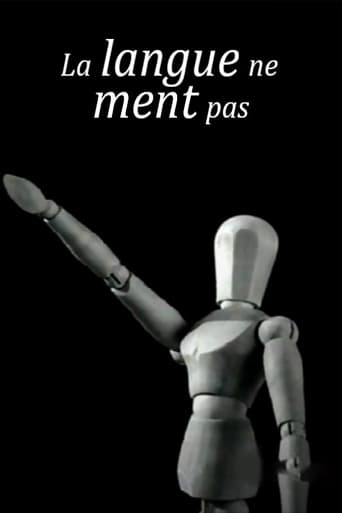
Victor Klemperer (1881-1960), a professor of literature in Dresden, was Jewish; through the efforts of his wife, he survived the war. From 1933 when Hitler came to power to the war's end, he kept a journal paying attention to the Nazis' use of words. This film takes the end of 1945 as its vantage point, with a narrator looking back as if Klemperer reads from his journal. He examines the use of simple words like "folk," "eternal," and "to live." Interspersed are personal photographs, newsreel footage of Reich leaders and of life in Germany then, and a few other narrative devices. Although he's dispassionate, Klemperer's fear and dread resonate
 120 ans d'inventions au cinéma · 2016
120 ans d'inventions au cinéma
★ 6.02016
MovieDocumentaryHistory
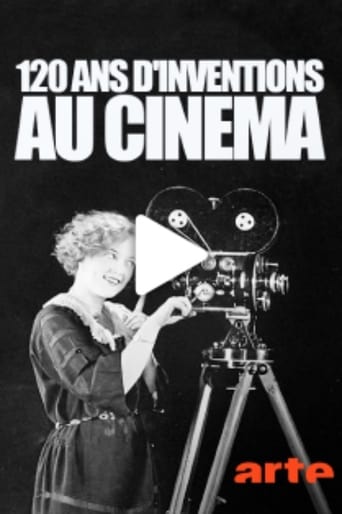
One hundred and twenty years of film history in a warehouse in Paris. In the reserves of the French Cinematheque, where thousands of cameras and projectors are sleeping on the shelves. Thousands of stationary machinery, we dream of getting back to work as a great machine back in time. To tell their story, the material history of cinema.
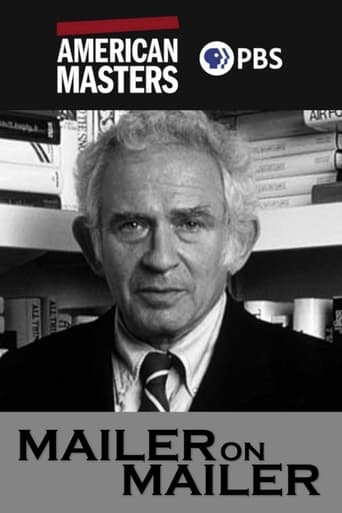 Mailer on Mailer · 2000
Mailer on Mailer
★ 5.02000
MovieDocumentary
Norman Mailer frankly discusses American culture, politics, literature, and his own tumultuous life.
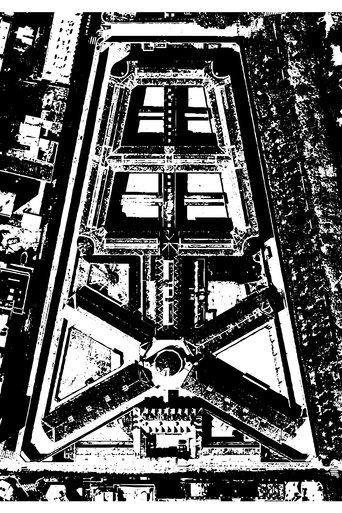 Architectures : La Santé, une prison dans Paris · 2016
Architectures : La Santé, une prison dans Paris
2016
Movie
Filmography
Sort