I
Editing
Isaac Kleinerman
No biography available.
Known For
 Flying Padre · 1951
Flying Padre
★ 5.11951
MovieDocumentary
Stanley Kubrick’s short documentary about Father Fred Stadtmueller, a Catholic priest serving a vast 4,000-square-mile parish in rural New Mexico. To reach his scattered congregation, he pilots his own Piper Cub aircraft, the Spirit of St. Joseph. Over two days, Kubrick follows the “flying padre” as he conducts Mass, mediates between quarreling children, attends a funeral, and airlifts a sick child to medical care—capturing both the challenges and quiet heroism of his daily mission.
 Project XX: The Great War - World War I · 1956
Project XX: The Great War - World War I
1956
MovieDocumentary
Alexander Scourby narrates this fascinating look at Western culture between 1914 and 1918, when the nations of Europe, and later America, plunged into a level of warfare unlike any known before. Note: Originally part of Project XX, this film was also distributed separately on 16mm for schools and libraries, qualifying it as a standalone documentary.
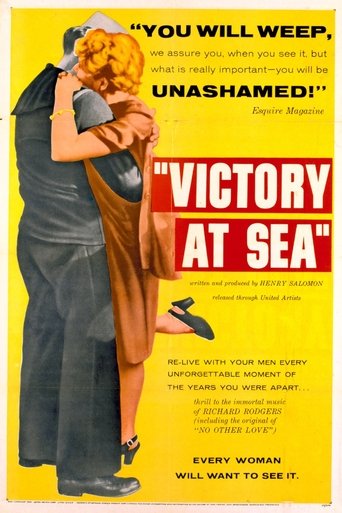 Victory at Sea · 1954
Victory at Sea
★ 9.01954
MovieDocumentary
A feature-length, condensed version of the 1952 documentary TV series 'Victory at Sea'.
 Search for the Goddess of Love · 1971
Search for the Goddess of Love
★ 3.01971
MovieTV MovieDocumentary
CBS News presents a Smithsonian adventure featuring Iris Love and narrated by Walter Schirra produced by CBS News in association with the Smithsonian Institution (1971).
 The Twentieth Century · 1957
The Twentieth Century
★ 8.01957
SeriesNewsDocumentary
The Twentieth Century is a long-running CBS documentary television series that aired from 1957 to 1966, sponsored throughout its run by the Prudential Insurance Company and narrated by Walter Cronkite. Drawing on the resources of CBS News, the series produced both historical compilation documentaries and originally photographed contemporary reports, presenting major political, cultural, scientific, and social developments that shaped the modern world. Episodes combined newsreel footage, eyewitness testimony, and on-location reporting, covering subjects ranging from global conflicts and political change to arts, science, and international social transformation. Popular with audiences and critically respected, the series functioned as a formative model for later American television documentary programming and helped establish the compilation-documentary format as a central mode of broadcast nonfiction.
 Project XX · 1954
Project XX
★ 6.01954
SeriesDocumentary
Early NBC series showcasing compilation films - documentaries made from existing archival footage. Patterned on the successful Victory at Sea, it employed fast-paced editing, music, and narration. Concentrating on public affairs and public life, it steered clear of controversial subjects and enjoyed strong ratings, inspiring many competitors such as Air Power and The Twentieth Century. In later years, however, it would be criticized as superficial in comparison to "serious" documentary and current events programs.
Filmography
Sort