D
Directing
David Baker
No biography available.
Known For
 Five Days · 1986
Five Days
★ 6.01986
MovieDrama
An American Vietnam serviceman arrives on a 5 day R&R leave in Sydney. He meets a local girl and they enjoy their short time together.
 Fucked Up · 2024
Fucked Up
2024
Movie
The short film that audiences are calling...
 Best Enemies · 1985
Best Enemies
★ 10.01985
MovieDrama
Niel longs for his older second cousin Patricia, but can't help but be drawn to the emotionally unstable Fennimore, an on-again off-again lover of his equally unstable friend Eric.
 Libido · 1973
Libido
★ 4.71973
MovieDrama
Scripted by four of Australia’s greatest authors (David Williamson, Thomas Keneally, Hal Porter and Craig McGregor), this quartet of carnal desires explores adultery and jealous fantasies, the end of innocence, the moral and spiritual conflicts of a priest and a nun in love. The stories define the exploration of women and the cultural upheaval of the early 70s.
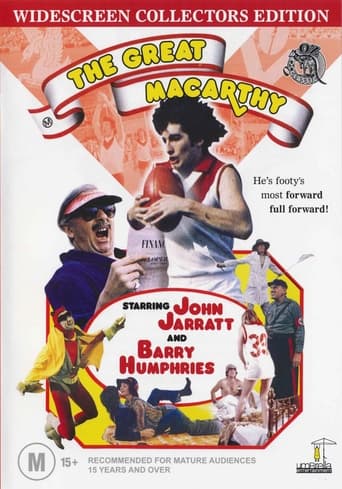 The Great MacArthy · 1975
The Great MacArthy
★ 5.21975
MovieComedy
Macarthy is a country town football champ who is kidnapped in a neon lit helicopter by tyrant Colonel Ball-Miller, the tycoon president of the South Melbourne football club.
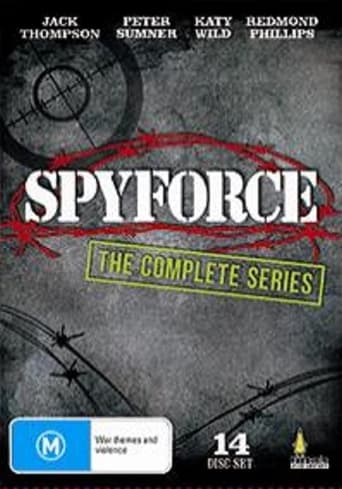 Spyforce · 1971
Spyforce
★ 6.01971
SeriesDrama
Spyforce was an Australian TV series produced from 1971 to 1973, based upon the adventures of Australian Military Intelligence operatives in the South West Pacific during World War II. It was produced by the Nine Network in conjunction with Paramount Pictures.
The series centres on the action and adventures of lead actor Jack Thompson's character Erskine, and his main support character, Peter Sumner's Gunthar Haber. It was the first lead role for Jack Thompson. The two are part of an elite unit of special operatives, the Special Intelligence Unit, and their adventures are loosely based upon those of the real Services Reconnaissance Department who often operated behind Japanese-held lines during the war. Unlike most previous war films, Spyforce deliberately steered away from the notion that the United States was solely responsible for Japan's defeat, and highlights the important role Australian forces played in the defeat of the Imperial Japanese Army. Producer Roger Mirams was also careful to avoid stereotypes of the genre, and tired formulas for the battle scenes.
The idea appealed to American producers Paramount Pictures, who backed creator Roger Mirams to begin production without having seen a script. He made the pilot episode, "Spy Catcher", which impressed Paramount, and the Nine Network immediately bought the local rights. The first episode aired in Sydney on 8 August 1971, and the rest of Australia on 26 August 1971. It was originally intended to produce 26 episodes, but following the success of the first series, Mirams held talks with both Nine Network and Paramount Pictures, who backed him for a second series. In all 42 episodes were produced. The series was last aired on Australian television in Adelaide on 21 September 1976, but has been re-run several times since.
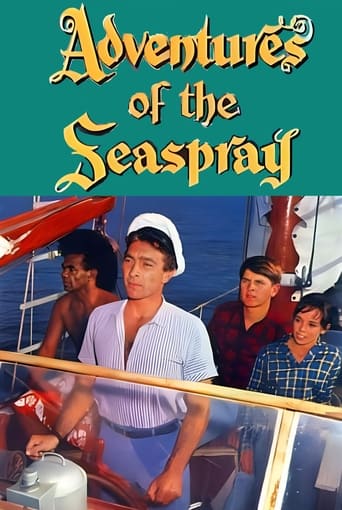 Adventures of the Seaspray · 1965
Adventures of the Seaspray
★ 7.01965
Series
Adventures of Seaspray is a 1967 Australian TV series about a widower journalist who brings up his children in a small boat.
Filmography
Sort