Acting
Giorgos Kyritsis
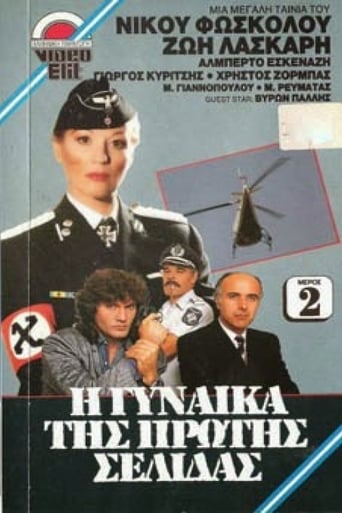
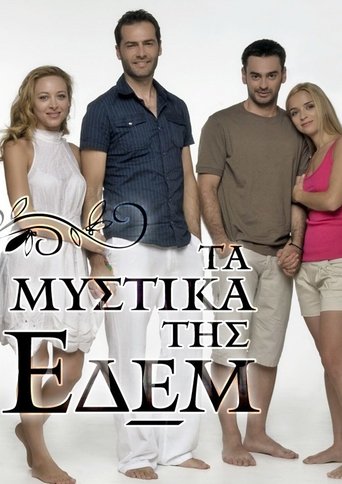
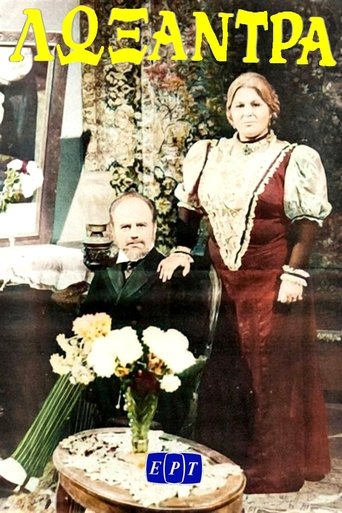
Giorgos Kyritsis played in almost all the major works of the world theater repertoire (Sophocles, Aristophanes, Shakespeare, Ibsen, Pirandello, Pinter, Brecht, Gorky, ), participated in films in the cinema and starred in many television series. He collaborated in the theater with the greatest Greek and foreign directors and most important protagonists of the modern Greek theater. With Elena Akri…
Known For
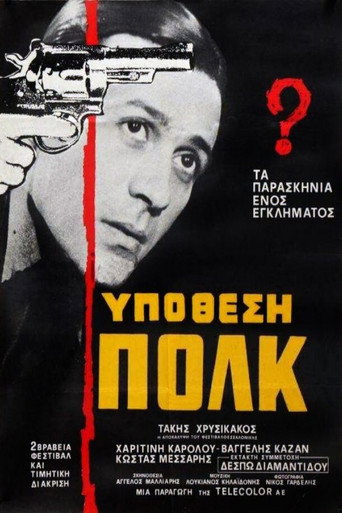 Υπόθεση Πολκ · 1978
Υπόθεση Πολκ
1978
MovieHistory
 Living Dangerously · 1987
Living Dangerously
★ 6.61987
MovieComedy
On the morning of the World Cup final, Karamanos, an employee of the Greek Telecommunications Organization (TOE), connects his commander's personal computer to a devilishly complex and explosive device. He threatens to blow up the floor and the satellite dishes above if he is not allowed to appear on the national network 10 minutes before the football match to denounce all the wrongs that plague the lives of Greek citizens and make them victims of a partisan and corrupt state.
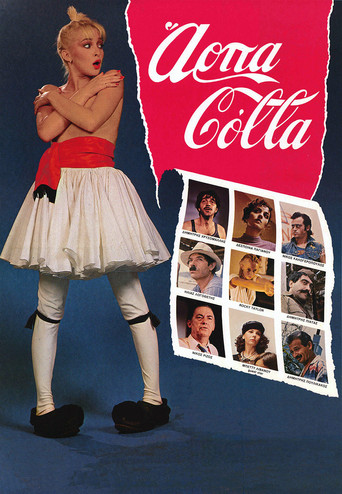 Arpa Colla · 1982
Arpa Colla
★ 6.11982
MovieComedy
"Arpa-colla" in Greek literally means "Grab and stick", a phrase used to show something that has been done quickly and therefore isn't good enough. This is what the 2 main heroes of the film are doing. The one is a director(Giorgos) and the other an author(Kostas) with communistic ideas, who has won a prize at a festival. They both want to make a movie for the cinema. But every idea they have never comes true, because every time they meet someone to whom they tell their idea, they change their mind, and they want to make a totally different movie, ideas varying from political cinema to Greek historical dramas and modern films with motorcycle gangs. Not a bad attempt for the Greek cinema of the early 80's, which starts to wake up from the hibernation of the 70's.
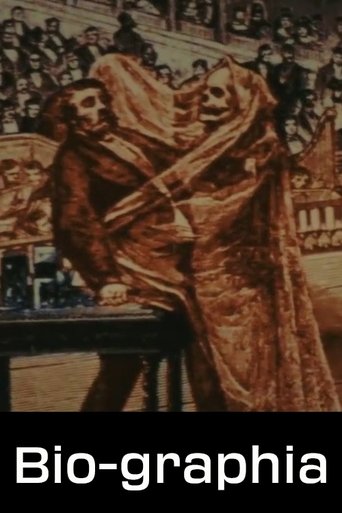 Bio-graphia · 1975
Bio-graphia
★ 7.01975
Movie
With a title that expresses the connection/disagreement of bios (βίος) = life, and graphi (γραφή) = writing, this film of Rentzis has as a subject “the passage from homo universalis to homo industrialis”. Based on a visual material provided by the collage book of the Basque Chumy Chúmez, the film forms, out of cultural deposits of the industrial era, a novative oneirographic discourse, through the audacious and unprecendeded claim of a combinatorial optimization of collage/montage techno-poetics. Viewing the body as historical ideotype ‘the sublime point of reference, a matrix and a refusal of all signs’, Rentzis, dissects the body of film, makes an inter-parody of historical utopias and certainties and moves between animation and expanded cinema in order to reflect on the broader social, political question of our social coexistence condition, the unity and rupture.
 The Hook · 1976
The Hook
★ 5.11976
MovieDramaCrime
An adulterous woman and her lover plot to murder her husband Kostas and make it look like a yachting accident. However, unknown to them, Kostas has hired a private detective to follow them and knows of their plans in advance. A deadly game of double-crossing begins and propels all three of them towards tragedy.
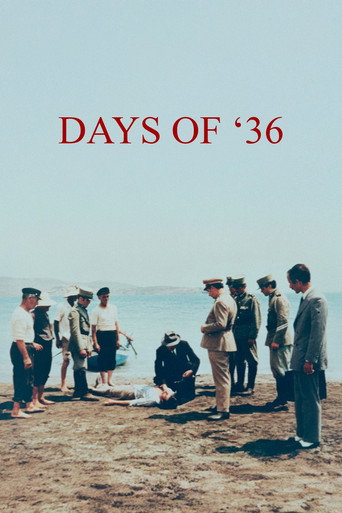 Days of '36 · 1972
Days of '36
★ 6.41972
MovieDramaHistory
The assassin of a prominent trade unionist takes a conservative MP hostage, throwing the government into a state of disarray.
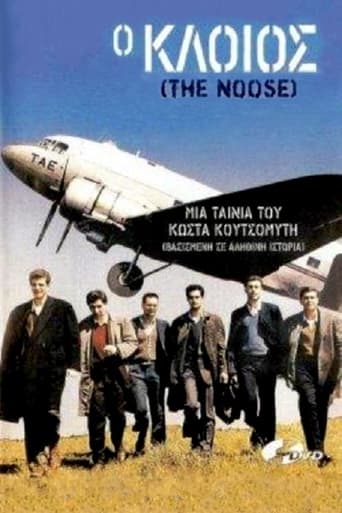 The Noose · 1987
The Noose
★ 7.81987
MovieDramaAction
In the fall of 1948, shortly before the end of the civil war in Greece, six young leftists traveled to Athens, boarded a plane to Thessaloniki, and forced the pilot to fly them to neighboring Yugoslavia, where they would seek political asylum along with other comrades. Their plan went off without a hitch and went down in history as the first hijacking ever.
 Agrafos nomos · 1987
Agrafos nomos
★ 8.01987
MovieAdventure
Stratos, a marginal figure, carries on his shoulders the freedom and doubts of his generation. Upon leaving prison after serving a five-year sentence, he will seek out those responsible, demanding his share of a theft for which he paid the consequences. It is an extremely dangerous journey, and to reach his destination, he must pass through the dark circles of nighttime illegality. He encounters old "friends" who still want him as a pawn in their game, women with strange identities, and police officers who lead him into a relentless pursuit...
Filmography
Sort