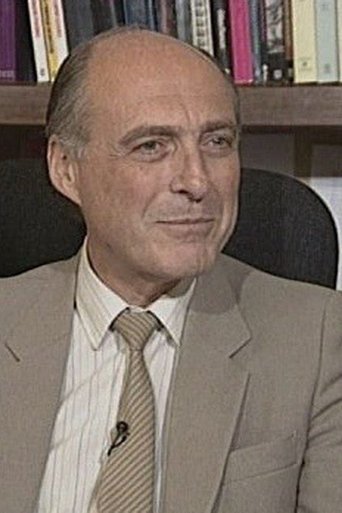
James Ferman

Directing

James Ferman

Born April 11, 1930 · New York, New York, USA

Died December 24, 2002 · aged 72

James Alan Ferman was an American television and theatre director. He was the Secretary of the British Board of Film Classification from 1975 to 1999.

Known For
Chariot of FireChariot of Fire · 1970
Chariot of Fire
9.01970
MovieDramaTV Movie
A prison visitor becomes involved with a convicted sex offender.
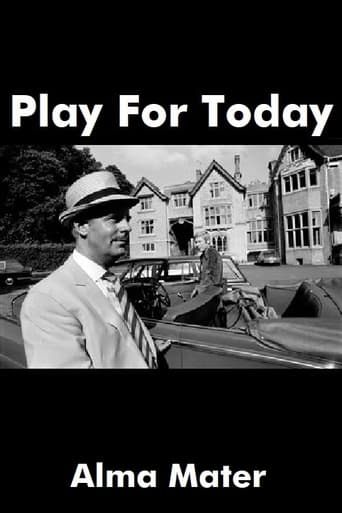
Alma MaterAlma Mater · 1971
Alma Mater
8.01971
MovieDramaTV Movie
Jimmy Nicholson returns from working in the Middle East to visit his son at boarding school. He went to the same public school himself and is disturbed to find that things have changed and the traditions by which he has always lived and been guided now seem to be obsolete.
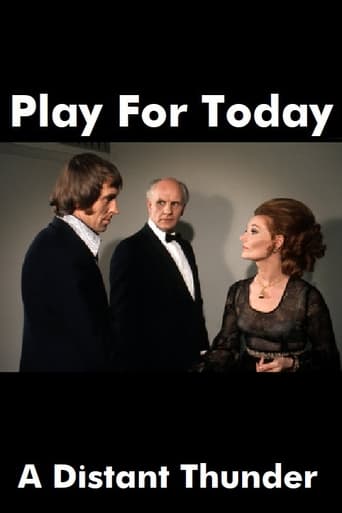
A Distant ThunderA Distant Thunder · 1970
A Distant Thunder
8.01970
MovieDramaTV Movie
Peter Barkham hero-worships his distinguished father. However, this is threatened by the intrusion of events and people from his father's wartime past.
Death of a PrivateDeath of a Private · 1967
Death of a Private
9.01967
MovieTV MovieDrama
An army private is driven to murder when his wife falls in love with another man.
Edward G: Like the FilmstarEdward G: Like the Filmstar · 1973
Edward G: Like the Filmstar
1973
MovieDramaTV Movie
Edward G is nothing like a film star; his life has been ordinary - until now. But he's just had a shattering experience.
The CriminalsThe Criminals · 1958
The Criminals
1958
MovieTV MovieDrama
A small construction company's new year's eve party is taken over by a crook who has intricate knowledge of the men's private lives, forcing them into an incredible bank robbery plot.
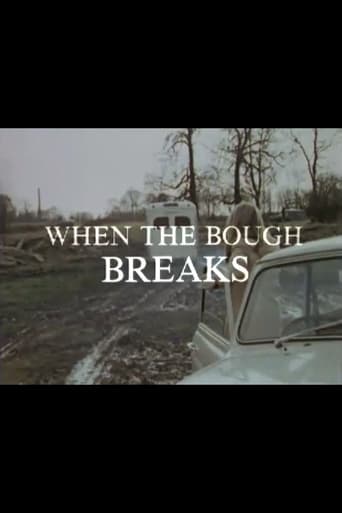
When the Bough BreaksWhen the Bough Breaks · 1971
When the Bough Breaks
10.01971
MovieDramaTV Movie
NSPCC social worker Margaret Ashdown is given the case of investigating into the Gosse family, when the young mother, Sheila, is unable to explain her baby's fractured skull at the hospital. She discovers the family live in poverty and ignorance, and have a tradition of instability.
The Pigeon FancierThe Pigeon Fancier · 1971
The Pigeon Fancier
8.01971
MovieDramaTV Movie
When Len Shelton retires from a life of work in the coal mines, he turns to his first love - pigeons, which become a symbol of hope for him.

Filmography

Sort
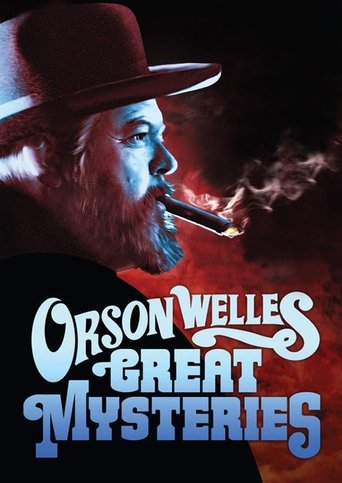
Orson Welles' Great MysteriesOrson Welles' Great Mysteries · 1973
Orson Welles' Great Mysteries
6.81973
SeriesMysteryDrama
Orson Welles’ Great Mysteries is a British television anthology series produced by Anglia Television for the ITV network and broadcast between 1973 and 1974. The series presents standalone adaptations of classic mystery, crime, and supernatural stories drawn from literary sources including Dickens, Conan Doyle, Wilkie Collins, Balzac, Maugham, O. Henry, and others. Each episode is framed by original introductory and closing sequences performed by Orson Welles, who serves as the series’ host and sole recurring on-screen presence. These segments, written and directed by Welles (uncredited), function as stylized narrative framing devices rather than dramatic participation in the stories themselves. The dramatic content of each episode is performed by separate casts and directors, with no continuing characters or serialized narrative, establishing the series as a unified television anthology rather than a collection of standalone films.

Director

Ghost SquadGhost Squad · 1961
Ghost Squad
6.01961
SeriesCrimeDrama
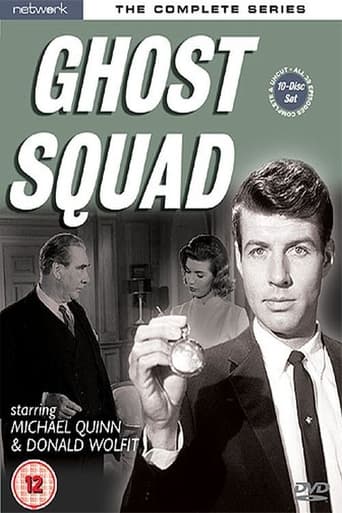
Ghost Squad, known as G.S.5 for its third series, was a crime drama series about an elite division of Scotland Yard that ran between 1961 and 1964. Each episode the Ghost Squad would investigate cases that fell outside the scope of normal police work. Despite the show and characters being fictional, an actual division did exist within the Metropolitan Police Service at the time. Inspiration for the series was taken from a book of the same name, written by John Gosling — a retired police officer and former member of the team. Although the real-life squad only operated in London, the fictionalised team travelled internationally; however — as was typical of the time — most foreign locations were actually a combination of stock footage and sets at Independent Artists Studio at Beaconsfield and Elstree Studios. Music was by Philip Green. The show was produced by ITC Entertainment, along with Rank Organisation TV and ATV. It was the first ITC show filmed to fit the one hour time-slot — setting the trend for the majority of ITC's future output. Another common ITC trait was to feature an American, in this case Michael Quinn, in a leading role so as to increase the chances of international sales. At 6' 3", Quinn often towered over his co-workers. This was especially noticeable in the first series title sequence showing him walking through a crowd walking in the opposite direction. He frequently smoked in the show as did many others. The second series had a different title sequence and Neil Hallett sometimes replaced Quinn. Hallett looked more like a spy while Quinn looked a bit like a playboy. Quinn was replaced by Australian actor, Ray Barrett in the third series. Ray Austin played Billy Clay in and was also Stunt Director on all series bringing the action to life. Austin went on to become a renowned TV director in Hollywood and the UK.

Director