Acting
Roberto Cairo
Born May 3, 1963 · Castillejo de Martín Viejo, Ciudad Rodrigo, Salamanca, Spain
Died August 28, 2014 · aged 51
No biography available.
Known For
 Alegre ma non troppo · 1994
Alegre ma non troppo
★ 5.11994
MovieComedyDrama
Pablo is a twenty-year-old man who wants to be a musician in order to be appreciated by his mother and find a male partner he can share his love with. He finds one, but because of his demanding behaviour, he is soon alone again. He tries to become a French horn player in the Youth Spain National Orchestra, but the examiner turns out to be his father, who's been living apart from his family and doesn't really accept Pablo's sexual trends. Once Pablo fails in his exam, he feels very depressed. When another French horn player from Valencia hasn't got a place to sleep, Pablo takes him home to his house. The next morning, however, he finds a girl named Salome inside of his bed.
 Amo tu cama rica · 1992
Amo tu cama rica
★ 6.71992
MovieComedyRomance
Pedro goes out searching for a girl, but the night doesn't seem to be good. While he is talking with a friend, he sees Sara breaking up with a boy. He goes after her, and they end up sleeping in his house. Time goes by and they continue together. But Sara has too many men around and Pablo can't stand that. Their relation is difficult, they love each other but, at the same time, they can not be together.
 Tocando fondo · 1993
Tocando fondo
★ 6.01993
MovieComedy
Andres de Granada, a forty-benefit trade more clear, believed that the first months of 1993 are the best time to do business. It also has the help of his nephew Fulgencio, who has arrived in Madrid with the idea of learning the trade.
 Fugitives · 2000
Fugitives
★ 4.92000
MovieDramaCrime
Tony is a young crook preparing for a bank robbery with her boyfriend Juanjo and their low-life partners Maxi and Moco. Right before they commit the crime, Juanjo informs Tony that his prostitute sister wants him to take her young daughter Laura to visit the girl's father, a flamenco singer in the Spanish southern coastal town of Tarifa. Juanjo persuades the initially reluctant Tony that Laura will provide the couple with a perfect cover after they relieve their partners of the robbery's earnings. Unfortunately, though the robbery comes off without a hitch, the duplicitous Juanjo absconds with the cash, making Tony and Laura fugitives both from the law and from the psychotically angry Maxi and Moco.
 Grandes ocasiones · 1998
Grandes ocasiones
★ 5.71998
MovieComedy
Antonio, a television scriptwriter, decides to separate from Ana, his wife, with whom he has three children in common.
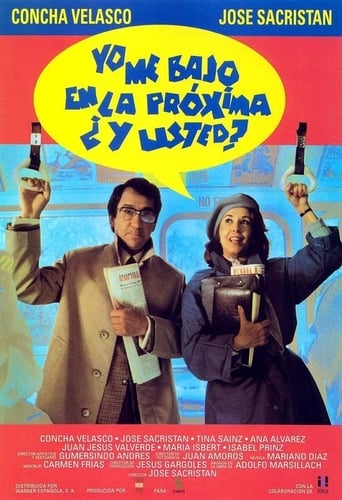 I Get Off at the Next Stop, What About You? · 1992
I Get Off at the Next Stop, What About You?
★ 5.41992
MovieComedy
A divorcing couple remembers the best years of their lives.
 Cachito · 1996
Cachito
★ 5.51996
MovieAdventureCrime
A gypsy girl, when her grandmother dies, goes in search of his mother who abandoned her as a baby
 Dirty Vivancos III · 2002
Dirty Vivancos III
★ 5.02002
MovieActionComedy
The investigation of the murder of two policemen will pit Inspector Vivancos, a tough, hardened and incorruptible guy, against his superior, Lieutenant Pajarda.
Filmography
Sort