Assia Djebar

Directing

Assia Djebar

Born June 30, 1936 · Cherchell, Algérie

Died February 6, 2015 · aged 78

Assia Djebar (آسيا جبار), pen name of Fatima-Zohra Imalhayène, born June 30, 1936 in Cherchell in Algeria and died February 6, 2015 in Paris, is an Algerian woman of letters, she obtained French nationality in 1967. She is considered one of the most famous and influential authors in the Maghreb. She was elected to the French Academy in 2005, becoming the first North African writer to be admitted t…
Known For

Women on the MoveWomen on the Move · 1990
Women on the Move
1990
MovieDocumentary
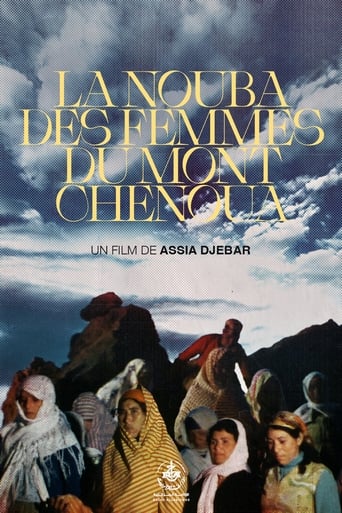
The Nouba of the Women of Mount ChenouaThe Nouba of the Women of Mount Chenoua · 1978
The Nouba of the Women of Mount Chenoua
6.61978
MovieDramaDocumentary
Writer and filmmaker Assia Djebar explores Algerian history, the psychological impact of war, and post-colonial female identity in this 1979 classic of film literature. Named for (and taking its structure from) a traditional song with five distinct movements, the film combines documentary-style observation with loose narrative form to tell the story of Lila, an Algerian expatriate returning to her country 15 years after independence has been won. In comparing her life with the lives and experiences of rural Algeriennes, Lila is able to put her childhood demons to rest and discover a new history -- one written in the ongoing strength of generations of women. Like much of Djebar's writing, the film has a strong subtext dealing with resistance to patriarchy and women's desire to appropriate the means of power and expression -- one of which, of course, is the filmmaker's camera.
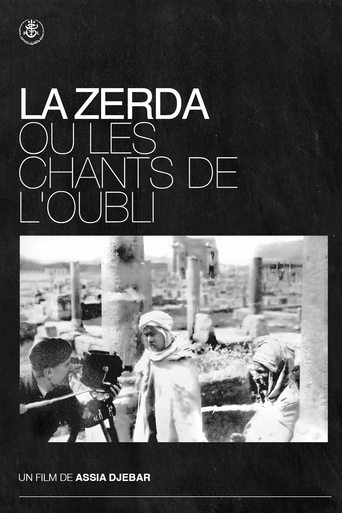
The Zerda or the Songs of ForgettingThe Zerda or the Songs of Forgetting · 1983
The Zerda or the Songs of Forgetting
8.11983
MovieDramaDocumentary
“La Zerda and the songs of oblivion” (1982) is one of only two films made by the Algerian novelist Assia Djebar, with “La Nouba des femmes du mont Chenoua” (1977). Powerful poetic essay based on archives, in which Assia Djebar – in collaboration with the poet Malek Alloula and the composer Ahmed Essyad – deconstructs the French colonial propaganda of the Pathé-Gaumont newsreels from 1912 to 1942, to reveal the signs of revolt among the subjugated North African population. Through the reassembly of these propaganda images, Djebar recovers the history of the Zerda ceremonies, suggesting that the power and mysticism of this tradition were obliterated and erased by the predatory voyeurism of the colonial gaze. This very gaze is thus subverted and a hidden tradition of resistance and struggle is revealed, against any exoticizing and orientalist temptation.

Filmography

Sort
The Nouba of the Women of Mount ChenouaThe Nouba of the Women of Mount Chenoua · 1978
The Nouba of the Women of Mount Chenoua
6.61978
MovieDramaDocumentary
Writer and filmmaker Assia Djebar explores Algerian history, the psychological impact of war, and post-colonial female identity in this 1979 classic of film literature. Named for (and taking its structure from) a traditional song with five distinct movements, the film combines documentary-style observation with loose narrative form to tell the story of Lila, an Algerian expatriate returning to her country 15 years after independence has been won. In comparing her life with the lives and experiences of rural Algeriennes, Lila is able to put her childhood demons to rest and discover a new history -- one written in the ongoing strength of generations of women. Like much of Djebar's writing, the film has a strong subtext dealing with resistance to patriarchy and women's desire to appropriate the means of power and expression -- one of which, of course, is the filmmaker's camera.

Director

The Zerda or the Songs of ForgettingThe Zerda or the Songs of Forgetting · 1983
The Zerda or the Songs of Forgetting
8.11983
MovieDramaDocumentary
“La Zerda and the songs of oblivion” (1982) is one of only two films made by the Algerian novelist Assia Djebar, with “La Nouba des femmes du mont Chenoua” (1977). Powerful poetic essay based on archives, in which Assia Djebar – in collaboration with the poet Malek Alloula and the composer Ahmed Essyad – deconstructs the French colonial propaganda of the Pathé-Gaumont newsreels from 1912 to 1942, to reveal the signs of revolt among the subjugated North African population. Through the reassembly of these propaganda images, Djebar recovers the history of the Zerda ceremonies, suggesting that the power and mysticism of this tradition were obliterated and erased by the predatory voyeurism of the colonial gaze. This very gaze is thus subverted and a hidden tradition of resistance and struggle is revealed, against any exoticizing and orientalist temptation.

Writer