C
Production
Charles Denton
No biography available.
Known For
 There's Only One Jimmy Grimble · 2000
There's Only One Jimmy Grimble
★ 6.82000
MovieComedy
Jimmy Grimble is a shy Manchester school boy. At school he is constantly being bullied by the other kids, and at home he has to face his mother's new boyfriend. However, through football, and some special boots, he manages to gain the confidence to succeed and leads his school football team towards the final of the local schools cup.
 Dean · 2016
Dean
★ 5.82016
MovieRomanceComedy
A comedy about loss, grief, and the redemptive power of love. Dean is a NY illustrator who falls hard for an LA woman while trying to prevent his father from selling the family home in the wake of his mother's death.
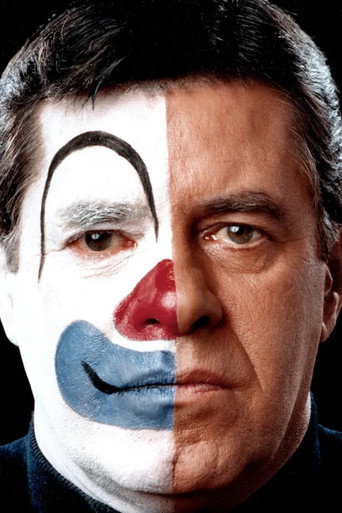 The Day the Clown Cried
The Day the Clown Cried
MovieDrama
A circus clown is imprisoned by the Nazis and goes with Jewish children to their deaths. Lost movie.
 Sequoia · 2014
Sequoia
★ 5.82014
MovieComedyDrama
A young man meets a 23-year-old cancer patient on the way to the park and disrupts her plan to commit suicide.
 The Most Powerful Politician in America · 1974
The Most Powerful Politician in America
1974
MovieDocumentary
Alabama governor George Wallace made his name as a segregationist remembered for standing “in the schoolhouse door” of the University of Alabama in 1963 in an attempt to stop the enrolment of black students. John Pilger subsequently interviewed Wallace on the campaign trail during two general elections.During the second, in 1972, Wallace was shot in an assassination attempt, leaving him paralysed and in a wheelchair. In The Most Powerful Politician in America, made in 1974, Pilger looks at the likelihood that a reinvented Wallace will run for the White House two years later, manipulating contemporary American passions and exploiting his influence in the powerful “Dixie” states controlled by the Democratic Party.
 Israel: After the Earthquake · 1974
Israel: After the Earthquake
1974
MovieDocumentary
John Pilger documentary from 1974.
 Vietnam: Still America's War · 1974
Vietnam: Still America's War
1974
MovieDocumentary
John Pilger returns to Vietnam in 1974. America had withdrawn its ground forces at the beginning of the previous year, he reports, yet the war had not ended. During this ‘peace’, more than 70,000 soldiers and civilians had been killed.
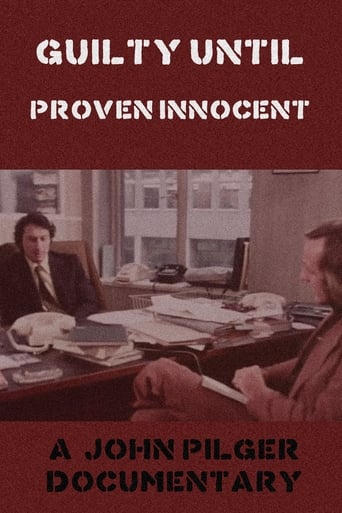 Guilty Until Proven Innocent · 1974
Guilty Until Proven Innocent
1974
MovieDocumentary
Documentary about innocent people confined to prison on remand. John Pilger reports that more than half of the 500,000 people remanded in custody by magistrates each year are eventually found not guilty, fined or, as in the case of “Helen”, given a conditional discharge. Helen, charged with stealing a pair of slippers but with no previous convictions, recalls her day in Holloway Prison, London, which started at 7am when she joined 96 other prisoners in a rush to use four toilets whose conditions were “disgusting”. Between then and lunchtime, all prisoners were locked up, with just half-an-hour’s walk round a large yard for exercise. Lunch was eaten in cells, with tea at 3.30pm, before they were locked up until the following morning.