Directing
Saodat Ismailova
Saodat Ismailova (1981, Uzbekistan) is a filmmaker and artist who lives and works between Tashkent and Paris. Her works have been presented in solo exhibitions at Le Fresnoy – Studio national des arts contemporains, Tourcoing; Eye Filmmuseum, Amsterdam; the Center for Contemporary Art Tashkent; Tromsø Kunstforening; and the Kunstsammlungen & Museen Augsburg, among others. Ismailova’s works have al…
Known For
 18000 Worlds · 2023
18000 Worlds
2023
Movie
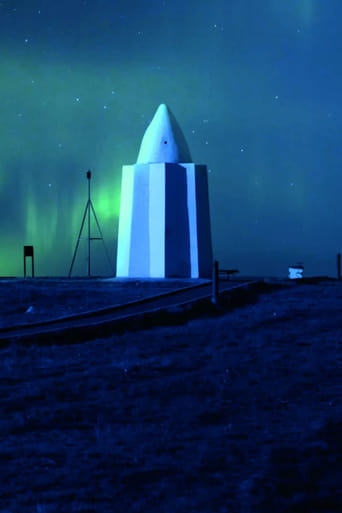
According to the 12th century mystic Shihab al-Din Yahya al-Suhrawardi, the world we live in is only one of the 18,000 that make up the universe. The film 18,000 WORLDS is conceived as a video story that draws attention to a world that is losing contact with its ancestors, and where the danger of losing forms of knowledge is real.
 Cemetery · 2019
Cemetery
★ 6.22019
MovieAdventure
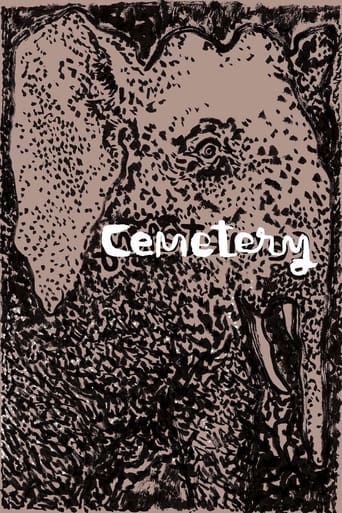
After a devastating earthquake, Nga, an old elephant and probably the last of its species, and Sanra, his mahout, are about to embark on a journey to find the mythical elephant’s graveyard. The group of poachers following them will die one after the other under mysterious circumstances and spells.
 40 Days of Silence · 2014
40 Days of Silence
★ 8.02014
MovieDrama
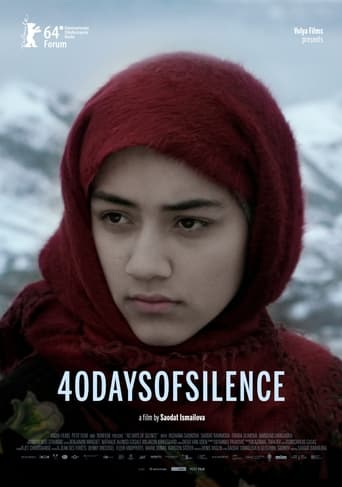
This is a passage between two faces, each the same, yet different. Bibicha’s face first appears in the dark, her eyes open and expression impassive, only her heavy breathing betraying the strain she feels. She will withstand the strain and take the vow of silence, retreating to her grandmother’s house for the 40 days to pass. The house and the landscape outside at least offer Bibicha certain sensory distractions: the taste of honey, the texture of a wall, an eye-catching bedspread, the view out over a sea of cloud, water fizzling on the stove. But it is not just her under strain, as her aunt’s frantic text messaging, her grandmother’s rueful acknowledgement of the stories of marital strife on the radio and her little cousin’s illegitimate status bear witness to. Four generations of women in the complete absence of men, yet all marked by their presence, the similarity of their fates blurring together different times and customs.
 Swan Lake · 2025
Swan Lake
★ 6.02025
Movie
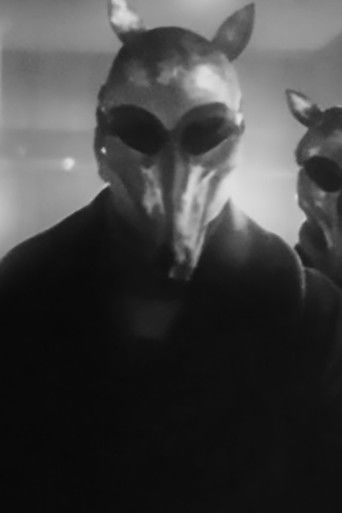
Composed of footage from Central Asian film archives, Swan Lake addresses the period running from a decade before to a decade after the collapse of the Soviet Union. The film includes familiar visual markers of the era: long queues outside shops, popular television programs hosted by healers and hypnotists, ballerinas performing Tchaikovsky’s Swan Lake (1876). This was a typical television intermezzo in the late Soviet empire, when high culture often filled the airwaves during moments of political uncertainty, whether the death of another elderly leader or an emergency declared in Moscow. What may be less familiar to Western audiences is the footage drawn from Central Asian films of the same period. These fragments extend the usual visual aesthetics of perestroika into a different regional context, introducing other ethnicities, landscapes, and urban spaces into what is often remembered as a predominantly Russian narrative of late-Soviet culture.
 Bibi Seshanbe · 2022
Bibi Seshanbe
2022
MovieDocumentary
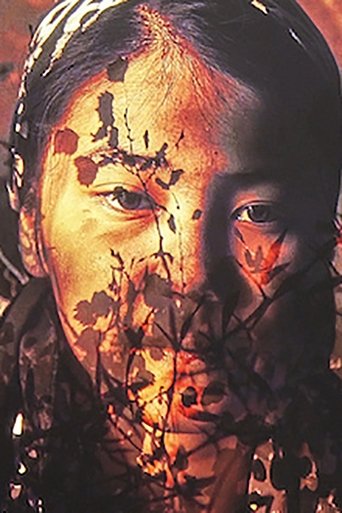
Bibi Seshanbe Ona – literally ‘The Lady of Tuesday’ – is a widespread blessing ritual in Central Asia. It incorporates elements of animalism, Zoroastrianism and an ancient story comparable to Cinderella. It is performed in a small circle of women and includes cooking special traditional foods, lighting candles and fortune-telling using flour. It is still performed in Uzbekistan and Tadjikistan.
 Her Right · 2020
Her Right
★ 6.02020
MovieDocumentary
Her Right is based on original feature films filmed in Uzbekistan from the 1920s to the 1980s and focuses on hujum, a government campaign against the wearing of the burqa in order to emancipate Muslim women.
 Two Horizons · 2017
Two Horizons
2017
Movie
Two Horizons is a two-screen video that speculates between ancient Turkic legend and soviet space travel program. The First Shaman of the Great Eurasian Steppe – Qorqut tried to escape Death throughout his life. It appeared to him as a seven years old boy. The only way for Qorqut to escape Death and achieve immortality was to levitate, hence beating gravity. It occurred in the southern edge of the Great Steppe. Locals venerate this place, as they believe that Qorqut revealed umbilical navel of the Earth. Later in the middle of the XX century this same place became known to the world as Baikonur, Soviet Union’s Space Station. Where the First Human defied gravity in mission Vostok - 1, traveling to space in the search of eternal life.
 Aral, Fishing in an Invisible Sea · 2004
Aral, Fishing in an Invisible Sea
★ 7.22004
MovieDocumentary
A documentary film about the three remaining generations of fishermen in the Aral Sea-- Their everyday struggle to survive in one of the most dire and inhospitable places on the planet.
Filmography
Sort