Sut Jhally

Directing

Sut Jhally

Sut Jhally is Professor of Communication at the University of Massachusetts at Amherst and founder and Executive Director of the Media Education Foundation (MEF). He is one of the world's leading scholars looking at the role played by advertising and popular culture in the processes of social control and identity construction. The author of numerous books and articles on media (including The Codes…

Known For
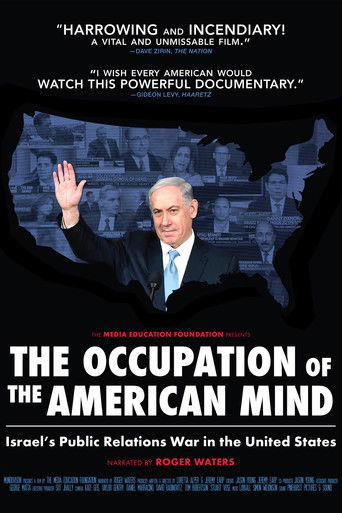
Behind the Shield: The Power and Politics of the NFLBehind the Shield: The Power and Politics of the NFL · 2022
Behind the Shield: The Power and Politics of the NFL
2022
MovieDocumentary
Celebrated author and Nation magazine sports editor Dave Zirin tackles the myth that the NFL was somehow free of politics before Colin Kaepernick and other Black NFL players took a knee.
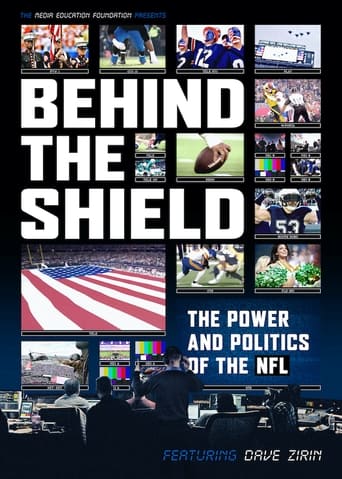
The Occupation of the American MindThe Occupation of the American Mind · 2016
The Occupation of the American Mind
8.42016
MovieDocumentary
Over the past few years, Israel's ongoing military occupation of Palestinian territory and repeated invasions of the Gaza strip have triggered a fierce backlash against Israeli policies virtually everywhere in the world—except the United States. This documentary takes an eye-opening look at this critical exception, zeroing in on pro-Israel public relations efforts within the U.S.
Playing UnfairPlaying Unfair · 2002
Playing Unfair
4.02002
MovieDocumentary
Sports media scholars look at the persistence of heterosexism and homophobia in perpetuating gender stereotypes. They argue for new media images which fairly and accurately depict the strength and competence of female athletes.
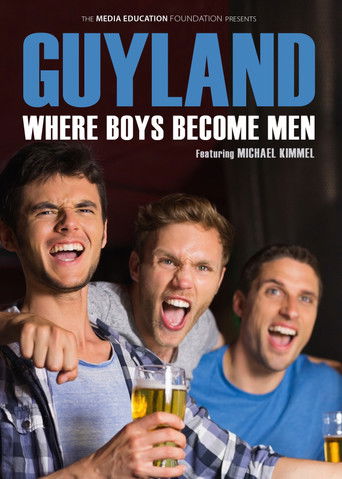
GuylandGuyland · 2015
Guyland
2015
MovieDocumentary
In this powerful new film based on his bestselling book, sociologist Michael Kimmel maps the troubling social world where boys become men -- a new stage of development he calls "Guyland." Arguing that the traditional adult signposts and cultural signals that once helped boys navigate their way to manhood are no longer clear, Kimmel provides an astonishing glimpse into a world where more and more young men are trying desperately to prove their masculinity to other young men -- with frequently disastrous consequences for young women and other young men. Guyland offers a way for all of us -- parents, young men and women, community members, and professors and administrators -- to envision new ways to support young men as they navigate this often perilous world.
Atrocity Inc.Atrocity Inc. · 2024
Atrocity Inc.
10.02024
MovieDocumentaryWar
In an exclusive new documentary, Max Blumenthal rips the cover off the media deceptions and atrocity hoaxes Israel pushed after October 7 to create political space for its gruesome assault on the Gaza Strip. Blumenthal exposes the US mainstream media's role as a megaphone for the Israeli government, introducing new lies even after their initial ones were debunked. Atrocity Inc raises serious questions about the official narrative of October 7, while revealing how Israel's army has consciously engaged in the same hideous atrocities which it falsely accused Palestinian militants of committing.
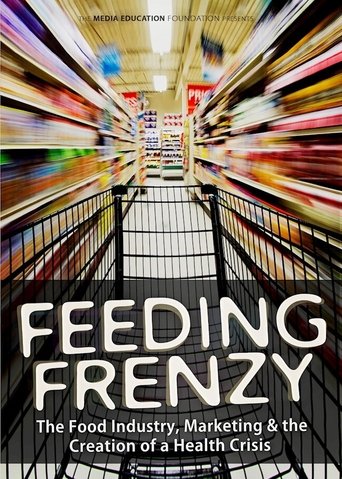
Feeding Frenzy: The Food Industry, Obesity and the Creation of a Health CrisisFeeding Frenzy: The Food Industry, Obesity and the Creation of a Health Crisis · 2013
Feeding Frenzy: The Food Industry, Obesity and the Creation of a Health Crisis
2013
MovieDocumentary
In the past three decades, obesity rates in the US have more than doubled for children and tripled for adolescents, and 70% of adults are now obese or overweight. The result has been a widening epidemic of obesity-related health problems, including coronary heart disease, high blood pressure, stroke, and Type 2 diabetes. While discussions about this spiraling health crisis have tended to focus on the need for more exercise and individual responsibility, FEEDING FRENZY trains its focus squarely on the responsibility of the processed food industry and the outmoded government policies it benefits from. It lays bare how taxpayer subsidies designed to feed hungry Americans during the Great Depression have enabled the food industry to flood the market with a rising tide of cheap, addictive, high calorie food products, and offers an engrossing look at the tactics of the multi billion-dollar marketing machine charged with making sure that every one of those surplus calories is consumed.
Edward Said On Orientalism: "The Orient" Represented in Mass MediaEdward Said On Orientalism: "The Orient" Represented in Mass Media · 1998
Edward Said On Orientalism: "The Orient" Represented in Mass Media
1998
MovieDocumentary
Edward Said's book Orientalism has been profoundly influential in a diverse range of disciplines since its publication in 1978. In this engaging and lavishly illustrated interview he talks about the context within which the book was conceived, its main themes, and how its original thesis relates to the contemporary understanding of "the Orient" as represented in the mass media. "That's the power of the discourse of Orientalism. If you're thinking about people and Islam, and about that part of the world, those are the words you constantly have to use. To think past it, to go beyond it, not to use it, is virtually impossible, because there is no knowledge that isn't codified in this way about that part of the world." -Edward Said
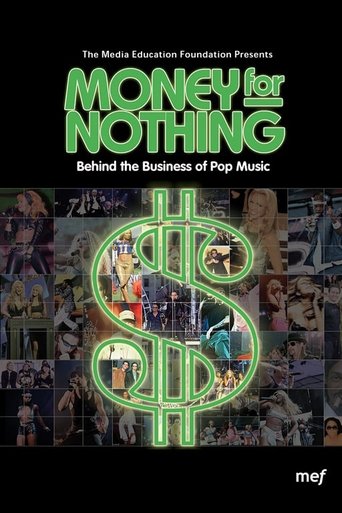
Money for Nothing: Behind the Business of Pop MusicMoney for Nothing: Behind the Business of Pop Music · 2001
Money for Nothing: Behind the Business of Pop Music
2001
MovieDocumentaryMusic
The hallmarks of popular music - artist independence and diversity of voices - are threatened by a contracting marketplace of record companies, radio ownership and playlists, as well as increased use in advertising. Big-name artists, historians and economists explain how popular music is produced and marketed and critique its current state.
Filmography

Sort
GuylandGuyland · 2015
Guyland
2015
MovieDocumentary
In this powerful new film based on his bestselling book, sociologist Michael Kimmel maps the troubling social world where boys become men -- a new stage of development he calls "Guyland." Arguing that the traditional adult signposts and cultural signals that once helped boys navigate their way to manhood are no longer clear, Kimmel provides an astonishing glimpse into a world where more and more young men are trying desperately to prove their masculinity to other young men -- with frequently disastrous consequences for young women and other young men. Guyland offers a way for all of us -- parents, young men and women, community members, and professors and administrators -- to envision new ways to support young men as they navigate this often perilous world.

Producer

Feeding Frenzy: The Food Industry, Obesity and the Creation of a Health CrisisFeeding Frenzy: The Food Industry, Obesity and the Creation of a Health Crisis · 2013
Feeding Frenzy: The Food Industry, Obesity and the Creation of a Health Crisis
2013
MovieDocumentary
In the past three decades, obesity rates in the US have more than doubled for children and tripled for adolescents, and 70% of adults are now obese or overweight. The result has been a widening epidemic of obesity-related health problems, including coronary heart disease, high blood pressure, stroke, and Type 2 diabetes. While discussions about this spiraling health crisis have tended to focus on the need for more exercise and individual responsibility, FEEDING FRENZY trains its focus squarely on the responsibility of the processed food industry and the outmoded government policies it benefits from. It lays bare how taxpayer subsidies designed to feed hungry Americans during the Great Depression have enabled the food industry to flood the market with a rising tide of cheap, addictive, high calorie food products, and offers an engrossing look at the tactics of the multi billion-dollar marketing machine charged with making sure that every one of those surplus calories is consumed.

Executive Producer

Edward Said On Orientalism: "The Orient" Represented in Mass MediaEdward Said On Orientalism: "The Orient" Represented in Mass Media · 1998
Edward Said On Orientalism: "The Orient" Represented in Mass Media
1998
MovieDocumentary
Edward Said's book Orientalism has been profoundly influential in a diverse range of disciplines since its publication in 1978. In this engaging and lavishly illustrated interview he talks about the context within which the book was conceived, its main themes, and how its original thesis relates to the contemporary understanding of "the Orient" as represented in the mass media. "That's the power of the discourse of Orientalism. If you're thinking about people and Islam, and about that part of the world, those are the words you constantly have to use. To think past it, to go beyond it, not to use it, is virtually impossible, because there is no knowledge that isn't codified in this way about that part of the world." -Edward Said

Director

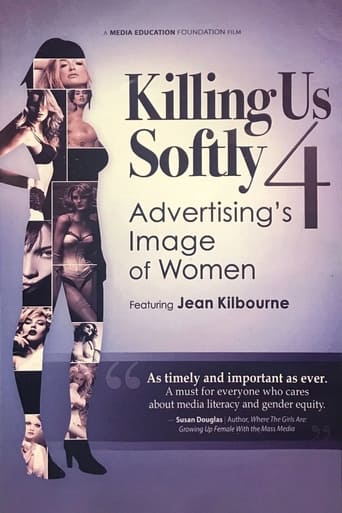
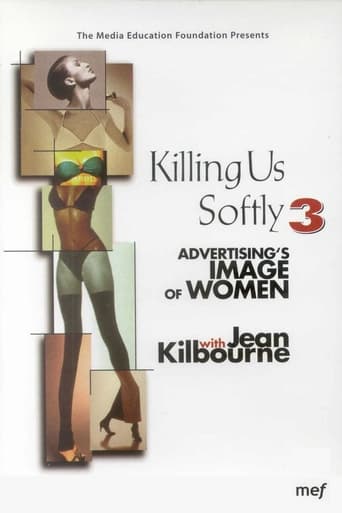
Killing Us Softly 3: Advertising's Image of WomenKilling Us Softly 3: Advertising's Image of Women · 2000
Killing Us Softly 3: Advertising's Image of Women
6.22000
MovieDocumentary
Jean Kilbourne's pioneering work helped develop and popularize the study of gender representation in advertising. Her award-winning Killing us Softly films have influenced millions of college and high school students across two generations and on an international scale. In this important new film, Kilbourne reviews if and how the image of women in advertising has changed over the last 20 years. With wit and warmth, Kilbourne uses over 160 ads and TV commercials to critique advertising's image of women. By fostering creative and productive dialogue, she invites viewers to look at familiar images in a new way, that moves and empowers them to take action.

Director

This Land Is Our LandThis Land Is Our Land · 2010
This Land Is Our Land
2010
MovieDocumentary
For more than three decades, transnational corporations have been busy buying up what used to be known as the commons -- everything from our forests and our oceans to our broadcast airwaves and our most important intellectual and cultural works. In This Land is Our Land, acclaimed author David Bollier, a leading figure in the global movement to reclaim the commons, bucks the rising tide of anti-government extremism and free market ideology to show how commercial interests are undermining our collective interests. Placing the commons squarely within the American tradition of community engagement and the free exchange of ideas and information, Bollier shows how a bold new international movement steeped in democratic principles is trying to reclaim our common wealth by modeling practical alternatives to the restrictive monopoly powers of corporate elites.

Director

Game Over: Gender, Race & Violence in Video GamesGame Over: Gender, Race & Violence in Video Games · 2000
Game Over: Gender, Race & Violence in Video Games
2000
MovieDocumentary
Video and computer games represent a $6 billion a year industry. One out of every ten households in American owns a Sony Playstation. Children who own video game equipment play an average of ten hours per week. And yet, despite capturing the attention of millions of children worldwide, video games remain one of the least scrutinized cultural industries. Game Over is the first educational documentary to address the fastest growing segment of the media through engaging questions of gender, race and violence. Game Over offers a refreshing dialogue about the complex and controversial topic of video game violence, and is designed to encourage high school and college students to think critically about the video games they play. - See more at: http://www.mediaed.org/cgi-bin/commerce.cgi?preadd=action&key=205#sthash.f6Cram5T.dpuf

Executive Producer

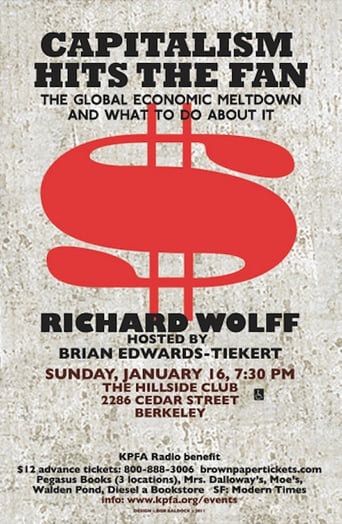
Capitalism Hits the FanCapitalism Hits the Fan · 2009
Capitalism Hits the Fan
7.02009
MovieDocumentary
With breathtaking clarity, renowned University of Massachusetts Economics Professor Richard Wolff breaks down the root causes of today's economic crisis, showing how it was decades in the making and in fact reflects seismic failures within the structures of American-style capitalism itself. Wolff traces the source of the economic crisis to the 1970s, when wages began to stagnate and American workers were forced into a dysfunctional spiral of borrowing and debt that ultimately exploded in the mortgage meltdown. By placing the crisis within this larger historical and systemic frame, Wolff argues convincingly that the proposed government "bailouts," stimulus packages, and calls for increased market regulation will not be enough to address the real causes of the crisis, in the end suggesting that far more fundamental change will be necessary to avoid future catastrophes.

Director

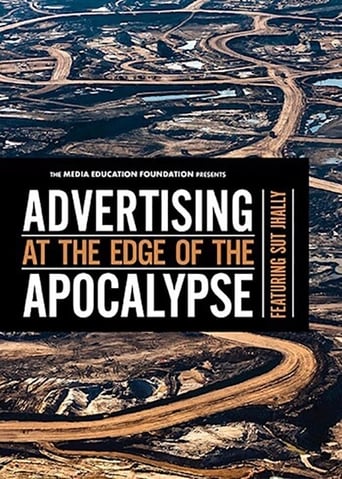
Advertising at the Edge of the ApocalypseAdvertising at the Edge of the Apocalypse · 2018
Advertising at the Edge of the Apocalypse
2018
MovieDocumentary
In this highly anticipated sequel to his groundbreaking, ADVERTISING AND THE END OF THE WORLD, media scholar Sut Jhally explores the devastating personal and environmental fallout from advertising, commercial culture, and rampant American consumerism. Ranging from the emergence of the modern advertising industry in the early 20th century to the full-scale commercialization of the culture today, Jhally identifies one consistent message running throughout all of advertising: the idea that corporate brands and consumer goods are the keys to human happiness. He then shows how this powerful narrative, backed by billions of dollars a year and propagated by the best creative minds, has blinded us to the catastrophic costs of ever-accelerating rates of consumption.

Director

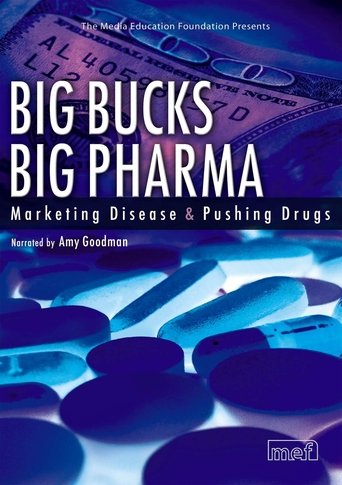
Big Bucks Big Pharma - Marketing Disease and Pushing DrugsBig Bucks Big Pharma - Marketing Disease and Pushing Drugs · 2006
Big Bucks Big Pharma - Marketing Disease and Pushing Drugs
5.22006
MovieDocumentary
Big Bucks, Big Pharma pulls back the curtain on the multi-billion dollar pharmaceutical industry to expose the insidious ways that illness is used, manipulated, and in some instances created, for capital gain. Focusing on the industry's marketing practices, media scholars and health professionals help viewers understand the ways in which direct-to-consumer (DTC) pharmaceutical advertising glamorizes and normalizes the use of prescription medication, and works in tandem with promotion to doctors. Combined, these industry practices shape how both patients and doctors understand and relate to disease and treatment. Ultimately, Big Bucks, Big Pharma challenges us to ask important questions about the consequences of relying on a for-profit industry for our health and well-being.

Writer