Acting
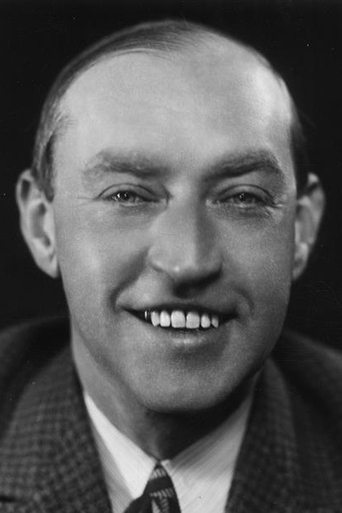
Bedřich Vrbský
Born May 4, 1890 · Prague, Bohemia, Austria-Hungary. [now in Czech Republic]
Died February 23, 1966 · aged 75
No biography available.
Known For
 The Good Soldier Švejk · 1957
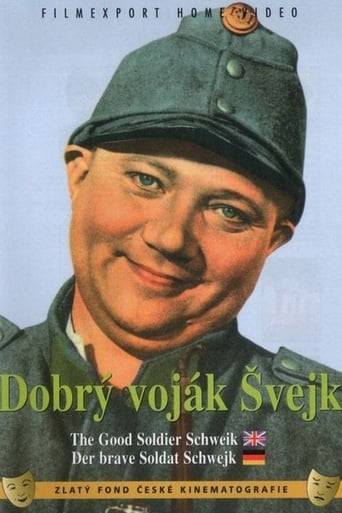
The Good Soldier Švejk
★ 7.51957
MovieComedyWar
Good-natured and garrulous, Schweik becomes the Austrian army's most loyal Czech soldier when he is called up on the outbreak of World War I -- although his bumbling attempts to get to the front serve only to prevent him from reaching it. Playing cards and getting drunk, he uses all his cunning and genial subterfuge to deal with the police, clergy, and officers who chivy him toward battle.
 Krakatit · 1948
Krakatit
★ 6.51948
MovieScience FictionThriller
In early 20th century Czechoslovakia, a gravely ill chemist recalls his discovery of a powerful explosive and how it landed in the hands of anarchists.
 Ecstasy · 1933
Ecstasy
★ 6.31933
MovieDramaRomance
Eva has just gotten married to an older gentleman, but discovers that he is obsessed with order in his life and doesn't have much room for passion. She becomes despondent and leaves him, returning to her father's house. One day while bathing in the lake, she meets a young man and they fall in love. The husband has become grief stricken at the loss of his young bride, and fate brings him together with the young lover that has taken Eva from him.
 Její lékař · 1933
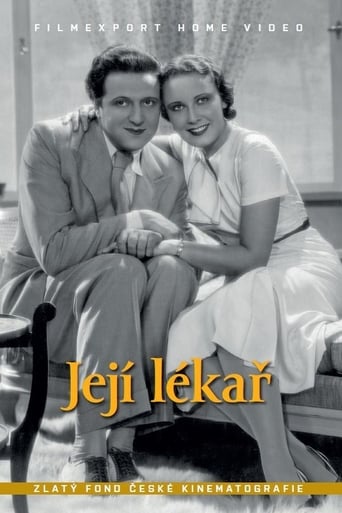
Její lékař
★ 6.51933
MovieComedyRomance
 I Dutifully Report · 1958
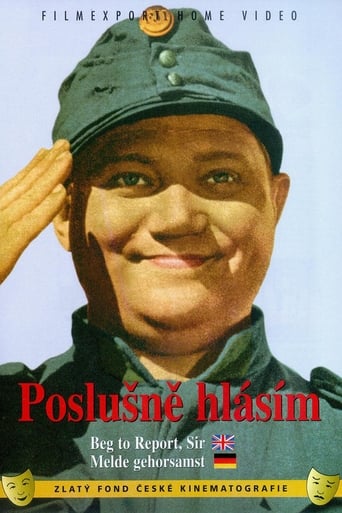
I Dutifully Report
★ 6.91958
MovieComedyWar
A comedy based on the novel of Jaroslav Hašek's The Good Soldier Svejk happens during the World War I. I Dutifully Report: In the introduction to the second part of the film adaptation of Hašek's novel The Good Soldier Švějk presents his main character Josef Švejk. With the distinctive traditional Czech cartoon character of a soldier Svejk, this time you meet on the way to the front and eventually right in the firing line. You can look at his famous train events, and also probably the most famous episode of the novel, Švejk's Budějovice anabasis. Don't miss the scene with the secretly bought cognac, the episode with Svejk as a fake Russian prisoner of war, including the court scene, and the scene in which lieutenant Dub is caught in a brothel. Despite the criticism, Steklý's adaptation is undoubtedly the most famous and memorable at present.
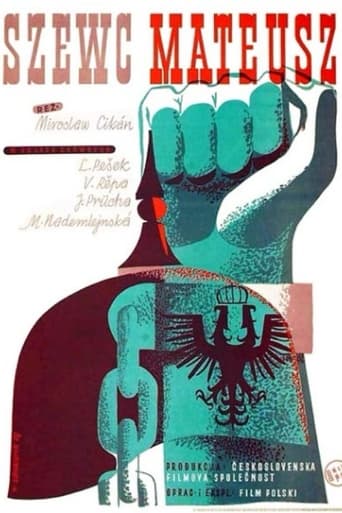 O ševci Matoušovi · 1948
O ševci Matoušovi
★ 5.01948
MovieDramaHistory
The revolutionary year of 1848 brought great hopes among the hitherto silent classes, awakening social and national hopes. The response also penetrated the remote countryside, even as far as the Podkrkonoše Mountains. The young shoemaker there began to take an interest in social and political events, and he also experienced disappointment in later developments.
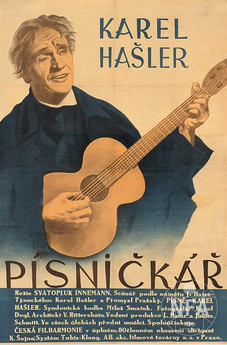 Ballad-Singer · 1932
Ballad-Singer
★ 9.01932
MovieDrama
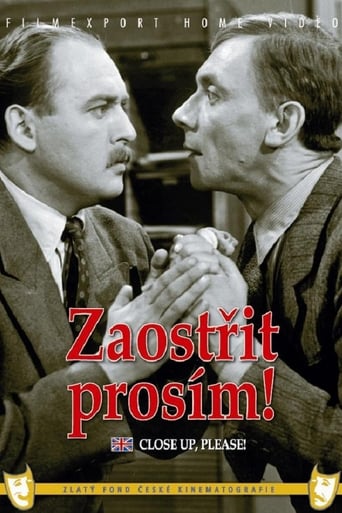 Zaostřit prosím! · 1956
Zaostřit prosím!
★ 7.31956
MovieComedy
A Czech satirical comedy, filmed according to a script by the State Prize laureate Jiří Marek based on several of his satirical short stories. The film contains three stories, the first of which mocks careerism, the second takes aim at the inadequate attitude of some of our literary critics, and the final story is a satirical picture of how irresponsible construction work is still done in some parts of our country.
Filmography
Sort