J
Production
Jerry Fairbanks
Born November 1, 1904 · San Francisco, California, USA
Died June 21, 1995 · aged 90
No biography available.
Known For
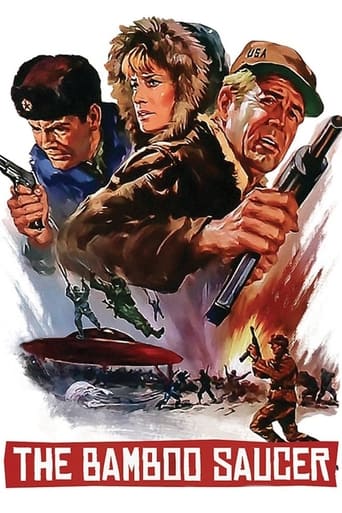 The Bamboo Saucer · 1968
The Bamboo Saucer
★ 5.21968
MovieScience Fiction
A flying saucer hidden in a Red Chinese peasant village is sought by teams from the United States and U.S.S.R. On finding it, they band together to explore the saucer and take a trip into space.
 Tom, Dick and Harriet · 1960
Tom, Dick and Harriet
1960
MovieMusic
Long distance telephone calls save the day when Aunt Emily tries to sell the farm, and when Harriet tries to decide whose proposal to accept, Tom's or Dick's.
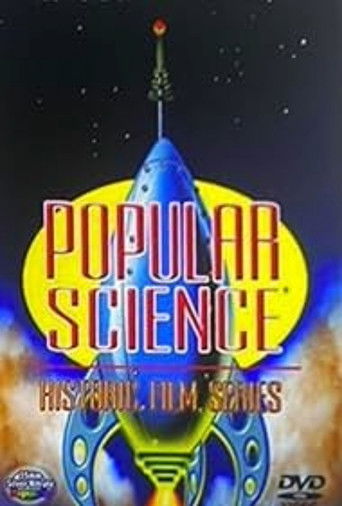 Popular Science J-0-5 · 1941
Popular Science J-0-5
★ 7.01941
MovieDocumentary
Huge electric sign operated by photo cell animation; freshwater fauna propagated by Carolina Biological, sold and used for research; pickup and delivery of airmail in flight with small planes.
Popular Science J-0-1 · 1940Popular Science J-0-1
1940
MovieDocumentary
A disaster truck, which is equipped to meet practically any emergency that arises in the community; In Oklahoma a breeder of under-slung cattle, making possible smaller grazing areas for milk herds; a deburping machine, of all things.
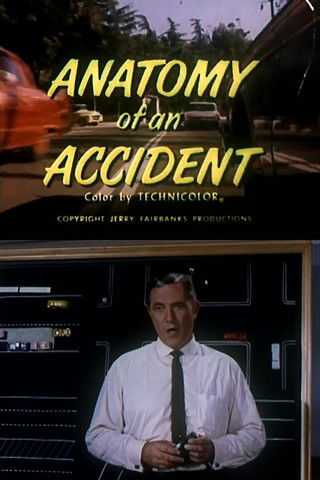 Anatomy of an Accident · 1961
Anatomy of an Accident
★ 8.01961
MovieDrama
A Jerry Fairbanks and Bell System production, “Anatomy of an Accident” is a 1961 driver's education film in technicolor focusing on defensive driving told through a scripted story centered around a family outing that came to a tragic end.
 With This Ring · 1954
With This Ring
★ 6.01954
MovieDrama
Dramatised promotional film for the Miller Brewing Company.
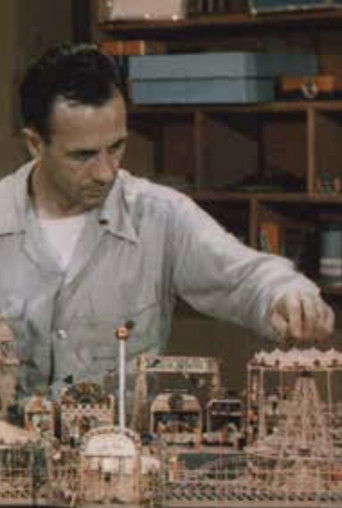 Unusual Occupations · 1946
Unusual Occupations
1946
MovieDocumentary
"Unusual Occupations exploited a booming contemporary interest in the offbeat and eccentric. Turning its eye specifically toward the surprising professions and hobbies of otherwise ordinary people, the series—produced by Fairbanks’ Scientific Films Inc., and with able narration by sportscaster Ken Carpenter—featured everything from artillery testers to underwear collectors. While the series’ two 1936 pilots were shot in Cinecolor, the production soon switched to Magnacolor, a similar two-color subtractive system that had likewise found a place in the film production market as a cheaper alternative to Technicolor. Using bipack camera film to obtain two color records, prints were struck on double emulsion-coated (“duplitized”) film with one side toned blue and the other red-orange. The resulting color image is pleasing, if not entirely natural."
— Kirk McDowell
Popular Science J-0-3 · 1940Popular Science J-0-3
★ 8.01940
MovieDocumentary
Pliofilm plastic (rubber hydrochloride) and applications in raingear, food packaging, a transparent dress. Also, hybrid giant vegetables; plastic contact lenses; the nature and prevention of dust explosions.