
Acting
Kostas Smoriginas
Born April 22, 1953 · Kaunas, Lithuania (age 73)
No biography available.
Known For
 Parade · 2023
Parade
★ 7.02023
MovieDramaComedy
Miglė, who married when she was very young, has for 26 years been divorced from her ex-husband who one day calls her and asks for a favour. He has found that it would be a good time to get married again after the death of his mother. But there is a small problem: their divorce is valid only in the eyes of the law, because a Catholic marriage cannot be divorced. It can, however, be annulled. All that needs to be done is to complete an application and give the “Catholic court” a good reason. But she does not know in what kind of absurd situations she is about to find herself in.
 The Devil's Seed · 1979
The Devil's Seed
★ 10.01979
MovieDrama
In the Lithuanian village of Lietuvos, a farmer brings his sheltered nephew, Joni, to the rich Bani. By biting the prospective host's hand, the teenager gains the nickname of "the devil's seed."
 Walnut Bread · 1977
Walnut Bread
★ 6.71977
MovieRomance
In rural postwar Lithuania, the Šatai and Kaminskai families live beside each other. A cow sold to the Kaminskai dies, creating enmity between the families. Andrius Šatas and Liuka Kaminskaitė grow up together and fall in love.
 A Streetcar Named Desire · 1987
A Streetcar Named Desire
1987
MovieDramaTV Movie
As Blanche’s fragile world crumbles, she turns to her sister Stella for solace – but her downward spiral brings her face to face with the brutal, unforgiving Stanley Kowalski.
 Loss · 2008
Loss
★ 7.32008
MovieDrama
A mentally ill young woman Valda convinces herself that a boy growing up in an orphanage is her child. Following the footsteps of a thousands Lithuanians, she immigrates to Ireland to earn money to save him. "Loss" portrays the beauty and tragedy of the human heart.
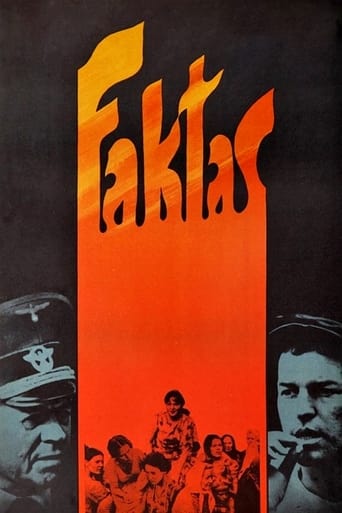 Fact · 1981
Fact
★ 5.71981
MovieDramaWar
Facts is a dramatization of a massacre in a Lithuanian village during World War II when Nazis rounded up over 100 men, women, and children accused of partisan activity and then torched the houses in which they were held. Using Russian interrogations of a few survivors, the testimony of villagers, and some of the Germans responsible for the killing, the film gradually reconstructs the event and its context.
 The Eternal Light · 1989
The Eternal Light
★ 9.01989
MovieDrama
A land surveyor marries a young woman, but she falls for a reckless machine-operator, while a local buffet worker harbors unrequited love for the surveyor, entangling the four isolated villagers in a web of passion and tragic despair.
 Whisper of Sin · 2007
Whisper of Sin
★ 5.52007
MovieDrama
A nearly-suicidal, young woman visits a psychotherapist. She is in love with a priest, and the diagnosis of her husband's mental illness leaves no hope. The psychotherapist, in her attempts to resolve the amassed difficulties, seemingly begins to duplicate the life stages and behavioral patterns of her patient. A script for this film is based on motifs from the best-seller, scandalous novel, Witch and Rain, by female author, Jurga Ivanauskaite. By choosing a priest as the main role for a love story, the author broke an existing societal taboo. Faith, Love and Hope form the trilogy by the authors of this screenplay. Love stands as the grandest of the three.


