A
Directing
Akram Zaatari
No biography available.
Known For
 How I Love You · 2004
How I Love You
2004
MovieDocumentary
How I Love You is an exploration of sexuality among gay men in Lebanon. A couple and three individuals talk about their sex lives, about commitments and failures, about their relationships to their bodies, about their passions and love in a society where homosexuality is still punished by imprisonment. The video uses light to produce a white veil that obstructs seeing, hence rendering character identification almost impossible. Through this obstruction, the video locates itself within a specific social context.
 Objects of War · 2000
Objects of War
2000
MovieDocumentary
‘Objects of War’ is a series of testimonials on the Lebanese war. Each person chooses an object, ordinary or unusual, which serves as a starting point for his / her story. These testimonials while helping to create a collective memory, also show the impossibility of telling a single History of this war. Only fragments of this History are recounted here, held as truth by those expressing them. In ‘Objects of War’, the aim is not to reveal a truth but rather to gather and confront many diverse versions and discourses on the subject. ‘Objects of War’ started in 1999 assembling the testimonials of eleven persons. It was first shown in 2000 . It continued in 2003 with ‘Objects of War n°2’, recording seven additional testimonials. This time however, and since then, the recorded material is left unedited, shown in its integrity. The work of collecting and assembling these stories continued with ‘Objects of War n°3 & n°4’ in 2006 and ‘n°5 & 6’ in 2014.
 Reflection · 1995
Reflection
1995
Movie
An eleven-minute film by Akram Zaatari from 1995. Memories and images of childhood are reflected both on the screen and in the small mirror that a young boy plays with. Filmmaker and video artist Akram Zaatari was born in Saida, Lebanon in 1966 and currently lives in Beirut. His art practice also includes photography, installation, critical writing and curating.
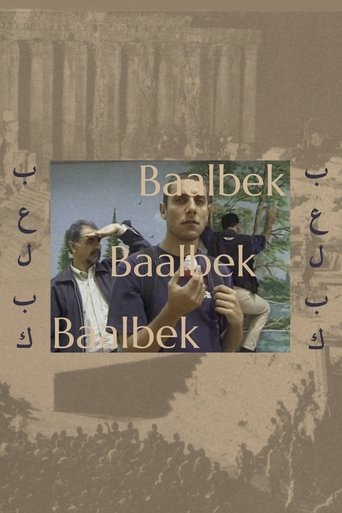 Baalbek · 2001
Baalbek
2001
Movie
A journalist and a photographer drift on their way between Beirut and Baalbeck. Their journey is repeated three times in three different ways to evoke current issues and confusion in Lebanon’s present state.
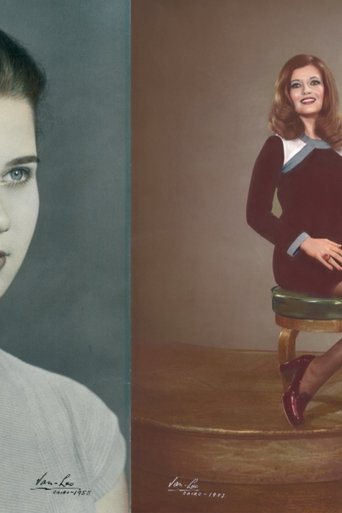 Her + Him · 2012
Her + Him
2012
Movie
In 1998, Akram Zaatari interviewed Egyptian photographer Van Leo in Cairo. In 2001 he made the video Her + Him Van Leo and based it on the story of a woman who once entered Studio Van Leo and asked the artist to take pictures of her naked. At the time, Zaatari had access to a few of the woman's twelve pictures. In 2010 Zaatari came across the entire series showing "Nadia" undressing in twelve poses and expanded the original work into this re-edited, remastered version.
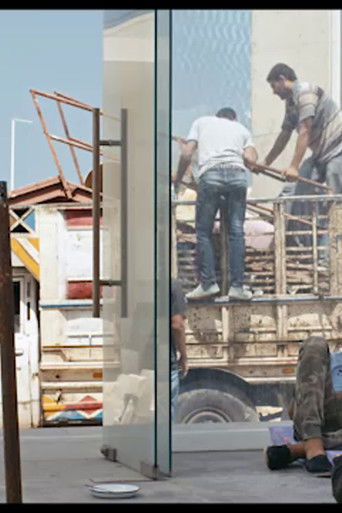 Beirut Exploded Views · 2014
Beirut Exploded Views
2014
Movie
In a city post-apocalypse, young men communicate only through smart devices. They make home out of urban debris. They can’t speak to each other, but are still able to dream.
 Mourning Images · 1995
Mourning Images
1995
Movie
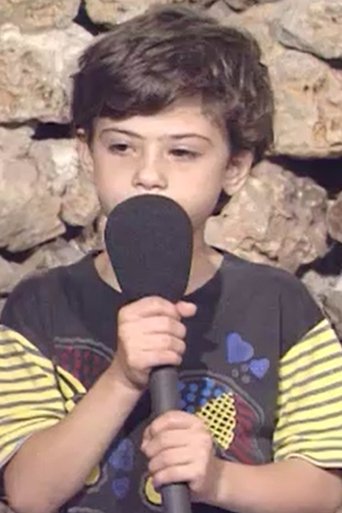
"Zaatari got his start in the freewheeling and somewhat rough-and-tumble world of Lebanese television in the mid-1990s. Zaatari was hired in 1995 as the executive producer of a morning television program for Future TV. Lebanon’s television industry had just been reorganized to curb the broadcasting excesses of the previous era; every party and militia across the political spectrum had set up its own station during the civil war. When the conflict ended, the government reduced the more than fifty channels to around ten. Future TV was one of the newer, more professional stations that aggressively recruited young creative types and gave them unfettered access to equipment, along with relative freedom to produce highly experimental documentaries. Zaatari’s earliest videos were originally screened as filler between the morning show’s segments."
 Letter to a Refusing Pilot · 2013
Letter to a Refusing Pilot
2013
Movie
Lebanese artist-filmmaker Zaatari conducts both an investigation and a stirring tribute to an act of resistance (or forbearance) that marked his childhood memories: the refusal of an Israeli pilot to bomb a boys' high school in south Lebanon in 1982.
Filmography
Sort