Directing
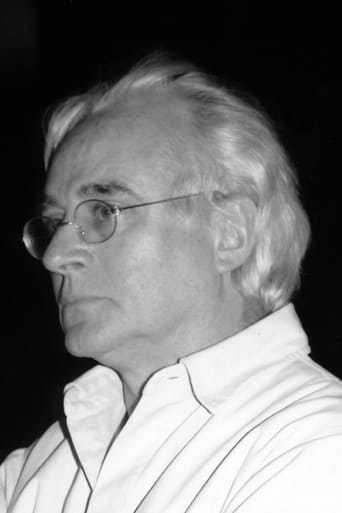
Jean-Claude Rousseau
Born January 1, 1946 · Paris (age 80)
Jean-Claude Rousseau is one of the most unconventional lone fighters in French cinema. His predominantly short films deal with no less than cinema per se: space, time and movement. As abstract as each of these concepts might seem taken alone, Rousseau assigns their ultimate designation as an integral whole: A person (or no-one, for that matter) moves (or does not move) within a room (or looks into…
Known For
 In Memoriam · 2019
In Memoriam
★ 10.02019
MovieDocumentary
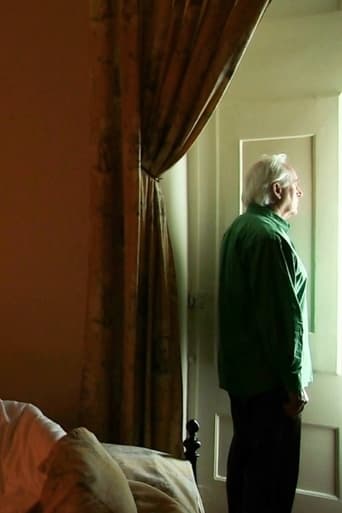
A hotel room and a few sweets, their wrappers stacked like gold leaf... An interview with Chantal Akerman and ongoing coverage of the 2015 terrorist attacks in Paris, and what emerges is a genuine tragedy, as simple as Racine's.
 A Day · 2010
A Day
★ 4.02010
Movie
 Festival · 2010
Festival
★ 3.02010
Movie
Jean-Claude Rousseau is a filmmaker who believes in the natural power of images. The rigid compositions create something like a pure state, which constantly changes during the period of its viewing – like an empty and simultaneously detail-packed field. During this period the viewer is challenged to find and occupy his own position, to find his perspective in a similar way the filmmaker has found his in several places. Festival combines places the artist has visited during the last few years. Jean-Claude Rousseau’s films not only make beautiful discoveries, they are beautiful discoveries.
 The Enclosed Valley · 1995
The Enclosed Valley
★ 7.51995
MovieDocumentary
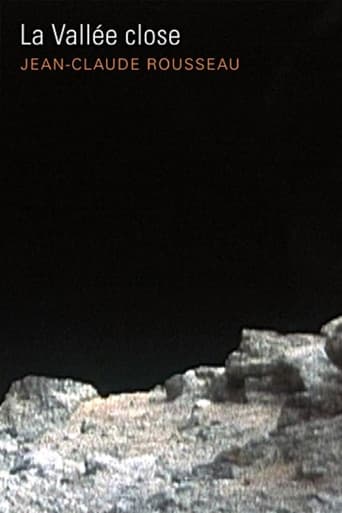
My films are like that: in a room, but looking out onto an open sky. [...] I can’t really say it except to repeat that Bresson note, ‘that without a thing changing, everything is different.’ The film exists. The fiction is set up, and we believe in it. The justness of the agreement leads us to believe it, because everything plays equally at being a sign. That’s the arrangement of the elements. It’s an act of faith. La vallée close is just this: elements treated above all as if in a documentary that, without being changed, portray the story and reveal between them the elements of fiction. But above all seen as they are, insignificant. And then in the relations they set up, they can satisfy our desire for a story. -- Rousseau
 Saudade · 2012
Saudade
★ 7.22012
Movie
“My eyes are imprisoned/ Weeping with great longing”. Soèdade (saudade) — “longing” or “yearning” — is a Portuguese word that does not have a precise translation in English. It has been described as a “…vague and constant desire for something that does not and probably cannot exist…”
 La Villa · 2017
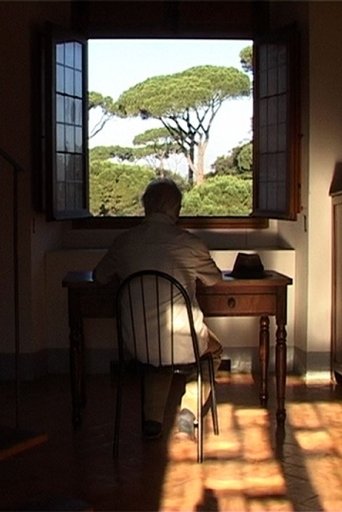
La Villa
2017
Movie
 Requiem · 2025
Requiem
★ 5.02025
MovieDocumentary
As the orchestra choir settles into the church choir, the trombonist blows into his instrument as a warm-up. Mozart's name appears at the top of the score to be performed, whose title is also that of the film: Requiem.
 Série noire · 2009
Série noire
★ 7.02009
Movie
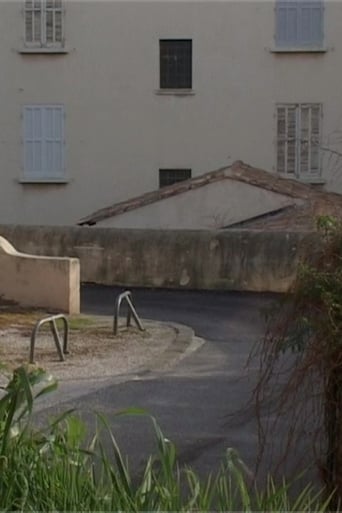
The title is playing with us, claiming that the film is a detective story. Witch in a way it is not untrue. The camera is peeping tom and it does not lose a thing (almost) in its surveillance: every movement, people coming and going, sounds, a sudden shot... A crime ? Maybe. Some phone calls and nobody answering: another crime ?
Filmography
Sort
A Day · 2010A Day
★ 4.02010
Movie
Director
La Villa · 2017La Villa
2017
Movie
Director

 Attic · 2011
Attic
2011
MovieDrama
Director