N
Directing
Nicky Hamlyn
Nicky Hamlyn studied fine arts at the University of Reading. He is a professor in experimental films and a filmmaker.
Known For
 La Défense · 2013
La Défense
2013
Movie
A video work by Nicky Hamlyn
 Matrix · 1998
Matrix
★ 7.11998
Movie
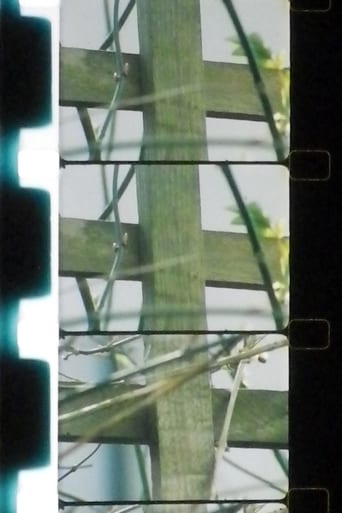
The film is composed of receding planes in a landscape: a back garden and the houses beyond. The wooden lattice fence, visible in the image, marks the border between enclosed and open, private and public space, and forms both a fulcrum for the work and a formal grid by which the shots are framed and organised.
 Pistrino · 2003
Pistrino
2003
Movie
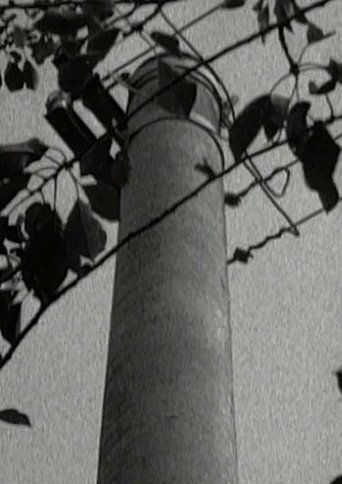
The film is composed from thirty-second long time-lapse sequences, filmed in Northwest Umbria. Condensing days into seconds, Hamlyn makes use of lap dissolves and time-lapse photography to compress the temporal duration of the Italian landscape. The film invokes some pre-cinematic technologies mainly in the shadow plays where light and shadow manifest as the movement of trees, clouds, and other objects cast by the sun project and dance onto white walls and other surfaces, emulating and interacting with the film’s grain
 Double Fence · 2010
Double Fence
2010
Movie
Double Fence was shot from the balcony of a B&B in Porto Potenza Picena , on the Adriatic coast near Ancona . The work explores the changes that occur with slight shifts in framings of the same scene, and the dramatic alterations in light, colour , space and movement between early morning and late afternoon. The work is the third in a series that records spontaneously occurring moiré patterns and related phenomena. The multifarious birdsong emanates from a nearby animal and bird sanctuary.
 Ghost Stories · 1983
Ghost Stories
1983
Movie
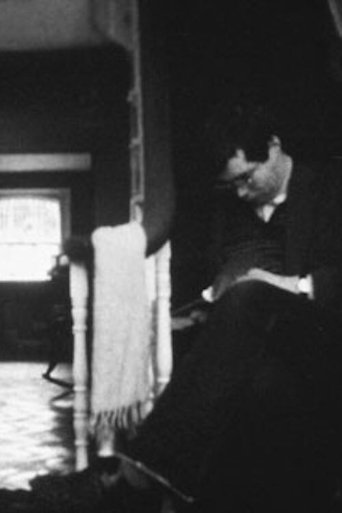
Ghost stories opens with a sequence of polemical shots: a mysterious shadow, an ambiguous advertisement which has deeper ambiguities unknown even to itself, and a lengthy quotation from Roland Barthes on the nature of autobiography. These opening shots outline the context in which I hope the bulk of the film will be seen: as a critique on so-called visual literacy, which is frequently based on a complacent mis-reading of images, and also as a rejection of film-biography, whose efficacy depends on such visual complacency. The body of the film consists of fragmentary views of the interior of a house, in which desultory activity occasionally takes place, sometimes in front of the camera, sometimes not. A ghost story is told, firewood is sorted.
 Panni · 2005
Panni
2005
Movie
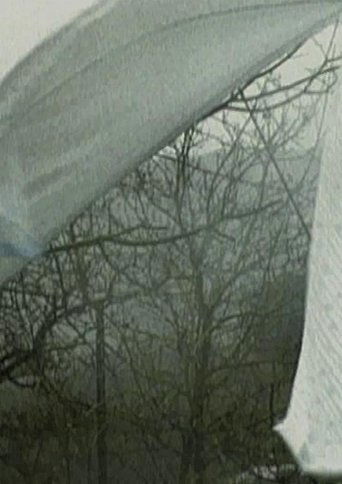
Panni is a visually arresting work in its formal structure and visual expression of colors. The subject matter of the film is a row of bed sheets flapping on a clothesline, drying in the wind. The colors punch through the screen as orange sheets flutter against a green backdrop of grass and trees.
 Power Hub · 2009
Power Hub
2009
Movie
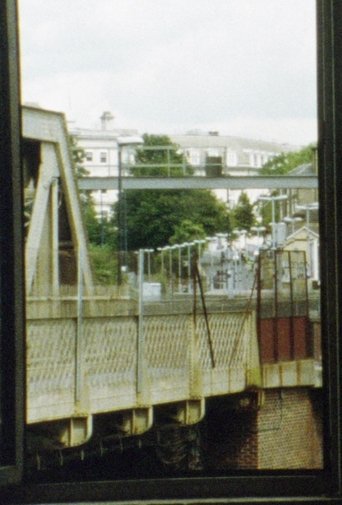
Power Hub is a site-specific time lapse film shot over 24 hours in a disused bus factory in Maidstone, Kent, UK. The film was projected onto the window through which it was shot.
 Water Water · 2003
Water Water
2003
Movie
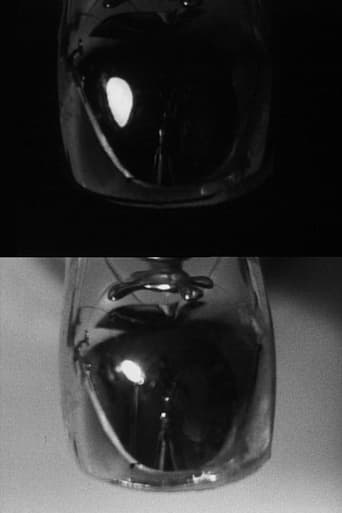
WATER WATER revisits the bathroom location of a previous film WHITE LIGHT (1996). It is based around a set of antinomies that operate at various levels, from between frames to between the two halves of the film. The black and white first part is composed of individually filmed frames (animation) which form shots of interlaced contrary motion that nevertheless can be read as sequences of individual frames, and/or in which alternate frames are lit in contrasting ways so as to emulate negative-positive juxtapositions. In the colour second half, dissolves replace cuts, light softens and contrast decreases. Continuity, by way of isomorphic features in the room, replaces the discontinuities of part one.