Directing
Klaus Wyborny
Born June 5, 1945 · Bittkau, Germany (age 81)
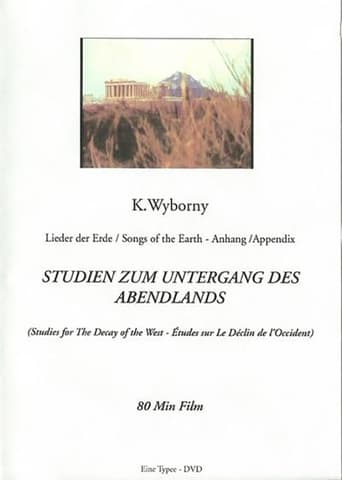
Klaus Wyborny (b.June 5, 1945 in Bittkau bei Magdeburg; lives and works in Hamburg) is a German filmmaker, producer, film director, actor, cameraman and screenwriter, known for his experimental films. Klaus Wyborny studied from 1963 to 1970 Theoretical Physics at the University of Hamburg and the Yeshiva University in New York City. Wyborny was co-founder in 1968, with Hellmuth Costard, Thomas S…
Known For
 The Enigma of Kaspar Hauser · 1974
The Enigma of Kaspar Hauser
★ 7.31974
MovieDramaHistory
The film follows Kaspar Hauser, who lived the first seventeen years of his life chained in a tiny cellar with only a toy horse to occupy his time, devoid of all human contact except for a man who wears a black overcoat and top hat who feeds him.
 Bartleby · 1976
Bartleby
1976
MovieDrama
Adaptation of the novel "Bartleby the Scrinener: A story of Wall Street" (1853) by Hermann Melville.
 She Must Be Seeing Things · 1988
She Must Be Seeing Things
★ 5.51988
MovieDrama
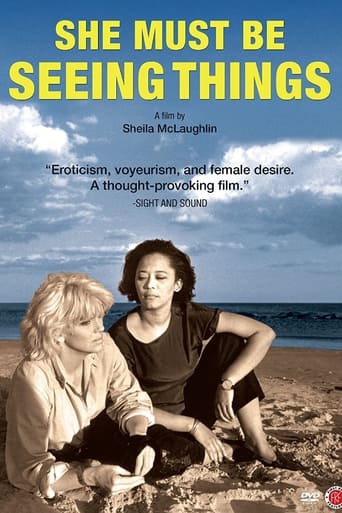
Agatha is an international lawyer, Jo a filmmaker. The two women are lovers. While Jo is on the road showing her films, Agatha discovers and reads her diaries. Problems ensue as Agatha's transgressions lead to jealousy and a spiraling cycle of sexual obsession.
 The Cathedral of New Emotions · 2006
The Cathedral of New Emotions
★ 8.02006
MovieAnimationScience Fiction
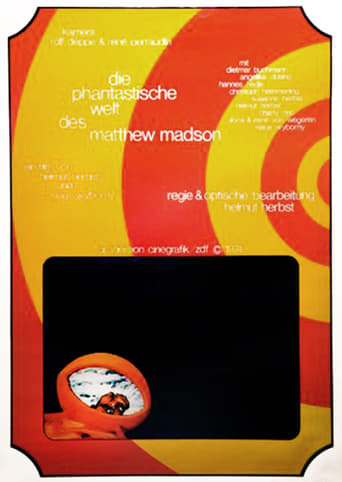
The year was 1972. A commune of Berlin stoners and intellectuals set adrift in space in a packing container clutched in a giant flying hand. Based on Herbst's 1974 animated sci-fi film DIE PHANTASTISCHE WELT DES MATTHEW MADSON.
 The Birth of a Nation · 1973
The Birth of a Nation
★ 7.31973
MovieDrama
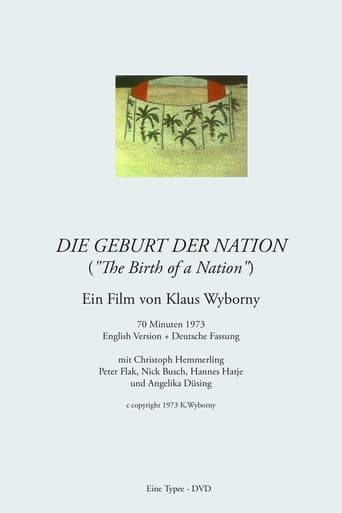
The film depicts, in an anecdotal, quasi-anthropological style, the efforts of a group of men in a desert to achieve some kind of social organisation. An opening title locates the action in Morocco, in 1911, the date evidently refers to the work of D.W. Griffith.
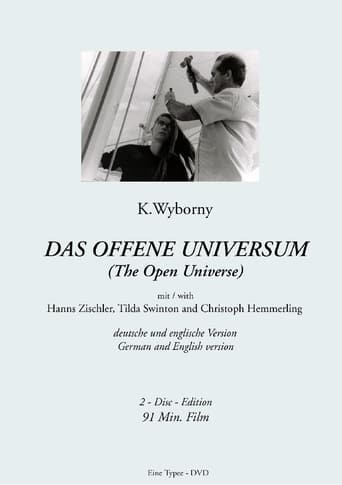 The Open Universe · 1990
The Open Universe
★ 7.01990
MovieAdventureTV Movie
The whole world in one film: Robert, a young Dane, is shanghaied in Marseille, and via Acapulco he is abducted into the South Pacific. There he kills his father and seduces his mother. Then he explores the changing world. The end finds him in a Polynesian village, where the chief bestows him with a girl of his age-class. A novel of adventure, a novel of love, also an oratory of some sort.
 Percy McPhee - Agent des Grauens (6. + 7. Folge) · 1970
Percy McPhee - Agent des Grauens (6. + 7. Folge)
1970
Movie
The drawings on which the series is based were created in 1969 and served as a template for a slide series in 1970. During its screening, this is interrupted by the film "Percy McPhee Agent of Horror (6th + 7th episode)".
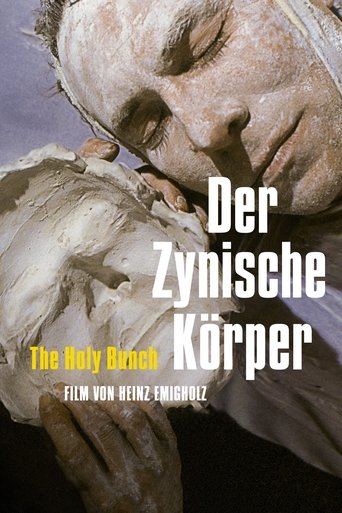 The Holy Bunch · 1991
The Holy Bunch
★ 6.51991
MovieDrama
After Roy's demise, five friends try to reconstruct his life by reading through the late editor's notebooks - only to face some very personal demons. The Holy Bunch is a modernist melodrama: beyond-Antonioni in its images, decisively Dreyerian in its spirituality. One of German cinema's few modern (or Modernist) masterpieces.