Directing
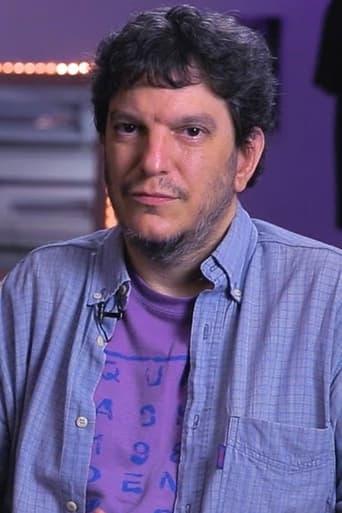
Nicolás Prividera
Degree in Communication (UBA), and graduated from the Argentina National School of Cinema (ENERC), where he currently works as a teacher. He has directed two films features: "M" (2007, award for best Latin American film and prize FIPRESCI at the Festival de Mar del Plata, as well as also the Runner Up Prize at the Festival of Yamagata (Japan), the prize for best documentary at the Mostra of Lleida…
Known For
 Fatherland · 2011
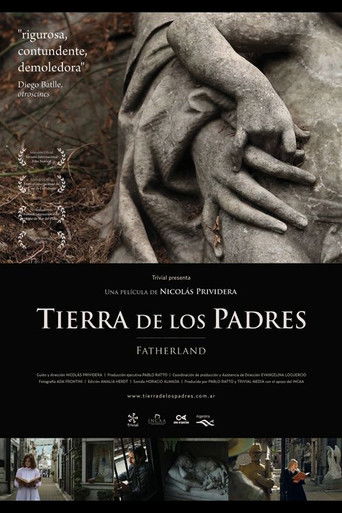
Fatherland
★ 5.52011
MovieDocumentary
Fatherland brings a rigorous structural approach to a site of monuments that is also a place of movement, criss-crossed daily by tourists and locals. The grounds are laid out like city blocks, with wide avenues branching onto laneways filled with elaborate mausoleums. The film does not attempt to tour the cemetery as one would on foot, however, but rather moves chronologically through the history enshrined there. A series of individuals are framed in static compositions as they read aloud excerpts from the writings of noteworthy Argentines interred within. (Some license has been taken, as the final resting places of certain figures represented - such as journalist Rodolfo Walsh, who was among the "disappeared" - remain unknown. The result is both poetic and political.) Beginning in the early 1800s, this history comprises civil war, battles with the country's native population, the conflict between the city and the provinces, and years of military dictatorship.
 Carta a una señorita en París · 2024
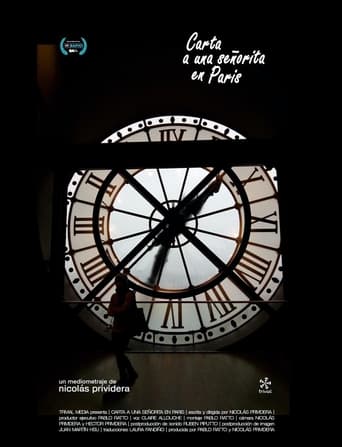
Carta a una señorita en París
★ 6.02024
MovieDocumentary
A letter about the persistence of ghosts, the incomprehensibility of the past and its traces in the present. A city in two times, 50 years apart. Images and words that mix and overlap, while memory recovers streets, museums, cemeteries, absences. And suddenly something explodes.
 Mauro · 2014
Mauro
★ 6.42014
MovieDrama
Mauro roams around the city buying things. Anything, no matter what. Because Mauro is a "pasador", a man who exchanges fake bills.
 Intervened Archives: Cinema School · 2016
Intervened Archives: Cinema School
2016
MovieDocumentary
Continuing the series started with Intervened Events (2014), the Buenos Aires Film Museum presents the second feature film made entirely with material from its archives and by fourteen outstanding Argentine filmmakers. These are nine issues of Cine Escuela Argentino, a project created in 1948 by the Argentine Ministry of Education during the first government of Juan Domingo Perón. The latter promoted “the use of the cinematographer as a didactic assistant destined to complete the educational and cultural work, mainly in what concerns exalting the feelings of the nationality, with the heroic example of the heroes, Christian morality and the multiple civil duties, great and small”. Hence, most of the films produced by Cine Escuela Argentino were aimed at scientific dissemination and tourism promotion of the various regions of the country. (Museum of Cinema)
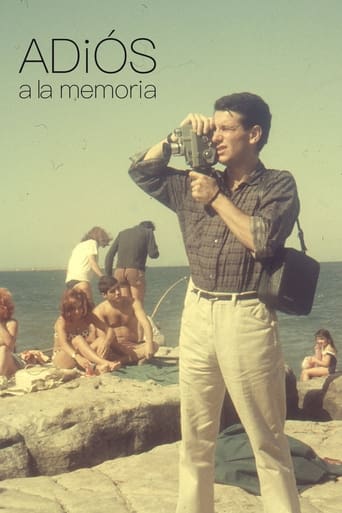 A Farewell to Memory · 2020
A Farewell to Memory
★ 7.92020
MovieDocumentary
A father who has lost his memory. A son looking for home movies that his father filmed. And among them, the impossible memory of the missing mother
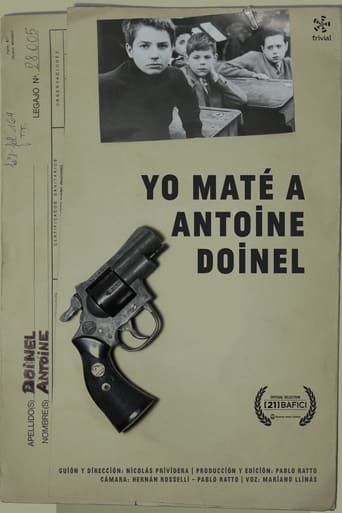 I shot Antoine Doinel · 2019
I shot Antoine Doinel
2019
MovieComedy
A film buff does his generational autobiography by relating the problems of maturity in contemporary cinema to the character of Antoine Doinel. When he learns that the actor who played him is coming to visit his city, he makes a drastic decision.
 m · 2007
m
★ 7.02007
MovieDocumentary
Close to achieving the same age as her mother when she was kidnapped in 1976, the film director began an intense investigation that leads him to meet with old colleagues and militants close to his mother. In this search, new questions arise, misunderstandings, silence, and complicity.
Filmography
Sort