Directing
Ute Aurand
Born January 1, 1957 · Frankfurt, Germany (age 69)
Ute Aurand was born in 1957 in Frankfurt/Main, and grew up in Berlin. She is a teacher and curator, and a devoted 16mm filmmaker since 1980. She studied filmmaking at the Deutsche Film und Fernsehakademie Berlin (dffb) during the years 1979-1985. Since 1985 she began to produce her own films. In 1987 she founded "Ute Aurand Filmproduktion". During 1990-95, she presented the series "Filmarbeiterin…
Known For
 Tenderness · 1985
Tenderness
1985
MovieDramaRomance
Stories from the lesbian subculture in West Berlin, about being in love, clichés, desire, and conflict – "shot as a narrative, with real lesbians at real locations about real feelings."
 Susan+Lisbeth · 2012
Susan+Lisbeth
2012
Movie
Portrait of Canadian artist Susan Turcot in 1993 and 2011.
 Anziehen
Anziehen
Movie
Four women film each other getting dressed in this four-part film. The motive for making the film was to work with a Bolex camera. A protected space is created, to which only women have access – and in which the female gaze is directed towards the female body.
 A Walk · 2008
A Walk
★ 6.02008
Movie
Throughout her work, Aurand frequently makes her camera and her images felt as an active, moving body—spinning, rushing, departing, returning, expanding, contracting, hanging upside down. In A Walk, her film goes walking. The camera occupies a snowy Swiss setting, as Aurand creates a material, tonal landscape that is both nebulous, serene, and wonderfully energetic.
 Okiana · 1983
Okiana
★ 6.01983
Movie
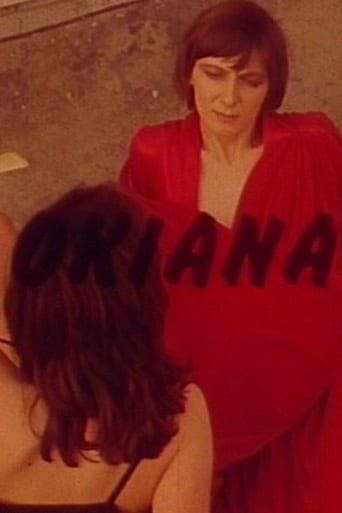
An imaginary journey on a ship. We turned the building of the Film Academy into a ship. Claire and Solange from a Jean Genet piece, a polish woman with her Madonna, screaming sailors are a few of the passengers on this artifical journey.
 At the Sea · 1995
At the Sea
★ 6.01995
Movie
A walk, a moment at the beach... And the Japanese filmmaker Utako Koguchi behind the heard piano.
 Detour · 1983
Detour
★ 6.01983
Movie
Experimental film about a train ride. The carriage window becomes a screen, the landscape a mood, the mood a landscape.
 Im Park · 2008
Im Park
★ 6.02008
Movie
Scenes in the park of the Rietberg Museum in Zurich with its collection of Asian, African and Indian art.