Acting
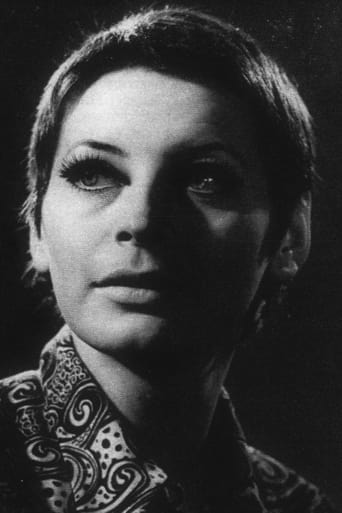
Mária Ronyecz
Born June 25, 1944 · Kunágota
Died November 2, 1989 · aged 45
No biography available.
Known For
 Diary for My Loves · 1987
Diary for My Loves
★ 7.01987
MovieDrama
A continuation of "Diary for My Children," the film picks up in 1950, when Juli, the diarist, is 18 and determined to become a movie director.
 Time Stands Still · 1982
Time Stands Still
★ 6.31982
MovieDrama
A Budapest high school in the beginning of the 1960s. Dini suffers the torments of adolescence. His father had to leave Hungary after the uprise in 1956, and since then Dini's mother has had to take care of her two sons on her own. A friend of Dini’s father, Bodor, is released from prison and moves in with them. Dini and his brother are far from happy about this intrusion on their family life.
 Those Who Wear Glasses · 1969
Those Who Wear Glasses
★ 6.01969
MovieDramaRomance
The young Valkó wants to plan a block of apartments that will still be modern fifty years from now. His ambitious plans are continuously rejected by his manipulative and careless superiors. So instead of the modern block of flats he only plans a bachelor apartment.
 When Joseph Returns · 1976
When Joseph Returns
★ 8.01976
MovieDrama
An unsentimental Hungarian film about the edgy relationship between a middle-aged woman and her young, restless daughter-in-law when the son-husband goes to sea for six months.
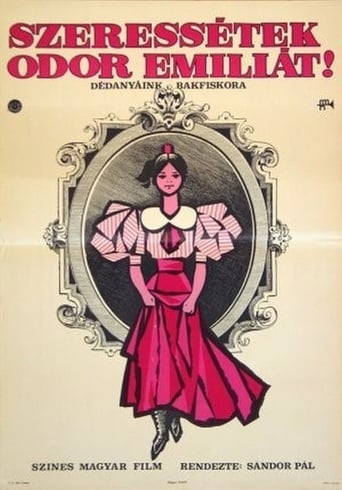 Love, Emilia · 1970
Love, Emilia
★ 7.01970
MovieComedy
Emilia Odor is a young, seventeen year old girl. She end up in a rural girl institute, which has strict rules, a hypocrite faculty and she soon starts to rebel against it. Her schoolmates support her until then the manager announce a competition among the students: the most deserving student will participant in the millenial festival in Budapest.
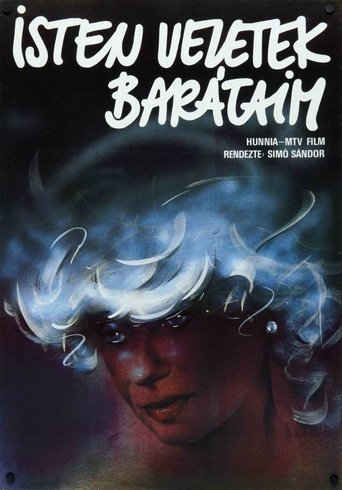 Farewell To You · 1987
Farewell To You
★ 7.01987
MovieDramaHistory
September 1938. Tenants of a Budapest block of flats live their everyday lives, conducted by tradition. World politics does not divide them. Their major experience is the private life of the actress in the house.
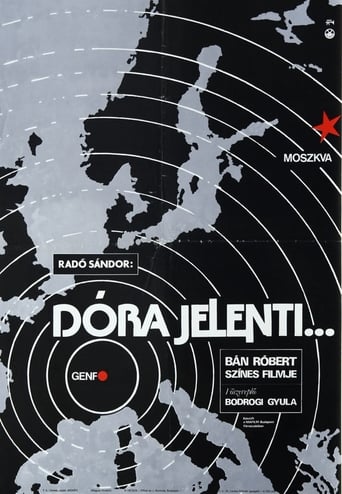 Code Name: Dora · 1977
Code Name: Dora
★ 10.01977
MovieDrama
After a tax inspection Sándor Radó, manager of a cartographic institute in Geneva called Geopress suddenly finds himself at the police station, where they withdraw his residence permit. This pestering makes him nervous, because cartography actually covers for a much more important activity: he is the head of the Soviet intelligence group in Switzerland.
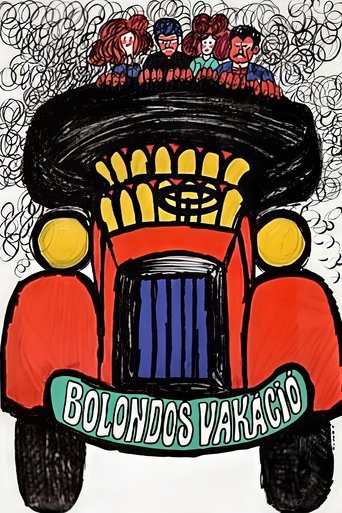 A Cloudless Vacation · 1968
A Cloudless Vacation
★ 7.71968
MovieComedy
Péter and Pál, two notorious skirt hunters competing in wooing Oana, a pretty Romanian girl on the beach at Tihany. A couple of days later the girl gets a telegram saying that she has to leave for Bucharest immediately. The party - which has increased with Piri, the interpreter, and Ági, the hitch-hiker - gets to a Romanian village by Peter's ramshackle car, a 1921 Colymne. The car, however, breaks down.