Paolo Gioli

Directing

Paolo Gioli

Born October 12, 1942 · Sarzano di Rovigo (age 83)

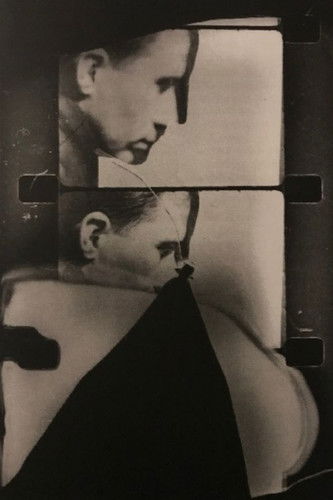
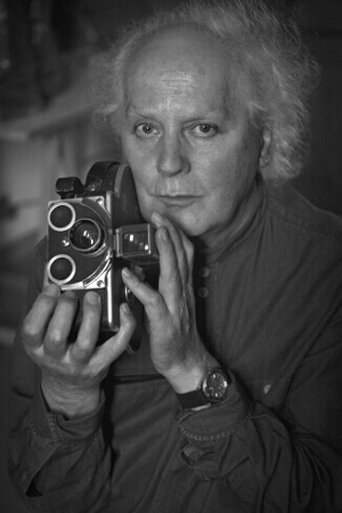
Paolo Gioli was born in Sarzano di Rovigo in 1942; he studied at the Fine Arts Academy in Venice and then in New York, where he came into contact with the New American Cinema, the New York School, and where he met Leo Castelli and Martha Jackson. In 1970 he settled in Rome where he frequented the authors of the Cooperativa Cinema Indipendente and the Filmstudio, and started to produce his own film…

Known For
Ritratto di Piero BargelliniRitratto di Piero Bargellini · 2005
Ritratto di Piero Bargellini
2005
Movie
From Paolo Brunatto's series "Scheggie Di Utopia".
Avant-Garde PrayerAvant-Garde Prayer · 1969
Avant-Garde Prayer
1969
Movie
An artist's self-portrait problematizing the choice between tradition and the avant-garde, between being free or being disciplined.
FilmarilynFilmarilyn · 1992
Filmarilyn
6.01992
Movie
Composed of still images from several photographs of the actress and pop icon Marilyn Monroe that have been manually transferred to film frame by frame, and animated through intermediate gradations within a series of successive, rapid fire montage visual "chapters", Gioli resurrects the vitality, captivating charm, and exuded sensuality of the voluptuous, iconic Hollywood superstar through the sequencing of the manipulated images - modulated object framing, subtle displacement, photographic blow-ups or visual recessions that simulate dimensionality and varying depths of focus - into a bold, risqué, and tantalizing "new" film starring the late actress.
Tessitura caldaTessitura calda · 2013
Tessitura calda
2013
Movie
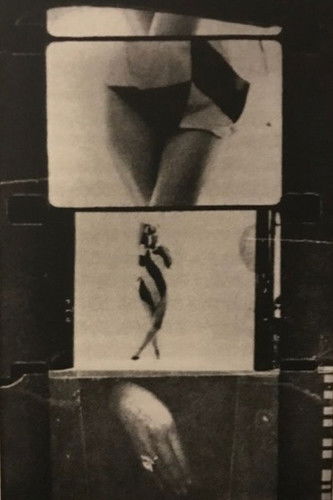
Feminine undergarments placed over a wooden tablet around which a film, itself impure, has been wound. Dissolving sexual fragments emerge. Whirling woven textures wrap around them.
AnonimatografoAnonimatografo · 1972
Anonimatografo
6.01972
Movie
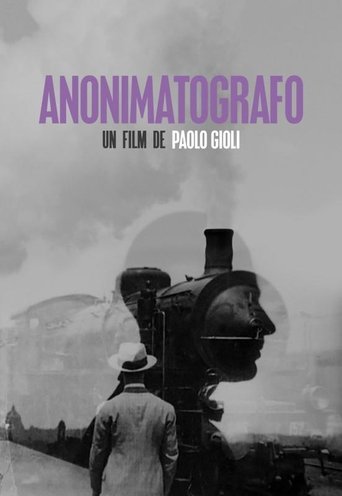
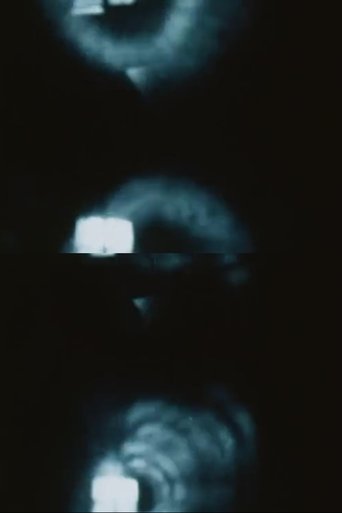
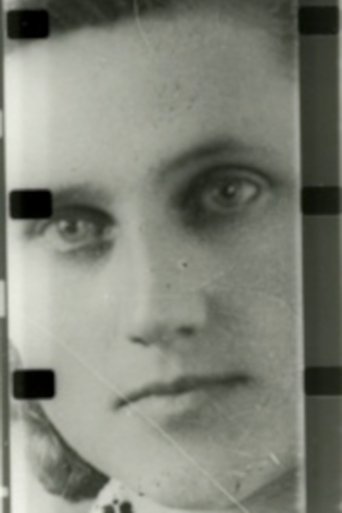
This film was shot a frame at the time using laborious extreme optical close-ups. Anonimatograph: the reanimated image of an unknown amateur at the beginning of the century who becomes middle class as he focuses on friends, movie camera in hand, indoors and outdoors surrounded by war and by his sisters. I have tried to reconstruct an extravagant film diary from which I have painstakingly torn out little pages of frames. These frames were exposed and abandoned on negative on a number of photographic reels, cut together at random in two sixty-meter reels in 35mm and acquired by me for 500 Lire from a flea-market vendor. Many frames were shot vertically, others only partially exposed, sometimes properly developed, sometimes not. I tried to animate these little reels using a flicker technique with light stroboscopic touches; in short, a film that could not be recommended to anyone.
FlutterFlutter · 1993
Flutter
1993
Movie
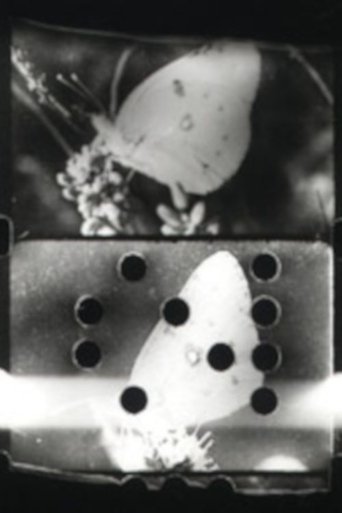
Cinematic flicker: flicker is introduced into the flutter of butterflies shot from small books. My intention was, here as elsewhere, to animate what is inexorably locked up in the fixity of typographic ink in a book. In this attempt, I brought into play the rhythm of some erotic film images, making butterflies and eros pulsate together.
RothkofilmRothkofilm · 2008
Rothkofilm
2008
Movie
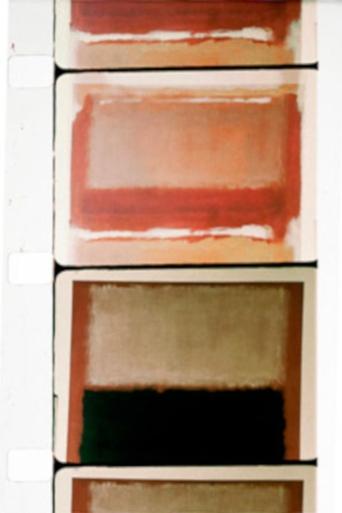
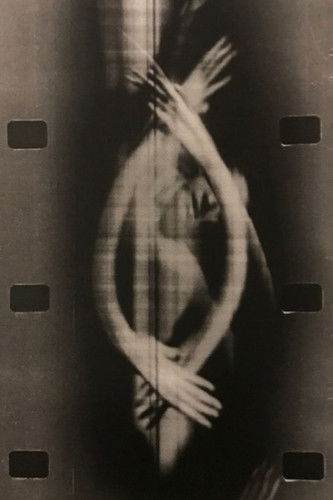
This is not a short documentary on Rothko, but rather my reflection on his canvasses, that become so deeply assimilated with the screen, frames of film, the frame line. A film excavated from two books. A silent film that should be a sound film. The rhythms, the inter-pulsations of the frames of film make me think of a sound I do not know.
The Cinema MachineThe Cinema Machine · 1979
The Cinema Machine
1979
MovieDocumentary
Directed by a group of avant-garde filmmakers, the film is an investigation of the less edifying aspects of film industry.

Filmography

Sort
AnonimatografoAnonimatografo · 1972
Anonimatografo
6.01972
Movie
This film was shot a frame at the time using laborious extreme optical close-ups. Anonimatograph: the reanimated image of an unknown amateur at the beginning of the century who becomes middle class as he focuses on friends, movie camera in hand, indoors and outdoors surrounded by war and by his sisters. I have tried to reconstruct an extravagant film diary from which I have painstakingly torn out little pages of frames. These frames were exposed and abandoned on negative on a number of photographic reels, cut together at random in two sixty-meter reels in 35mm and acquired by me for 500 Lire from a flea-market vendor. Many frames were shot vertically, others only partially exposed, sometimes properly developed, sometimes not. I tried to animate these little reels using a flicker technique with light stroboscopic touches; in short, a film that could not be recommended to anyone.

Director

FilmfinishFilmfinish · 1986
Filmfinish
5.01986
Movie
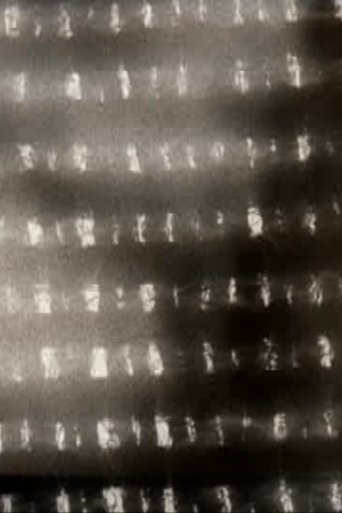
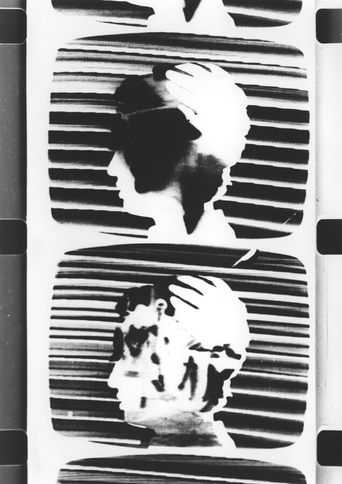
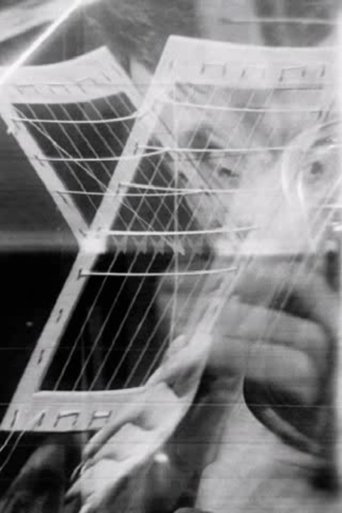
This film was constructed using the so-called “photo-finish” technique employed in sporting events. The same principle was applied, precisely, to the motion picture camera. The subjects are explored and self-explored using a thin slit arranged horizontally halfway along the aperture plate as they enter the motion picture camera itself. The images then are formed as an extremely dense series of lines as in a primitive video screen, such as the Nipkow. The cinematic rhythms of the film vary with the accelerations and decelerations imposed beyond the synchronism between movie camera and subject: with motion from top to bottom, or else with the movie camera lying sideways, (in that case the line is vertical) then, from left to right and vice versa. Of course without a shutter or claw [in the camera]. This filmic technique is well known in scientific cinematography, and it is this very combination that I most urgently desired to encompass in my graphic compositional concerns.
Director

The Screen, Just the ScreenThe Screen, Just the Screen · 1978
The Screen, Just the Screen
1978
Movie
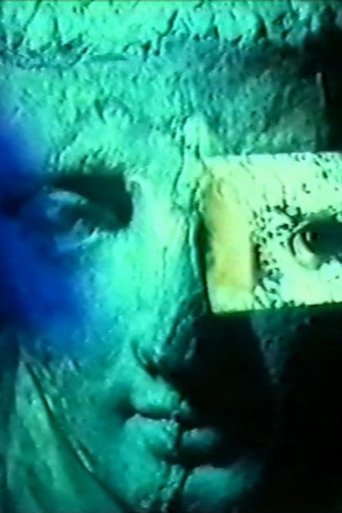
I have a fixed idea about the screen that while it has no depth, we know that it is sprayed by 24 frames a second at the same point for an infinite amount of time. Were it possible to freeze into a solid the sum of all the images, the screen would be seen as a limitless freezer of frames. Even more so, when the screen is a screen of a screen—a condition approaching the simultaneity of electronics. The usual battery of devices: Super-8, 16mm and slide projectors. A constructed series of film loops with scenes of [everyday] life, slowing down and accelerating the events on a solitary screen, so that life as it has been staged gathers itself up in a perpetual serial [process of] self-editing. On the tv screen a face is pierced through by the small filmic screen.

Director

ExtremotionsExtremotions · 2009
Extremotions
2009
Movie
A film completely excavated by rephotographing rolls of 35mm negative containing images made with the photo-finish (slit scan) technique, the so-called foto-lunga which has no frame line and therefore no individual frames. This sort of proto-film was born not as a film, but as a photograph; I caused it to transmigrate—using a horizontal scanning motion of the filmstrip typical of photo-finish—into a film, thus betraying its natural verticality. I rephotographed the photofinish negative through the gate of an old 35mm moviecamera causing it to advance using the crank handle at a velocity interpolated between the crank handle [of the old 35mm moviecamera] and that of my own [16mm] movie camera. I was interested in seeing figures transformed which had been destined to remain motionless and to see them reanimated.

Director

Images Overtaken by the Wheel of DuchampImages Overtaken by the Wheel of Duchamp · 1994
Images Overtaken by the Wheel of Duchamp
5.01994
Movie
"Duchamp is certainly as complex as Joyce and to do something about him, I tried to dedicate to him this small film poem, using only a few images of images of his work, taken always from books and catalogues (that are made of typographic ink). For example, blackening in the spokes of a wheel, allowing regular slits, transforming it in this way into a true external shutter, that came to substitute for the missing one of my movie camera. A bicycle wheel that becomes cinema and vice versa. For example, his black window that is transformed into a number of tv screens, etc. With Duchamp I think I could make a film for every one of his works because intelligence, irony and alchemy are all proper to the cinema."

Director

Finestra davanti ad un alberoFinestra davanti ad un albero · 1989
Finestra davanti ad un albero
1989
Movie
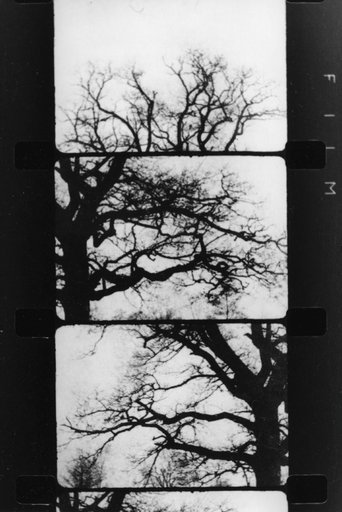
I have several English style windows and this and a tree in winter have caused me to think about Fox-Talbot’s window—his first image, perhaps. Carried out, as usual, with the technique—but perhaps it would be better to say the discipline—of the flicker, which is, “the undulation, trembling, quivering, flashing, sparkling weakly” of the dictionary, in short everything of the cinèsi fosforescentica. Drawn from a thin monograph (it’s worth saying from typographic ink where there had been silver salts) I tried to shake my window using his where there had been a tree in winter. Cross-dissolving between real and not-real, between fixed and animated images of his lively works, seemed to me to reconstruct what would have perhaps happened to Fox-Talbot, filming my window in winter.

Director