Directing
Noriaki Tsuchimoto
Born December 11, 1928 · Gifu Prefecture, Japan
Died June 24, 2008 · aged 79
Noriaki Tsuchimoto was a Japanese documentary film director known for his films on Minamata disease and examinations of the effects of modernization on Asia. Tsuchimoto and Shinsuke Ogawa have been called the "two figures [that] tower over the landscape of Japanese documentary."
Known For
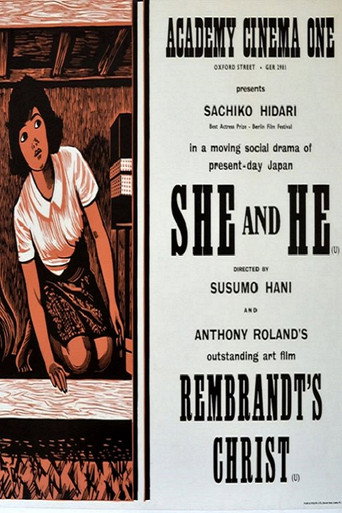 She and He · 1963
She and He
★ 7.01963
MovieDrama
As her husband Eiichi becomes more entangled in his life as businessman, Naoko looks for ways to expand her own life even as her husband's life shrinks in scope and intimacy. She finds new interests, new love, and a greater sense of her place in the world.
 Cuban Lover · 1969
Cuban Lover
★ 6.81969
MovieDramaRomance
Japanese fishery instructor Akira is attracted to beautiful Cuban young girl Martia. Though initially rejected, Akira still returns with Martia to her homeland. On the way he sees a post-revolution Cuba, cultivating fields, relics from the revolution, armies in training, and Castro in a political rally.
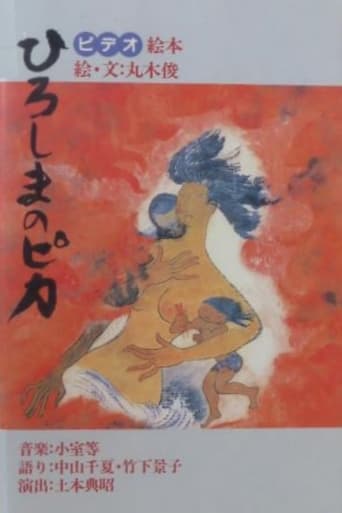 Hiroshima no pika · 1987
Hiroshima no pika
1987
MovieAnimation
Video version of the picture book 'Hiroshima no pika', based on the art pieces known as The Hiroshima Panels by Iri and Maruki Toshi
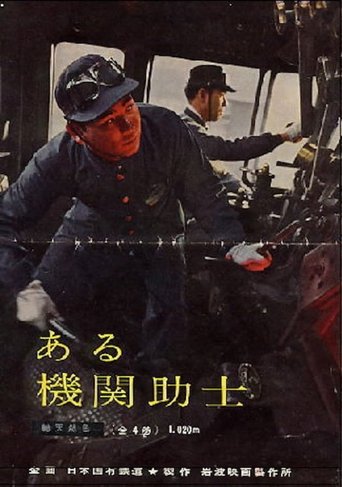 An Engineer's Assistant · 1964
An Engineer's Assistant
★ 5.51964
MovieDocumentary
"In my filmography, An Engineer’s Assistant (1963) is called my “first film.” This PR film on the safety of the Japanese National Railways was designed to be “self-criticism” after the big accident on the Joban line at Mikawashima Station, which had occurred in 1962. Right after the events back then, the responsibility for the accident was considered to be negligence of the engineer and the engineer’s assistant. The topic of this project was the promotion of a new device to avoid accidents. However, I had seen that the true cause of the accident was a congested service schedule, and I consciously placed emphasis on the depiction of the actual work of the engineer and his assistant, and of those who had chosen the route and were responsible for safety on the line on which the accident took place."
 Minamata: The Victims and Their World · 1971
Minamata: The Victims and Their World
★ 7.31971
MovieDocumentary
The first in a series of independent documentaries that Tsuchimoto made of the mercury poisoning incident in Minamata, Japan.
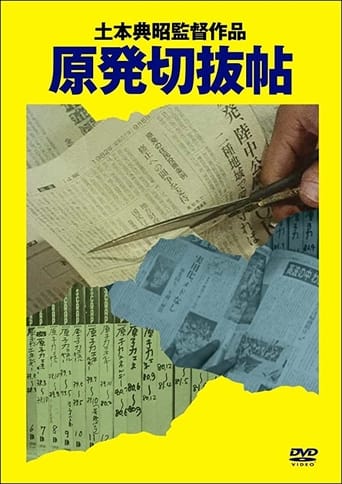 Nuclear Scrapbook · 1982
Nuclear Scrapbook
★ 9.01982
MovieDocumentary
A film essay about nuclear energy in Japan, composed of newspaper clippings collected in scrapbooks
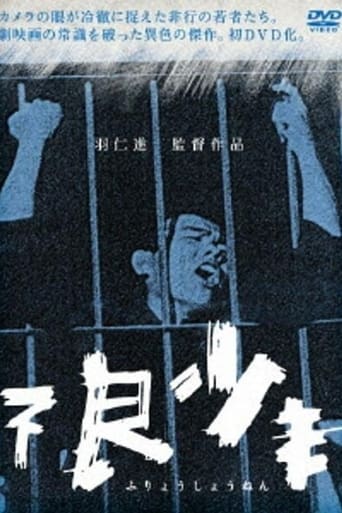 Bad Boys · 1961
Bad Boys
★ 6.71961
MovieDrama
A young delinquent takes part in a robbery and is sentenced to a juvenile detention center, where he clashes with other youths and reflects on his life experiences.
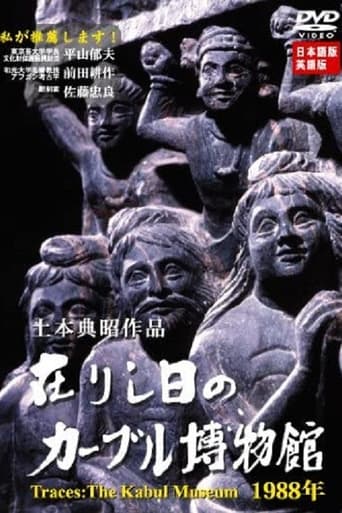 Traces: The Kabul Museum 1988 · 2003
Traces: The Kabul Museum 1988
★ 9.02003
MovieDocumentaryHistory
The Kabul National Museum, once known as the "face of Afghanistan," was destroyed in 1993. We filmed the most important cultural treasures of the still-intact museum in 1988: ancient Greco-Roman art and antiquitied of Hellenistic civilization, as well as Buddhist sculpture that was said to have mythology--the art of Gandhara, Bamiyan, and Shotorak among them. After the fall of the Democratic Republic of Afghanistan in 1992, some seventy percent of the contents of the museum was destroyed, stolen, or smuggled overseas to Japan and other countries. The movement to return these items is also touched upon. The footage in this video represents that only film documentation of the Kabul Museum ever made.
Filmography
Sort