Acting
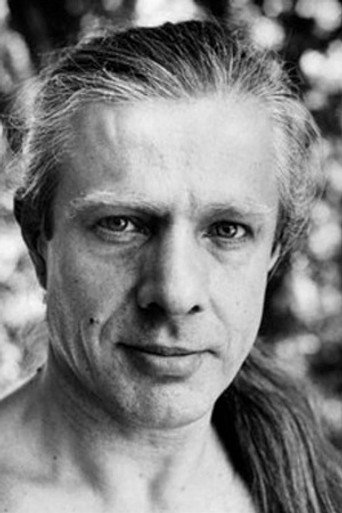
Peter Orlovsky
Born July 8, 1933 · New York City, New York, USA
Died May 30, 2010 · aged 76
Peter Anton Orlovsky (July 8, 1933 – May 30, 2010) was an American poet and actor. He was the long-time partner of Allen Ginsberg.
Known For
 Chappaqua · 1966
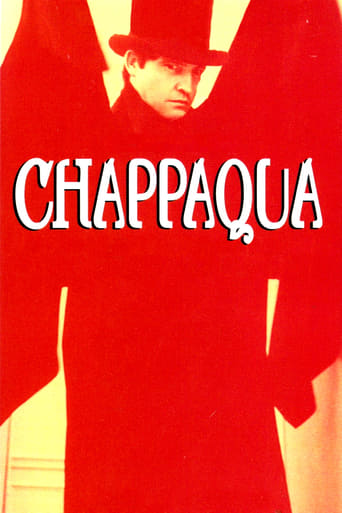
Chappaqua
★ 6.21966
MovieDrama
Semi-autobiographical story of Conrad Rooks, who travels to France to undergo a drug-withdrawal cure. Flashbacks to the beginings of psychedelia in San Fran. Though initially confusing, as Rooks blends drug-illusion with reality, and cuts color with black-and-white and monochrome tinted shots, "Chappaqua" is conventionally constructed with a beginning, middle, and end.
 Me and My Brother · 1969
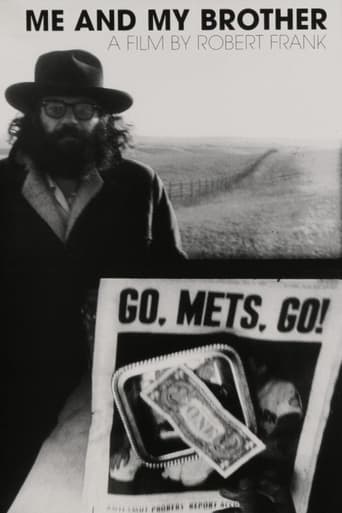
Me and My Brother
★ 6.51969
MovieDrama
Julius Orlovsky, after spending years in a New York mental hospital, emerges catatonic and must rely on his brother Peter, who lives with poet Allen Ginsberg. When Julius wanders off in the middle of filming, Frank hires and actor (Joseph Chaikin) to play the character and begins a fictional version of his psychological portrait. Then, as suddenly as he vanished, Julius turns up in an institution where he and Peter must face their relationship.
 Pull My Daisy · 1959
Pull My Daisy
★ 6.11959
MovieComedyDrama
Based on an incident in the life of Beat icon Neal Cassady and his wife, the painter Carolyn, the film tells the story of a railway brakeman whose wife invites a respected bishop over for dinner. However, the brakeman's Bohemian friends crash the party, with comic results. Pull My Daisy is a film that typifies the Beat Generation. Directed by Robert Frank and Alfred Leslie, Daisy was adapted by Jack Kerouac from the third act of his play, Beat Generation; Kerouac also provided improvised narration.
 One Hour · 1990
One Hour
★ 6.61990
MovieDocumentary
One of the longest handheld tracking shots in film history, It’s Real documents an hour in the street life of downtown Manhattan. Not only is it a unique record of a particular time and place—July 26, 1990, from 3:45 to 4:45 p.m. in the Lower East Side near Robert Frank’s studio (we note in a Daily News headline that after some 20 years the Zodiac killer still hasn’t been identified)—it’s also an experiment in fragmentary language, gesture, and life caught unawares. Snippets of dialogue captured in passing at phone booths and crosswalks, in alleyways, subways, and diners—chance encounters, only presumably, with people going about their day—have something of the aleatory cut-up technique of the Dadaists in the 1920s and William Burroughs and Byron Gysin in the 1950s, an effort to divine new and deeper meanings in ordinary life. — Museum of Modern Art
 My Paris Movie · 2011
My Paris Movie
2011
MovieDocumentary
For some time I had been thinking about doing something with my Paris footage, of which I have many many hours. So [curator Danièle Hibon’s] suggestion [to make a new work celebrating 20 years of cinema at the Jeu de Paume museum] came just in time. I spent some three months going through my Paris footage and I managed to reduce it to the length you will be seeing, two hours and 39 minutes. It was very very hard to do so. I have so many friends in Paris, so many memories – and it’s all on video. So this is my love letter to Paris. To its streets, to the river Seine, to its cafes, bistros, bars, to the jambon de Paris, and, especially, to all of you, my Paris friends!
Filmography
Sort