N
Directing
Nicolas Rey
Born January 1, 1968 (age 58)
French filmmaker Nicolas Rey has directed a series of remarkable fictional documentaries, intricate feature-length (and sometimes longer) essay films that meld historical fact with fantasy and autobiography while implementing modernist literary strategies to unravel heady and playful ruminations on ideological and cinematographic technologies. Equally philosophical and structuralist-materialist, R…
Known For
 Pausa Italiana · 2004
Pausa Italiana
2004
Movie
In 1998 it seemed impossible to Balagura to make films in the Ukraine without becoming a slave to television; he therefore left for Italy, the "country of culture". With no immigration papers, with a wife and two children, the less agreeable realities of his situation soon caught up with him. In 2004, armed with a basic mini-DV camera borrowed from a friend, with a casual acquaintance as camera operator, he shot 'Pausa Italiana'. From a small village in the Abruzzi region, he observed the reality surrounding him; he also turned the camera upon his own status as migrant, a situation no documentarist could capture. He allies precise recordings with a fragmentary narrative of literary quality, giving the film a particular quality: auto-fiction and ethnography intersect to form an Aristotelian poetic, avoiding separation between self and other, observer and observed, the real and the cosmic
 Un début prometteur · 2015
Un début prometteur
★ 4.62015
MovieDramaComedy
Tired of life, Martin returns to live with his romantic father and idealist little brother Gabriel.Martin will try hard to warn Gabriel about falling in love until Mathilde - a gambler - enter the picture...
 Burn the Sea · 2014
Burn the Sea
★ 6.32014
MovieDocumentary
From the seascapes of the North African Mediterranean to the streetscapes of Paris, this personal 16mm essay film explores the idealism and hard realities of departure and arrival. Stories of the post-revolution Tunisian diaspora in France, who “burned the sea” to leave, only to discover a new form of confinement in their liberation, provide a powerful meditation on personal revolution and freedom, and the compromises that face those whose mobility is a double-edged sword.
 Cinexpérimentaux #2: Nicolas Rey · 2001
Cinexpérimentaux #2: Nicolas Rey
2001
Movie
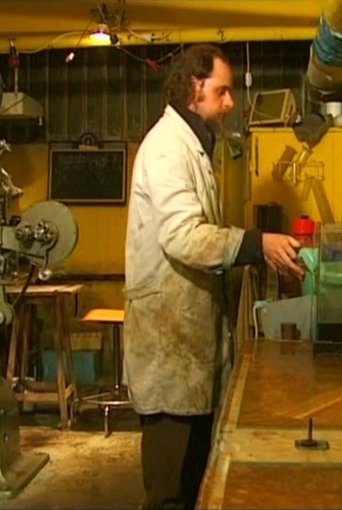
Portrait of experimental filmmaker Nicolas Rey.
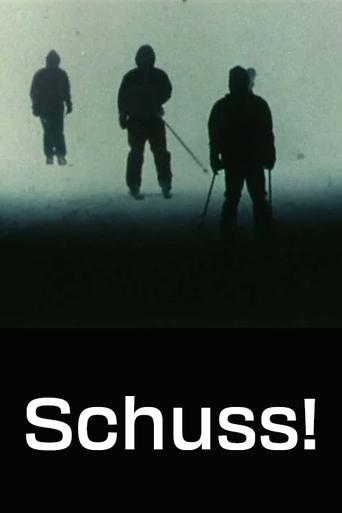 Schuss! · 2005
Schuss!
★ 3.62005
MovieDocumentary
Rey's first feature film begins as a stylish quasi-verité documentary about everyday life in a modest French ski resort. Gradually the film's attention shifts and discovers the dominant presence of the aluminum industry in the area steadily reshaping the region and threatening the resort itself. Shot on grainy 16mm treated with extreme photochemical techniques, the fable about industry and capitalism is an exploration of landscape as a hidden set of signifiers of power. - Harvard Film Archive
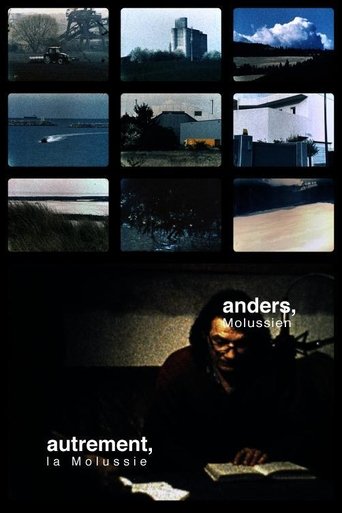 Differently, Molussia · 2012
Differently, Molussia
★ 5.62012
MovieDocumentary
Nine short, individually titled reels of colour 16mm film, which are presented in a random order determined before each screening. Drawing on a text by German philosopher Günther Anders, the film is an imaginary documentary about Molussia, a fictional totalitarian country that Anders invented to represent the dystopia of fascism.
 Nivis: Amigos de otro mundo · 2019
Nivis: Amigos de otro mundo
★ 3.02019
SeriesComedyFamily
Filmography
Sort