Hugh Griffith

Acting

Hugh Griffith

Born May 30, 1912 · Marianglas, Anglesey, Wales, UK

Died May 14, 1980 · aged 67

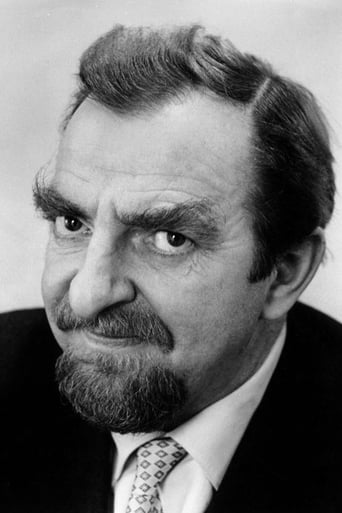
Hugh Griffith was an Oscar-winning Welsh screen, stage and television actor.

Known For
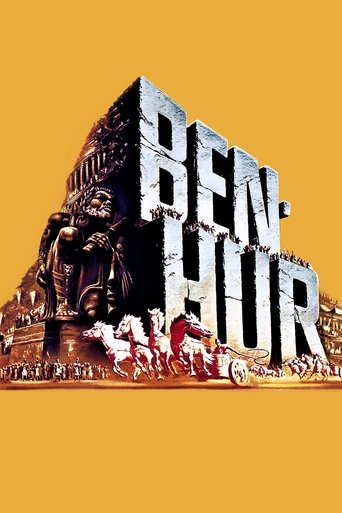
Ben-HurBen-Hur · 1959
Ben-Hur
★ 7.91959
MovieHistoryDrama
In ancient Judea, a Jewish aristocrat opposing Roman occupation of his homeland reunites with his childhood friend, now a Roman commander — setting in motion a saga of betrayal, adventure, tragedy, revenge, and faith.

What?What? · 1972
What?
★ 5.41972
MovieComedy
A young American woman traveling through Italy finds herself in a strange Mediterranean villa where nothing seems quite right.
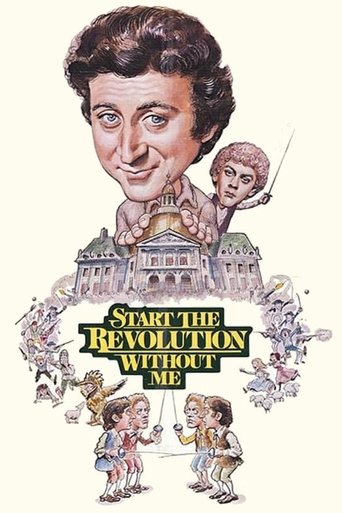
Start the Revolution Without MeStart the Revolution Without Me · 1970
Start the Revolution Without Me
★ 6.11970
MovieComedyHistory
Two sets of identical twins are accidentally switched at birth. One pair, Phillipe and Pierre DeSisi, are aristocratic and haughty, while the other, Charles and Claude Coupé, are poor and dim-witted. On the eve of the French Revolution, both sets find themselves entangled in palace intrigue.
How to Steal a MillionHow to Steal a Million · 1966
How to Steal a Million
★ 7.51966
MovieComedyCrime
A woman must steal a statue from a Paris museum to help conceal her father's art forgeries.
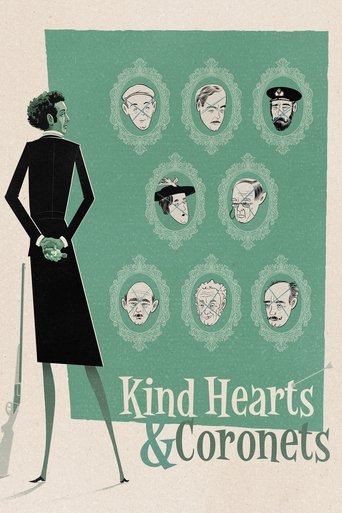
Kind Hearts and CoronetsKind Hearts and Coronets · 1949
Kind Hearts and Coronets
★ 7.61949
MovieComedyCrime
When his mother eloped with an Italian opera singer, Louis Mazzini was cut off from her aristocratic family. After the family refuses to let her be buried in the family mausoleum, Louis avenges his mother's death by attempting to murder every family member who stands between himself and the family fortune. But when he finds himself torn between his longtime love and the widow of one of his victims, his plans go awry.
The Million Pound NoteThe Million Pound Note · 1954
The Million Pound Note
★ 7.01954
MovieComedy
An impoverished American sailor is fortunate enough to be passing the house of two rich gentlemen who have conceived the crazy idea of distributing a note worth one million pounds. The sailor finds that whenever he tries to use the note to buy something, people treat him like a king and let him have whatever he likes for free. Ultimately, the money proves to be more troublesome than it is worth when it almost costs him his dignity and the woman he loves.
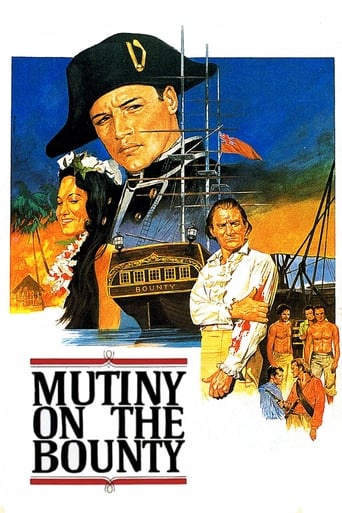
Mutiny on the BountyMutiny on the Bounty · 1962
Mutiny on the Bounty
★ 7.11962
MovieAdventureDrama
The Bounty leaves Portsmouth in 1787. Its destination: to sail to Tahiti and load bread-fruit. Captain Bligh will do anything to get there as fast as possible, using any means to keep up a strict discipline. When they arrive at Tahiti, it is like a paradise for the crew, something completely different than the living hell aboard the ship. On the way back to England, officer Fletcher Christian becomes the leader of a mutiny.
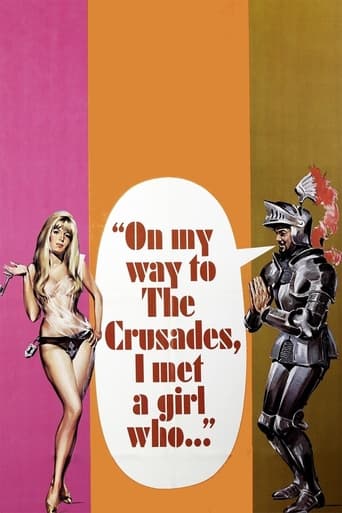
On My Way to the Crusades, I Met a Girl Who...On My Way to the Crusades, I Met a Girl Who... · 1967
On My Way to the Crusades, I Met a Girl Who...
★ 4.61967
MovieRomanceAdventure
A chastity belt provides an endless amount of grief for a woman whose jealous husband has gone off to the Crusades.

Filmography

Sort
Lights OutLights Out · 1949
Lights Out
★ 6.01949
SeriesSci-Fi & FantasyCrime
Lights Out was an extremely popular American old-time radio program, an early example of a network series devoted mostly to horror and the supernatural, predating Suspense and Inner Sanctum. Versions of Lights Out aired on different networks, at various times, from January 1934 to the summer of 1947 and the series eventually made the transition to television. In 1946, NBC Television brought Lights Out to TV in a series of four specials, broadcast live and produced by Fred Coe, who also contributed three of the scripts. NBC asked Cooper to write the script for the premiere, "First Person Singular", which is told entirely from the point of view of an unseen murderer who kills his obnoxious wife and winds up being executed. Variety gave this first episode a rave review ("undoubtedly one of the best dramatic shows yet seen on a television screen"), but Lights Out did not become a regular NBC-TV series until 1949.
Orson Welles' Great MysteriesOrson Welles' Great Mysteries · 1973
Orson Welles' Great Mysteries
★ 6.81973
SeriesMysteryDrama
Orson Welles’ Great Mysteries is a British television anthology series produced by Anglia Television for the ITV network and broadcast between 1973 and 1974. The series presents standalone adaptations of classic mystery, crime, and supernatural stories drawn from literary sources including Dickens, Conan Doyle, Wilkie Collins, Balzac, Maugham, O. Henry, and others. Each episode is framed by original introductory and closing sequences performed by Orson Welles, who serves as the series’ host and sole recurring on-screen presence. These segments, written and directed by Welles (uncredited), function as stylized narrative framing devices rather than dramatic participation in the stories themselves. The dramatic content of each episode is performed by separate casts and directors, with no continuing characters or serialized narrative, establishing the series as a unified television anthology rather than a collection of standalone films.

The Man

ABC Stage 67ABC Stage 67 · 1966
ABC Stage 67
★ 6.81966
SeriesDramaDocumentary
ABC Stage 67 is the umbrella title for a series of 26 weekly shows that included dramas, variety shows, documentaries, and original musicals. It premiered on American Broadcasting Company on September 14, 1966 with Murray Schisgal's The Love Song of Barney Kempinksi, directed by Stanley Prager and starring Alan Arkin as a man enjoying the sights and sounds of New York City in his last remaining hours of bachelorhood. Arkin was nominated for an Emmy Award for Outstanding Single Performance By An Actor in a Leading Role in a Drama and the program was nominated as Outstanding Dramatic Program. Future programs included appearances by Petula Clark, Bobby Darin, Sir Laurence Olivier, Albert Finney, Peter Sellers, David Frost, and Jack Paar. ABC's effort to bring culture to the masses was a noble but unsuccessful experiment. Scheduled first against I Spy on Wednesdays and then The Dean Martin Show on Thursdays, the show consistently received low ratings. Its last production, an adaptation of Jean Cocteau's one-woman play The Human Voice starring Ingrid Bergman, aired on May 4, 1967. "Stage 67" was not actually a part of the primary ABC facilities in Los Angeles. It was produced at the old Monogram Studios backlot that was later sold to KCET.

Herr Hoffman